If you’re debating between hiking shoes and boots, you’re likely seeking comfort and protection without compromising agility. As someone who loves the outdoors, I know firsthand that the terrain and type of hike can dictate the most suitable option.
I prefer hiking boots, but there’s an excellent argument for hiking shoes or even trail runners for short and multi-day hikes.
When picking your essential hiking footwear, no single choice fits all. It’s all about the specific needs of your adventure and personal comfort.
Key Takeaways
- Footwear choice between hiking shoes and boots impacts comfort and performance on trails.
- Hiking shoes are lighter and more flexible, and boots offer more ankle coverage and often more protection. Fit, sole stiffness, and grip matter more than the category label.
- Choosing hiking boots vs. shoes depends on trail difficulty, load weight, and personal preference.
- Consider trail runners as a worthy alternative.
Contents
Hiking Shoes

Hiking shoes, distinct from regular sneakers, are designed explicitly for trails and with construction that prioritizes grip, comfort, and durability.
They typically feature a low-cut design with flexible midsoles, and many models handle rugged trails and multi-day trips as well as day hikes. Unlike boots, hiking shoes are lighter and offer a closer feel to everyday footwear, helping you enjoy the benefits of being outdoors more easily.
Hiking shoes might be your best bet for a casual day hike, but consider the trail conditions before choosing your footwear. If you expect rocky, uneven paths or will be carrying a heavy pack, look at fit, sole stiffness, and toe protection. A stiffer shoe or a boot may suit you better than a soft, flexible shoe.
Hiking Shoe Pros
- Lightweight: Weight carried on your feet costs more energy than the same weight on your back, so lighter shoes can save energy over long distances. Fit and terrain still matter as much as weight.
- Breathable: Ventilated models use mesh and other breathable fabrics, so your feet stay cooler in warm weather. Waterproof versions of the same shoe breathe less and run warmer.
- Comfort: Many hiking shoes feel comfortable early and need less break-in than stiffer boots. That is a tendency, not a rule, and any new pair can rub, so test yours on shorter walks first.
- Cost-effective: They are often less expensive than boots, though premium shoes can cost more than budget boots, and a shorter lifespan can narrow the gap.
Hiking Shoe Cons
- Ankle Support: Shoes are low-cut, so they give the ankle less coverage. Stability also depends on fit, sole stiffness, and your own ankle history, not on height alone.
- Durability and Protection: Many hiking shoes use lighter builds, but protection varies widely by model. Look for toe caps, sturdy uppers, and rock plates rather than judging by the category.
- Traction: Grip comes from the outsole rubber and lug pattern, not from height. Some hiking shoes grip wet rock and mud very well, and others do not, so judge the specific model.
- Weather Suitability: Low, ventilated shoes let water in easily and add little warmth in cold, wet conditions. Waterproof versions shed some water but dry slowly once soaked, so pack spare socks.
Examples of popular hiking shoes
- Merrell Moab 3: A cushioned, ventilated hiking shoe known for comfort on day hikes. Waterproof versions are sold under the same Moab 3 name, so check which one you are buying.
- Salomon X Ultra 5 GTX: Praised for its aggressive Contagrip grip and protective build. The GTX version puts a Gore-Tex membrane under a reinforced textile upper, so it sheds water but runs warmer and dries more slowly than a ventilated shoe.
- Keen Targhee IV: Roomy in the toe box and protective, sold in waterproof and ventilated versions. The older Targhee III remains widely available, often at a discount.
Hiking Boots

Unlike hiking shoes, boots come with a higher cut that covers the ankle. The coverage can feel more supportive on uneven terrain and keeps out more trail debris, though it does not guarantee you will not roll an ankle.
Hiking Boot Pros
- Ankle Support: You get more coverage around the ankle, which many hikers find reassuring on rough, uneven ground. A higher cuff alone does not prevent sprains. If you have a previous ankle injury, rehabilitation, a clinician’s advice, or a brace may matter more than boot height.
- Durability: Many boots use tough materials like leather and are built for heavy use, and some can be resoled. Lifespan still varies a lot by model, materials, and how you use and care for them.
- Protection: Thanks to the sturdier construction of many models, your feet are better shielded against rocks and other trail debris.
- Traction: Many boots use deep, aggressive treads. Actual grip still comes from the rubber compound and lug pattern, and no ordinary hiking sole is dependable on ice. Snow and ice can call for traction devices.
- Waterproofing: Many boots come with waterproof membranes such as Gore-Tex, which help in wet brush and shallow water. Water can still enter over the collar, membranes can fail with wear, and waterproof boots dry slowly once soaked inside, so plan spare socks and drying time, especially in cold weather.
- Weather Suitability: Insulated boots are a strong choice for colder environments. An uninsulated boot is not automatically warm, and warmth also depends on socks, fit, and how active you are.
Hiking Boot Cons
- Weight: Boots are heavier, which can lead to quicker fatigue on longer hikes, since weight on the feet costs more energy than weight carried on your back.
- Breathability: The sturdy construction offers less ventilation, something your feet might need to appreciate in hot weather.
- Comfort & Flexibility: Boots often need more break-in than shoes, though many modern boots feel comfortable quickly. Stiffer soles can also feel clumsy on smooth, easy trails.
- Price: Boots often carry a higher price tag, though a long lifespan and resoling can repay it. Budget boots and premium shoes overlap more than the categories suggest.
Examples of Hiking Boots
- Lowa Renegade EVO GTX Mid: The current generation of a popular comfort-first boot, with a waterproof Gore-Tex lining.
- La Sportiva Nucleo High II GTX: The current Nucleo High generation, balancing a robust build with lighter weight for ease of movement.
- Merrell Moab 3 Mid Waterproof:My personal favorite and current go-to hiking boot.
Comparison Between Hiking Shoes vs Boots
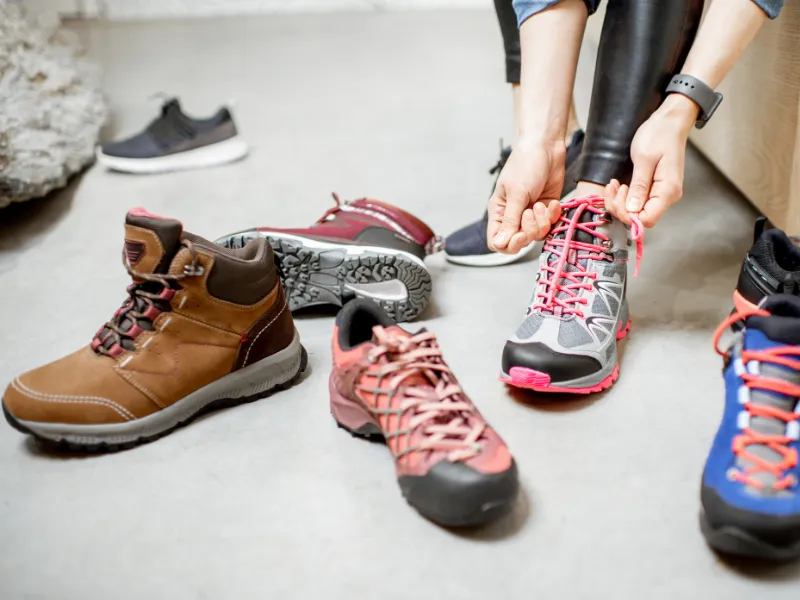
When deciding between hiking shoes and boots, the choice often comes down to fit, the conditions, and what you value more on the trail, comfort or protection.
Hiking Shoes
- Weight: Generally lighter, reducing energy expenditure
- Breathability: Better airflow, keeping feet cooler
- Flexibility: More agile and adaptable to varied surfaces
- Comfort: Often comfortable early, still test before a long hike
- Durability: Varies by model, lighter builds often wear faster and many cannot be resoled
- Protection: Varies by model, look for toe caps and rock plates, and the low cut leaves ankles exposed
- Traction: Set by outsole rubber and lugs, not by height
- Grip: Can be excellent or poor by model, check wet grip for your trails
- Suitability: Day hikes through multi-day trips, depending on model, load, and conditions
- Price: Often less expensive than boots, with wide overlap between the categories
Hiking Boots
- Weight: Heavier, offering robust construction
- Ankle Support: More ankle coverage, which does not by itself prevent sprains
- Breathability: Less than shoes can lead to warmer feet
- Comfort: May require break-in, many modern boots need little
- Durability: Often built for harsh conditions and heavy use, lifespan varies by model and care
- Protection: Usually more coverage against rocks, roots, and debris
- Traction: Set by outsole rubber and lugs, not by height
- Grip: Varies by model and surface, and ice calls for traction devices
- Suitability: Multi-day treks, rugged landscapes, heavy loads, and cold conditions in insulated models
- Price: A higher investment reflecting their rugged build
Steps to choose the proper footwear
- Assess the trail’s difficulty and conditions. Rough, rocky, or uneven ground calls for protection and a sole stiff enough for it, which you can find in a sturdy shoe or a boot. Slippery ground calls for proven wet grip, and snow or ice calls for traction devices.
- Consider the weather. Waterproof footwear helps in shallow wet conditions, and breathable footwear suits dry, warm climates. In sustained rain, plan for wet feet either way, with spare socks and a drying plan.
- Match your footwear to your load and your feet. A heavier backpack often pairs better with a stiffer sole and more support underfoot, in either a shoe or a boot.
- Ensure proper fit for your foot’s shape and size, using the fitting tips below. A poor fit causes more trouble than the shoe versus boot choice.
- Remember any injury history. A previous ankle injury may call for rehabilitation, a clinician’s advice, or a brace, not just a higher boot.
- Reflect on your experience level and preference. Beginners and experts alike do well in both categories when the fit and sole suit the hike.
Tips for fitting and care
- Try footwear on with the hiking socks you will wear, and with any orthotics or insoles you use. Shop later in the day, when your feet are at their largest.
- Test on an incline and a decline. On a decline your toes should not jam into the front of the shoe, and on an incline your heel should lift only slightly. Check width and volume too, and lace to lock the heel without cutting off circulation.
- Clean and dry after use to extend life. Dry at room temperature away from high heat, follow the maker’s care guidance, and renew water-repellent treatment when water stops beading on the upper. A surface treatment does not repair a damaged waterproof membrane.
- Build up on progressively longer walks before a demanding hike, whatever the category. Stop early to tape or treat hot spots before they become blisters.
- Pack spare socks on wet or cold trips, and have a drying plan. Waterproof footwear that gets wet inside can take a long time to dry.
Beyond the shoe or boot label, compare toe box shape and width options, heel-to-toe drop, sole stiffness and ground feel, and whether the sole works with any gaiters or traction devices you plan to use. Those details often decide comfort and control more than the category does.
Hikers’ testimonials reveal a mix of preferences based on these factors, with some swearing by shoes’ lightweight freedom and others relying on boots’ steadfast support.
Trail Runners as Alternative

As you venture into the hiking world, you’ll find that trail runners are unique compared to traditional hiking shoes and boots.
Trail runners are designed to combine running shoes’ comfort and lightweight feel with features suitable for off-road terrain. In The Trek’s 2025 Appalachian Trail thru-hiker survey of 279 respondents, 87% wore trail runners for the majority of their hike. That survey covers a self-selected group of long-distance hikers on one trail, so treat it as a strong trend signal rather than a rule for every hike.
Pros
- Lightweight: They won’t weigh you down, which can conserve energy over long trail miles.
- Breathability: Most use synthetic mesh uppers that ventilate well and dry faster than waterproof footwear. No upper can keep feet from overheating in hot weather.
- Cushioning: Cushioning ranges from minimal to very plush by model, so check the stack and feel of the specific shoe rather than assuming a soft step.
- Ease of Use: These shoes are flexible, often need little break-in, and are easy to pack, making them a solid choice for multi-day outings.
Cons
- Stability: They give the ankle less coverage, and softer or taller models can feel less secure on treacherous trails.
- Durability: Trail runners usually wear out faster than hiking shoes or boots. In The Trek survey above, thru-hikers went through about four pairs on average, replacing them roughly every 520 miles.
- Traction: Grip varies by outsole. Some trail runners use very grippy rubber that excels on wet rock, while shallower lugs can struggle in deep mud.
- Protection: Your feet may be more vulnerable to cold and wet conditions, and to rocks on the trail. Toe caps and rock plates vary by model.
Examples of Trail Runners
- Altra Lone Peak 9: Zero-drop with a roomy toe box, and the most popular model line in The Trek survey above.
- Saucony Peregrine 16: Lower profile, with a grippy Vibram Megagrip outsole for technical trails.
- Hoka Speedgoat 7: Highly cushioned for long days, with strong traction.
Fitting Tips for Trail Runners
- Ensure ample toe room, including room for your toes to spread and for your feet to swell on long days.
- Fit any insoles or orthotics you normally use. Do not assume you need added arch support if your current setup already works for you.
- Consider synthetics for faster drying.
The choice between shoes and boots depends on your adventure style, your feet, and the conditions, not on a category rule. Capable hiking shoes and trail runners handle rugged, multi-day routes, and boots earn their keep with coverage, stiffer soles, and protection on rough ground and in cold, wet weather.
You’ll find me wearing my hiking boots because I’m always hiking on rocky, rough trails, so I need the extra protection. There’s no one-size-fits-all, so pick what suits your trail and personal comfort.
Remember to bring your hiking essentials, including a compass and first aid kit, stay hydrated, and practice leave no trace.