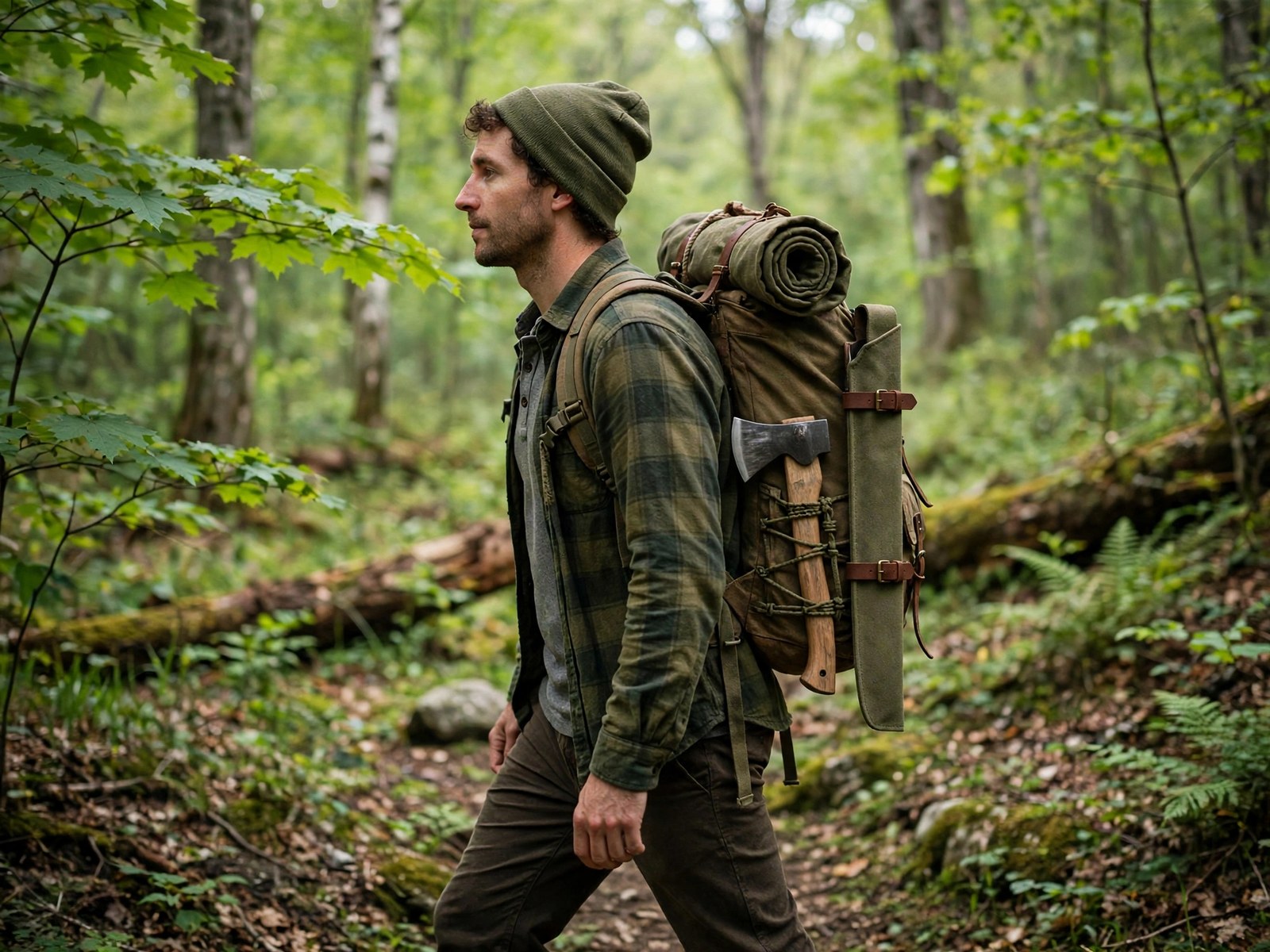
The best bushcraft backpacks keep your tools organized and within reach, carry comfortably through the woods, and stand up to the dirt, moisture, and hard use of building camp from scratch.
We scored 19 bushcraft backpacks. Durability came first, then tool carry, room and organization, comfort under a real load, weather protection, and weight. The scores rest on manufacturer documentation and more than 1,500 owner reports, read one by one. Every pick below is a research pick.
Our picks
- Best Overall and Best Overnight and Multi Day: Helikon-Tex Matilda, 8.6. The strongest all-round record in the field, with an axe carried behind its external pockets and room for several nights out.
- Best Premium: Karrimor SF Sabre 45, 8.1, provisional. A military pattern top loader that grows by about 25L with add-on side pockets.
- Best Budget: Wotony small tactical backpack, 6.3, provisional. Balanced scores and a quiet owner record at a true budget price.
- Best Day Pack: Helikon-Tex Bergen, 8.4. Designed tool pockets for an axe, a knife, and a folding saw, and a record with no failure pattern in it.
- Best Traditional: GOOTIUM Ranger, 5.6, provisional. Cotton canvas, leather, and metal hardware in the old rucksack pattern.
In this guide: the picks, the rest of the scored field, the full results, the short version, how to choose a bushcraft backpack, how we scored these packs, notes, and frequently asked questions.
We independently evaluate everything we recommend. We may earn a commission when you buy through links on this page. Commissions do not change a product’s score or pick status, and brands cannot pay for placement in this ranking.
Best Overall: Helikon-Tex Matilda
Pros
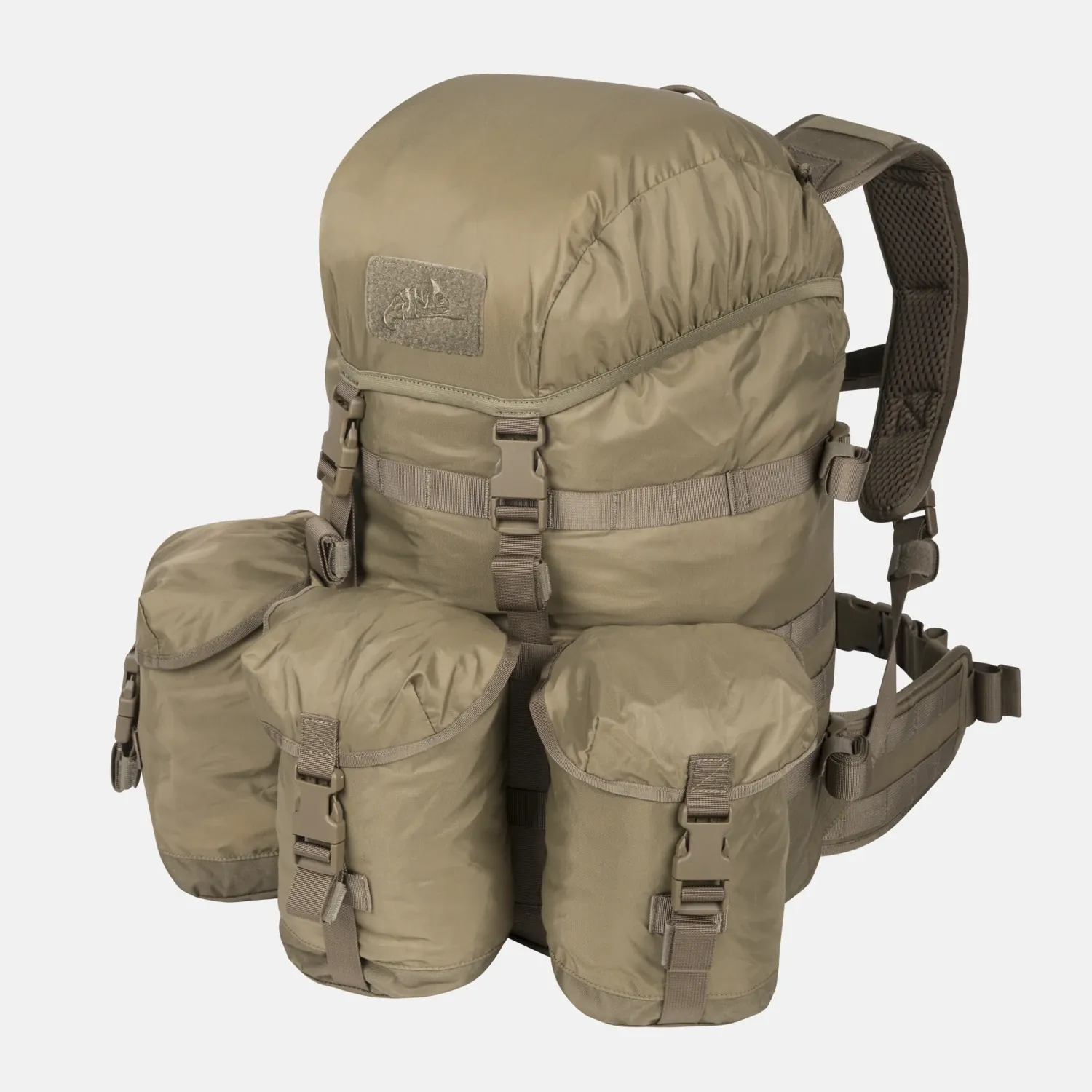
Axe rides behind its buckled external pockets
50L of room with a 39L main compartment
Wide hip belt and a clean structural record
Concerns
Back comfort reports split under load
DWR finish only, with no lining published
Weighs more than the day pack leader
The Matilda is built on a 500D Cordura shell with a flap and drawstring top. An axe rides behind its buckled external pockets. The 39L main compartment swallows a full overnight load, and the wide, removable hip belt carries it well.
Owners praise its room and its build in the same breath. No pack in this guide stands on a deeper record. For the strongest all-round bushcraft pack in this guide, look at the Helikon-Tex Matilda.
One pack takes two picks here. The Matilda holds Best Overall and Best Overnight and Multi Day on the same record.
Owner reports for this pack run to 90 across 3 sources, spanning 2018 to 2026. The recurring complaints are comfort complaints. Owners report back strain on longer carries, and a ceiling that shows up as loads grow. Its comfort score reflects them. A smaller wear pattern on the shell stands in the record too, but it is too slight to move the score.
The space inside is organized like a working pack, not a sack. Three large buckled pockets ride outside the main compartment. A zippered pocket sits on the flap, and a mesh pocket hides under it. Webbing inside and out takes add-on pouches wherever a trip asks for them.
Straps below carry a sleeping bag or a mat. The 39L main compartment stays free for food, clothing, and the cook kit while the tools ride in their pockets. Users who run it for several nights say everything has a place, and the place stays reachable in the dark.
It is comfortable too. The foam back panel wears a spacer mesh cover. The hip belt is wide and padded, and it comes off when a trip runs light. The shoulder straps are contoured, with a quick release fit.
A real minority of owners did find the foam backing causing back pain as the load and the miles add up. The score carries both halves of that record. A buyer with a sensitive back should treat the fit as the one thing to check.
Weather protection here is as much design as coating. The flap covers the drawstring top the way it should. The shell carries a DWR finish. Helikon-Tex makes no lining or rain cover for this pack, so a liner bag inside remains a good idea in sustained rain.
Its nearest rival is its own sister pack. The Bergen below matches it tool for tool and runs lighter. The Matilda pulls ahead on room, on its hip belt, and on the depth of evidence behind it, 90 owner reports against 30.
Specifications
| Model line | Helikon-Tex Matilda, Bushcraft Line (manufacturer spec) |
| Capacity | 50L total, 39L main compartment (manufacturer spec) |
| Weight | 1,686 g, about 3.7 lb (manufacturer spec) |
| Shell | Cordura 500D nylon (manufacturer spec) |
| Closure | flap and drawstring top with a snow collar, buckled external pockets |
| Hip belt | wide, padded, removable, with webbing rows (manufacturer spec) |
| Warranty | 2 years against defects in materials and workmanship (manufacturer terms) |
Best Premium: Karrimor SF Sabre 45
Karrimor SF Sabre 45
Pros
Grows by about 25L with zip on side pockets
Twin ice axe holders on the front
Shaped frame and padded hip fins
Concerns
Owner record is the thinnest behind any pick
Spec record rests on retailer pages
Highest price in the field
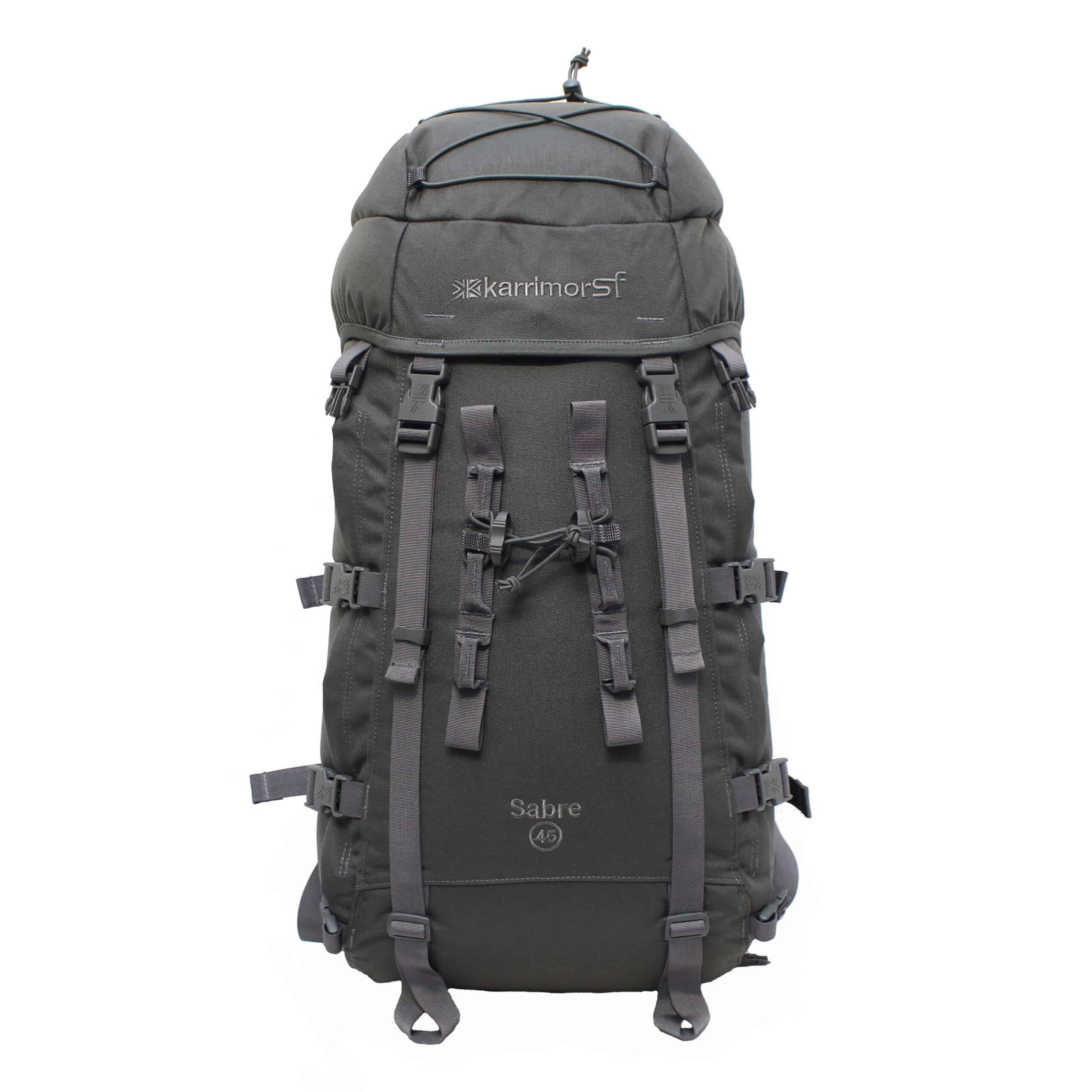
The Sabre 45 follows a proper military pattern. It is a 45L top loader in a 1000D class nylon, with a shaped internal frame, padded hip fins, and twin ice axe holders. Zip-on side pockets add about 25L more. It posts the strongest weather score of any pick in this guide, and its carrying system is the deepest here. For the premium end of bushcraft, built to be carried for decades, check the Karrimor SF Sabre 45.
Expansion is this pack’s signature. The side pockets come in pairs at about 12.5L each. They zip on for a long trip and come off again for a weekend. With a yoke, they serve as a small day pack of their own.
Owners in the community record walked 11 days in this pattern with the pockets fitted. The main compartment stays a simple, honest sack. Above it sits a zipped lid with an inner sleeve and mesh pockets.
Its weather score is well earned. The shell fabric carries a silicone and polyurethane elastomer coating and a water-repellent finish. The back system is a mesh design over a removable frame. The person carrying it can shape that frame to their own back. The hip fins are padded, with a quick-release fastener.
Its tool carry score rests on the twin axe holders and on tools riding separately outside the main compartment. The saw and edge parts of that score rest on thinner documentation than the axe part.
The honest limit is evidence, and it is stated here rather than buried. Owners have barely reported on this pack at all. The record holds 13 reports across 3 sources, with no dated span. Its durability figure is built from documented construction rather than a failure record.
That is why the durability score reads 6.0, the soft figure in its row. It says more about the record behind the pack than about the pack. Only 7 owner reports speak to wear at all, and the pack’s marketplace record is a single review. Nothing in that thin record reports the pack failing. The premium case rests on the rest of the row, a perfect tool carry score at 10.0, weather and weight at 9.0 each, and the highest total at the premium end of the field by a wide margin.
Its specification record, too, rests on retailer pages, because the maker’s own product page publishes no spec list. What carries the pick is the design, a pack drawn for military load carrying with the strongest expansion in the field. Buyers who want owner proof in depth should look at the Helikon-Tex Matilda.
Specifications
| Model line | Karrimor SF Sabre 45, PLCE side pockets compatible (retailer spec) |
| Capacity | 45L, plus about 25L with the add on side pockets fitted (retailer spec) |
| Weight | 1,840 g, about 4.1 lb (retailer spec) |
| Shell | KS100e 1000D class nylon, silicone and polyurethane coated (retailer spec) |
| Closure | top loading with a zipped lid compartment |
| Frame and hip belt | removable internal frame, shapeable to the back, padded hip fins |
| Warranty | manufacturer warranty through the place of purchase, no duration stated (manufacturer FAQ) |
Best Budget: Wotony Small Tactical Backpack
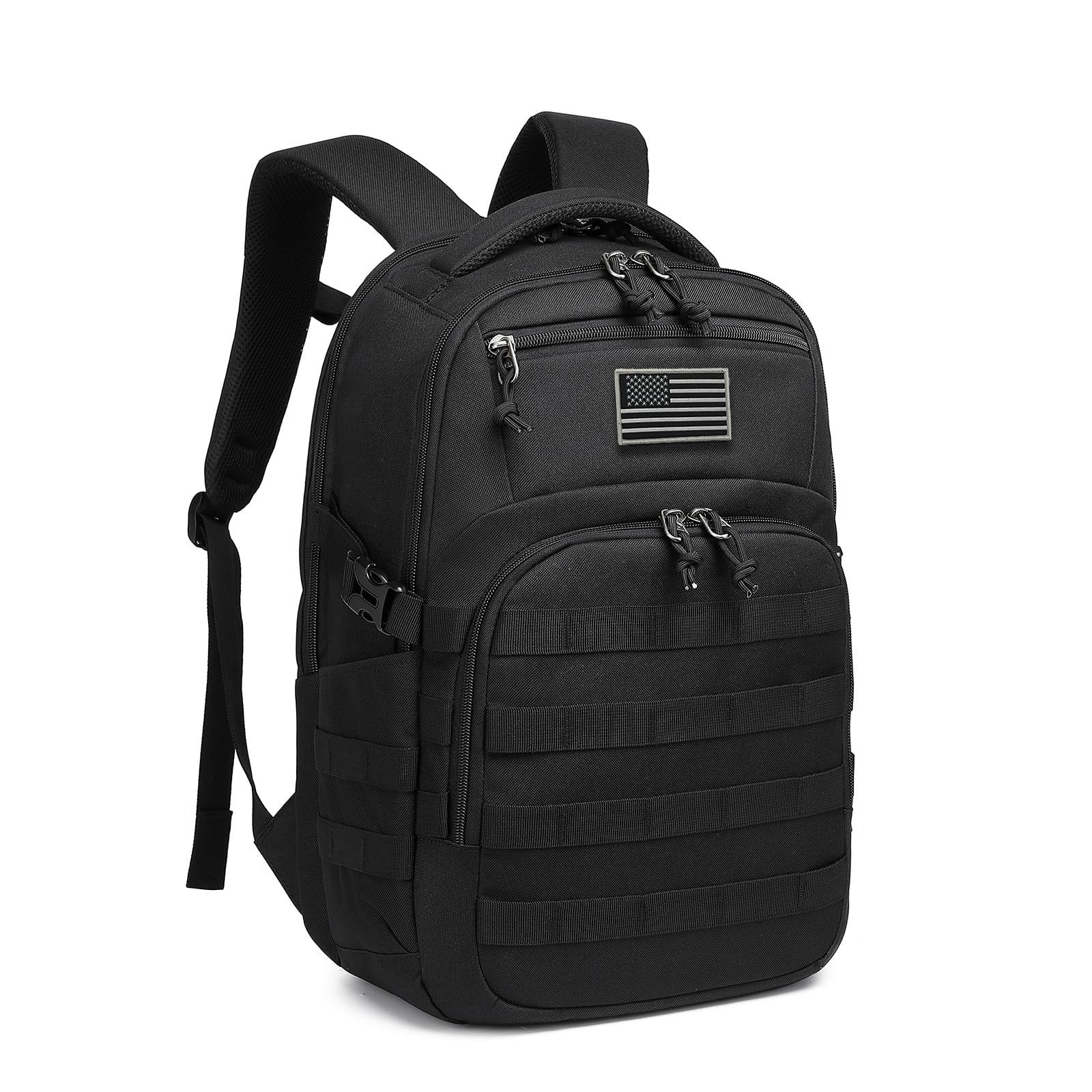
Wotony small tactical backpack
Pros
True budget price
Balanced scores with no weak criterion
Quiet owner record, few failures reported
Concerns
Owner record is young at about 6 months
Sold under two maker names
Tool carry is modest at 5.0
The Wotony is the budget end of this guide. It is a small tactical pack in the 25L class, with webbing across its front and sides, balanced scores on every criterion, and an owner record that reports few failures. It carries a day’s tools and kit, rides light at about 1.4 lb, and leaves money in the budget for other gear. For a true budget bushcraft pack, pick the Wotony small tactical backpack.
Balance is the whole case. Its lowest criterion stands at 5.0 and its highest at 7.5. A buyer gives up a little everywhere rather than a lot somewhere. That is the right shape for a first pack or a spare.
The documented build behind those figures is a 900D class fabric with a PVC coating. Breathable mesh padding covers the back and straps. Webbing on the front, sides, and shoulder straps takes pouches and lashings.
Tools ride lashed to that webbing. There is no dedicated axe pocket or saw sleeve anywhere on the pack. Its capacity honestly fits light tools, a tarp, a cook kit, food, and a warm layer. A bedroll can strap below if a night out stretches the plan.
The owner record is fairly clean for its price point. Across 100 reports, zipper complaints stand at 2 owners, one short of the level that counts as a pattern. No other failure theme comes close.
Hikers use it for day trips and short excursions. The complaints that do appear are about size expectations and small comforts, not pack construction. Its comfort in use rests on thinner evidence than its durability does.
The nearest alternative shows what the money buys. The OneTigris WILD ROCKET scores 8.0, with the strongest weather score in the field and axe holders on both sides, but it costs over 3 times this pack’s price. A buyer whose budget stretches that far gets a stronger pack. A buyer whose budget is firm gets this one.
Its owner record is young, about 6 months of reviews against the 12 months our method asks for, and this pick will be rescored as that record grows. Skip it for multi day loads. Skip it too if a named maker’s warranty matters to you, because neither maker behind this listing family publishes warranty terms for it.
Specifications
| Model line | Wotony small tactical backpack, sold in a listing family that also stands under the CVLIFE name (see Notes) |
| Capacity | about 25L (retailer spec) |
| Weight | about 1.4 lb (retailer spec) |
| Shell | 900D class high density fabric (retailer and maker spec) |
| Closure | zippered compartments, two way zippers |
| Hip belt | waist strap fitted, padding form not documented |
| Warranty | no terms published by either maker for this model |
Best Day Pack: Helikon-Tex Bergen
Pros
Best documented tool carry in the field
No failure pattern in its record
Light at about 3.1 lb with a real hip belt
Concerns
Main compartment is 18.7L of the 25L total
Back panel form goes unnamed by its maker
Premium money for a day pack
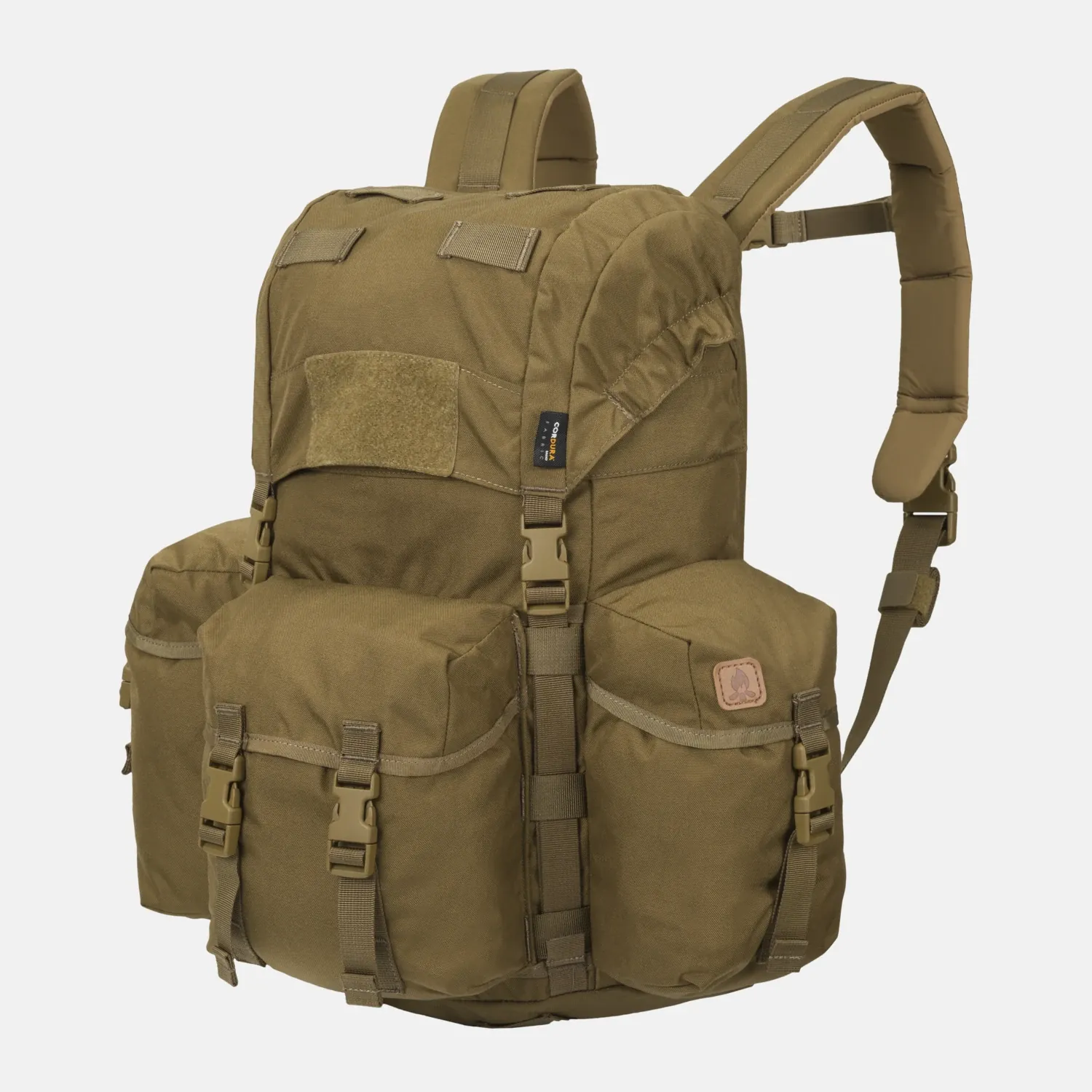
The Bergen is the day pack for people who need room for the tools. Three pass-through pockets carry an axe. Two more pockets take a knife or a folding saw. Every sharp tool rides outside the main compartment, reachable in seconds and separated from food and clothing.
Its owner record has no failure pattern in it. At about 3.1 lb, it carries its size the way a day pack should. For a day in the woods with sharp kit, check the Helikon-Tex Bergen.
No pack in this field documents its tool carry the way this one does. The maker’s own specification names the three axe pass-through pockets and the knife and saw pockets. The middle external pocket is great for water or food. The side pockets take bottles.
Webbing on the bottom and the flap can carry a jacket or a sleeping bag when the day runs long. That is why its tool carry stands at 10.0, the fullest score the criterion gives. The score rests on provisions a buyer can verify from the maker’s page, not on promises. Users who organize a day around an axe and a saw are exactly its audience.
The 25L size needs some honesty here. The main compartment holds 18.7L of that total. The rest sits in its external pockets. The drawstring chimney at the top adjusts the compartment to the load.
For a day list, axe, saw, knife, tarp, cook kit, food, water, and a warm layer, that is the right volume. The community praises the Bergen for exactly this, a small pack enforcing a lighter loadout. For an overnight list it runs tight. The Matilda above is the same maker’s answer at twice the volume.
Its owner record needs no apology and gets none. Across 30 reports from 3 sources, no failure theme of any kind reaches the level that counts as a pattern. There are no structural complaints. Users praise the tool pockets first and the build second.
Where owners divide, they divide over comfort on the back. Some find the stiffened panel exactly right. Others want more shaping. The maker does not name the back panel’s form in its own text. That is why comfort stands at 7.0 while the tool and durability scores stand higher.
Specifications
| Model line | Helikon-Tex Bergen, Bushcraft Line (manufacturer spec) |
| Capacity | 25L total, 18.7L main compartment (manufacturer spec) |
| Weight | 1,427 g, about 3.1 lb (manufacturer spec) |
| Shell | Cordura 500D nylon (manufacturer spec) |
| Closure | flap over a drawstring chimney top, buckled external pockets |
| Hip belt | removable, adjustable (manufacturer spec) |
| Warranty | 2 years against defects in materials and workmanship (manufacturer terms) |
Best Traditional: GOOTIUM Ranger
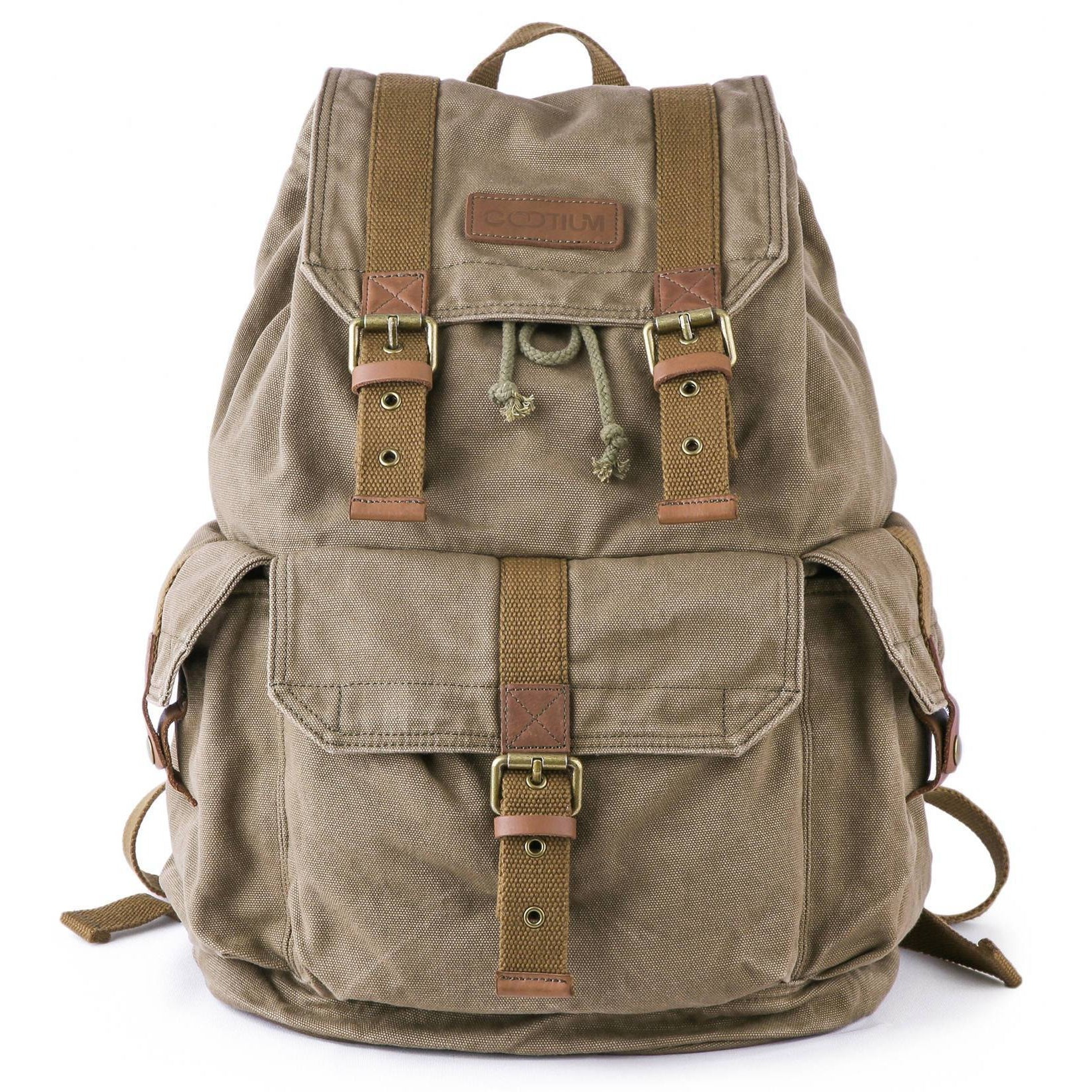
GOOTIUM Ranger
Pros
Heavy cotton canvas with leather trim
Lifetime warranty on its hardware
Light at 2.1 lb and simple to repair
Concerns
Canvas carries no coating and sheds no rain
No hip belt is fitted
No tool provisions of any kind
The GOOTIUM Ranger is the traditional rucksack in its honest form. It is built from 16 oz cotton canvas with leather trim and metal hardware, with a flap and drawstring top and stitching reinforced where the straps anchor. It weighs about 2.1 lb.
Its functional hardware carries a lifetime warranty from the maker. In return it asks that you keep it dry and mend it as it wears, the way canvas packs have always been kept. For a vintage pack at a fair price, look at the GOOTIUM Ranger.
This slot exists because a real camp of bushcraft buyers chooses canvas on purpose. This pack is the only one in the field that meets the slot’s materials definition on documented evidence, heavy canvas and leather construction stated by the maker itself. The canvas is washed rather than waxed, in the brand’s own word. The traditional case for it stands as its makers state it.
Canvas takes rough ground and abrasive loads with good grace, and it tolerates camp life that pits and melts thinner synthetics. The build record behind it is strong. Its durability figure of 9.5 stands on owner reports, with reinforced stitching at the anchors and metal fittings where budget packs use plastic.
The limits are plain. The canvas carries no coating, and the maker claims no water resistance for it. Its contents ride in a liner in wet weather.
No hip belt is fitted. Its comfort score of 3.5 confines it to day loads and light overnight loads, carried the old way, on the shoulders.
Its tool carry is a documented absence rather than a gap, so the axe rides lashed or in hand. Buyers who want those provisions designed in should take the Bergen or the Matilda and leave this pack to the camp it serves.
Its owner record is deep, 103 reports across 3 sources. Its durability praise is the strongest any traditional pack in this field can show. Owners describe years of use, hardware still working, canvas scuffed and sound.
The record falls about a month short of the span our method asks for. Four owners in it report closures giving way. We record that shape here and recheck it as the record matures.
Specifications
| Model line | GOOTIUM 21101AMG, the Ranger (manufacturer spec) |
| Capacity | about 30L in the Large, about 23L in the Small (manufacturer spec) |
| Weight | 2.1 lb in the Large (retailer spec, the maker publishes no weight) |
| Shell | 16 oz cotton canvas with leather trim and metal hardware (manufacturer spec) |
| Closure | cover flap over a drawstring main compartment, leather strap and snap closures on the pockets |
| Hip belt | none fitted (documented absence, manufacturer record) |
| Warranty | lifetime hardware warranty on functional components (manufacturer terms) |
The rest of the scored field
OneTigris WILD ROCKET 45L 8.0
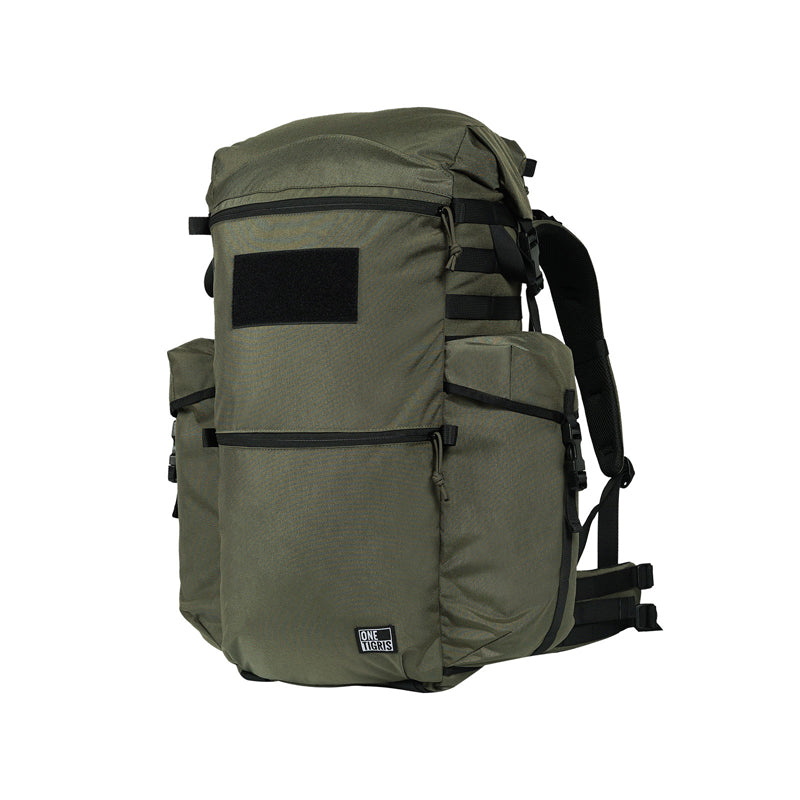
The WILD ROCKET is the strongest pack in this guide that holds no pick. It posts the field’s best weather score at 9.5, on a documented double polyurethane coating over a water repellent finish. It carries axe holders on both sides by design, and it rolls its top closed the way the heritage camp prefers. Across its 49 Amazon reports, every one of the 34 owners who speak to wear praises it. There is no wear complaint anywhere, and its capacity praise runs nearly as clean.
What holds it out of the picks is arithmetic and one flag. Its Amazon record holds 49 counted reports. That is one short of the count our method needs before owner evidence can move a score. The figures resting on that record stand as record figures, and the total as provisional.
Three owners inside that single source report back discomfort on longer carries. We name that flag here rather than price it. It is the nearest alternative to the budget pick and the strongest mid-priced option in the field.
Maxpedition Falcon-II 6.2
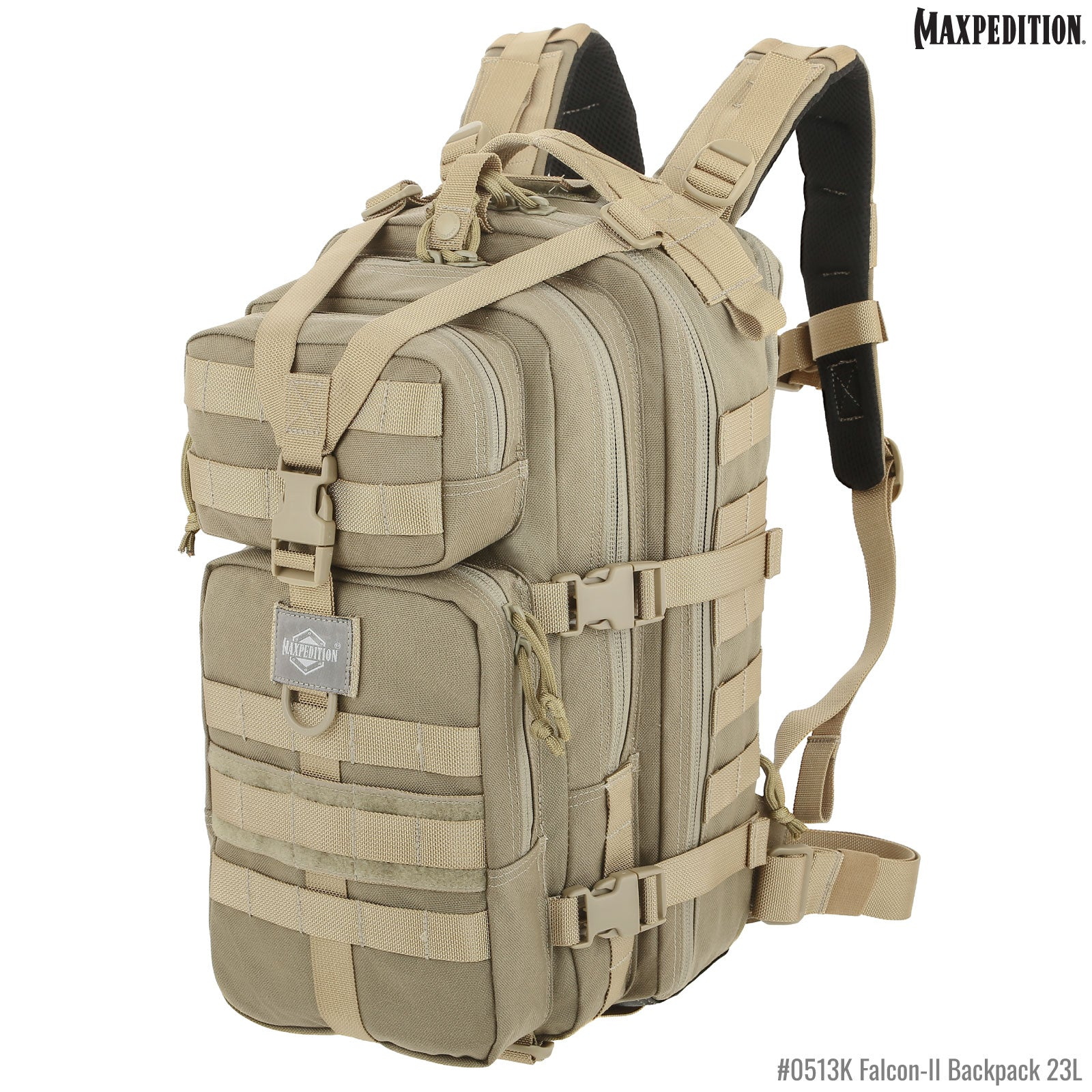
The Falcon-II is the best-known pack in this class. It posts a durability figure of 9.5 and the field’s broadest attachment record, webbing on every face. Owners report decade-scale service, with packs still working after 10, 11, and 15 years. Its wear praise is the deepest in the field.
Across 108 owner reports from 4 sources, spanning 2019 to 2026, the recurring complaint is back comfort. Its comfort score is priced for that pattern under our method. Buckle failures stand beside it at pattern strength, 7 owners with 5 buckle failures among them. Buckles sit in a flag theme in our method, with no scored home.
That record is stated here in full, and it moves no number. Buyers who prize build above tool design will keep choosing it. This guide scores it as exactly that.
Direct Action Dragon Egg Mk II 6.2
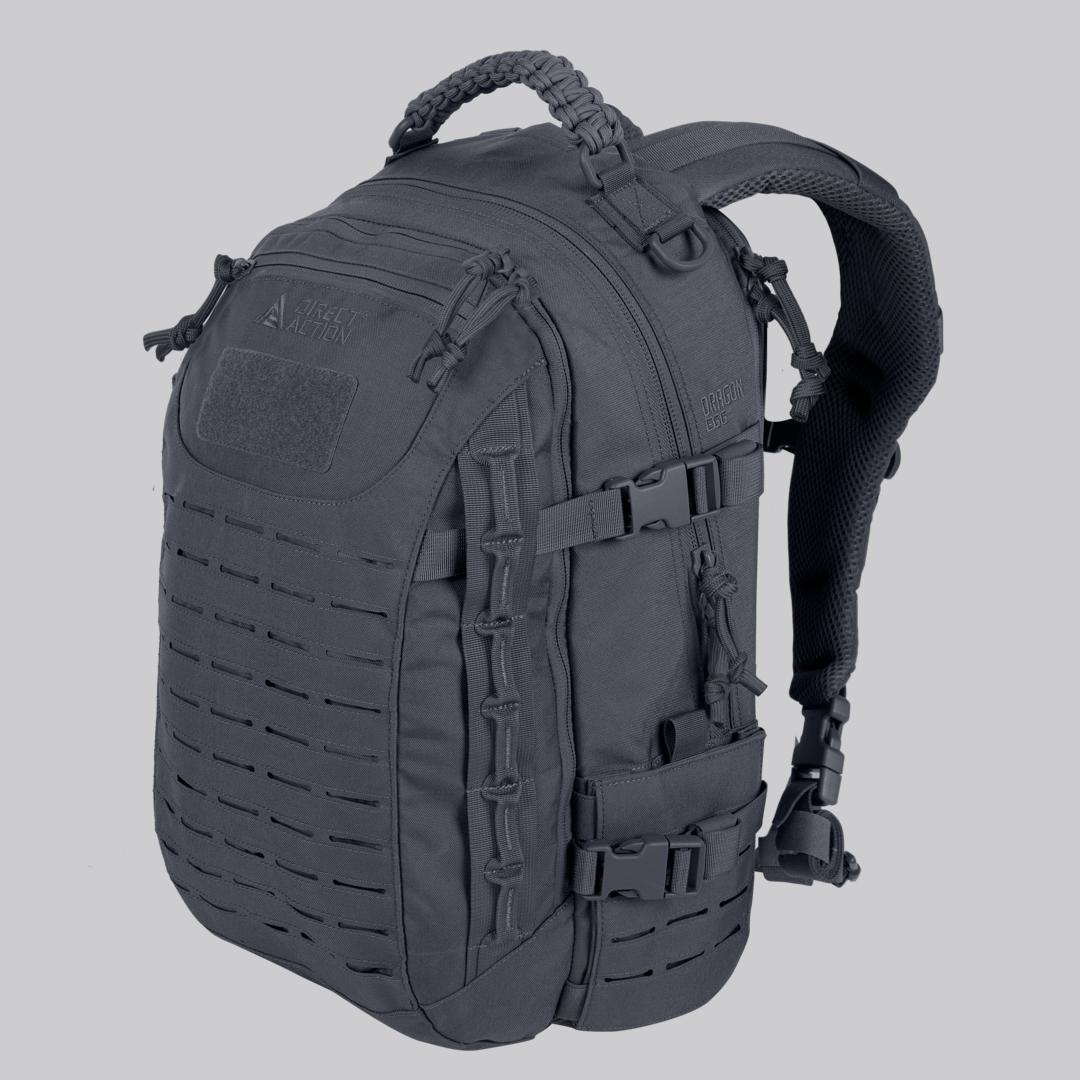
The Dragon Egg is a polished design in the 25L class. It posts friendlier comfort and organization scores than any rival at this size, with laser-cut webbing and a ventilated stiffened back. Owners genuinely praise its organization. Across 116 owner reports from 3 sources, the recurring theme is capacity.
Nine owners found the pack smaller than the load they sized it for, and its capacity score is priced for that pattern under our method. Part of that signal is expectation. Buyers asked a pack of this class to swallow loads it never promised, and the priced score carries that caution with it.
A smaller wear pattern stands in the record, on the same stated basis as the Matilda’s, and moves nothing. Its weather score of 4.5 is its honest weakness, an exposed zip top with no rain cover documented.
5.11 RUSH24 2.0 5.9
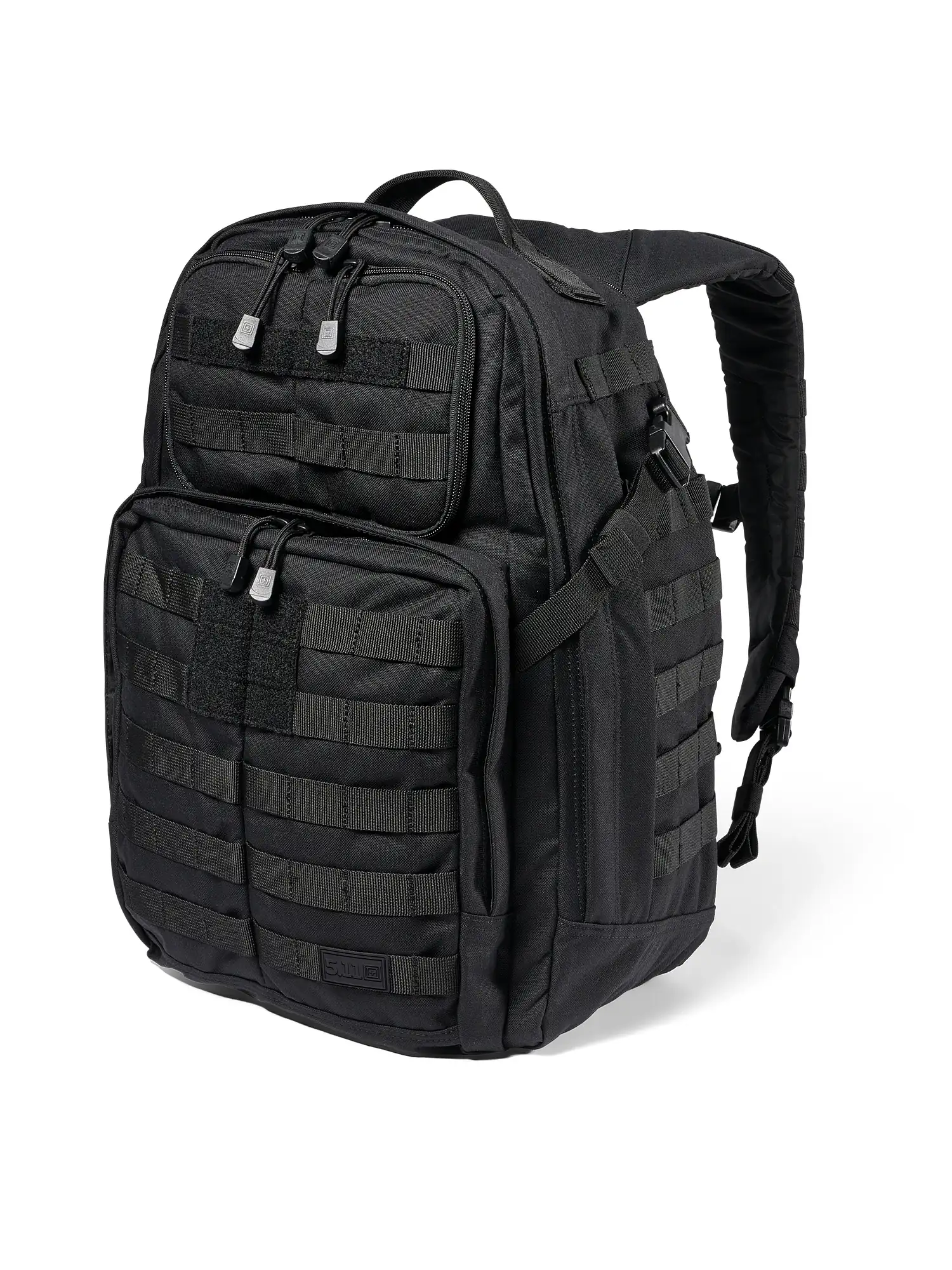
The RUSH24 posts the best capacity and organization score in the field, 9.5. Its zipper record costs it the contention its design earns. Across 115 owner reports from 3 sources, zippers are the recurring failure. Its durability score is priced for that pattern under our method. That brings the pack to 5.9 and leaves it eligible for picks it then wins none of.
The same record carries a counterweight, and we print both. Among its Amazon reports, zipper praise runs 9 to 1 against zipper complaints. The pattern rests on the thinner record away from Amazon for its severity weight. The pack ships with no waist belt in the box, a fact its comfort score carries. It remains a strong organizer with a priced warning on its zippers.
Eberlestock Switchblade 5.9
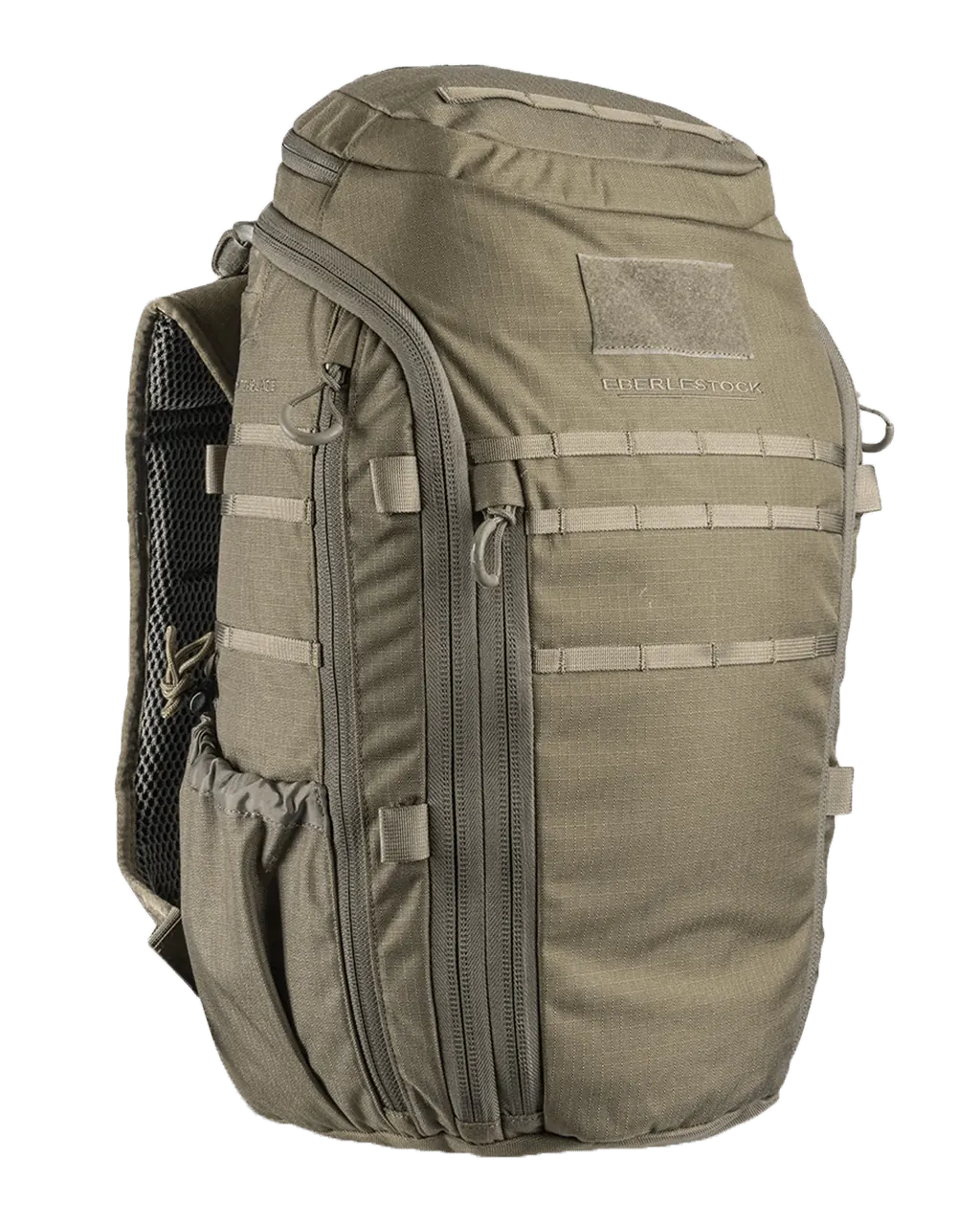
The Switchblade is a concealed carry design first and a bushcraft pack second. Its maker’s complete feature list names weapon carriage in detail and tool carriage nowhere. Its tool carry stands at 0.0 on documented absences, the same treatment the Falcon-II receives.
What it does well is capacity and organization, at 8.0, with a full zip main compartment and a documented lifetime warranty. It ships with no hip belt. Its maker states that plainly, and its comfort score of 5.0 carries it.
Its owner record holds no pattern of any kind. It serves buyers whose carry needs run the other way. It is scored here so the comparison exists in the open.
REEBOW GEAR 40L 5.8
The REEBOW is a budget pack with real capacity and a comfort ceiling owners put near 25 lb of load. Its score is priced down on a failure record that recurs across four themes at once. Its owner record comes from a single listing family, 104 reports spanning 2017 to 2026. Zipper, strap, and coating failures each recur inside it.
Its durability score is priced for all three, bringing the pack to 5.8. Seam failures recur too. They are recorded and described here, but that theme has no scored home in our method, so it moves no number.
Two cautions travel with the record wherever it is stated. The reports were read in the order the listing presents them, most helpful reviews first. That weights them older and more detailed than a recent first read. Its 3 outright zipper failures each ended service after about 3, 5, and 6 years of daily use.
They are wear outs at the end of long service, not early failures. The pack also stands at the edge of this guide’s class definition. Its attachment and build read borderline against the class test, so it cannot hold a pick in this edition on that ground alone. Its listings sit at the budget end of the field and vary by color and seller.
Three more scored packs
The Mystery Ranch 2 Day Assault, 5.8, pairs the strongest positive comfort record in the field with a lean 3.0 lb build and no tool provisions. Its capacity complaints stand at 2 owners, one short of a pattern. It is a fine urban and travel pack, scored honestly in a class it was not drawn for.
The 5.11 Rush 12 2.0, 5.7, posts near top durability and organization. It has no tool provisions and no hip belt in the box, and it carries the weakest comfort score among the scored packs, at 4.0. No failure theme in its record reaches the count our method treats as a pattern. Its buyers get build and order at the price of carry comfort.
The Mystery Ranch Blitz 35, 5.3, provisional, owns the best comfort score in the entire field, 9.5 on a framed harness. Its total understates its design more than any other scored pack’s. Its owner record for durability runs to 8 informative reports, under the floor our method needs.
Its durability is scored from documentation alone, and one deeper owner record is the whole cure. Its back comfort complaints stand at 2 owners, one short of a pattern, named here as a flag. It is a comfort led pack waiting on evidence.
Not recommended: Condor 3 Day Assault 5.3
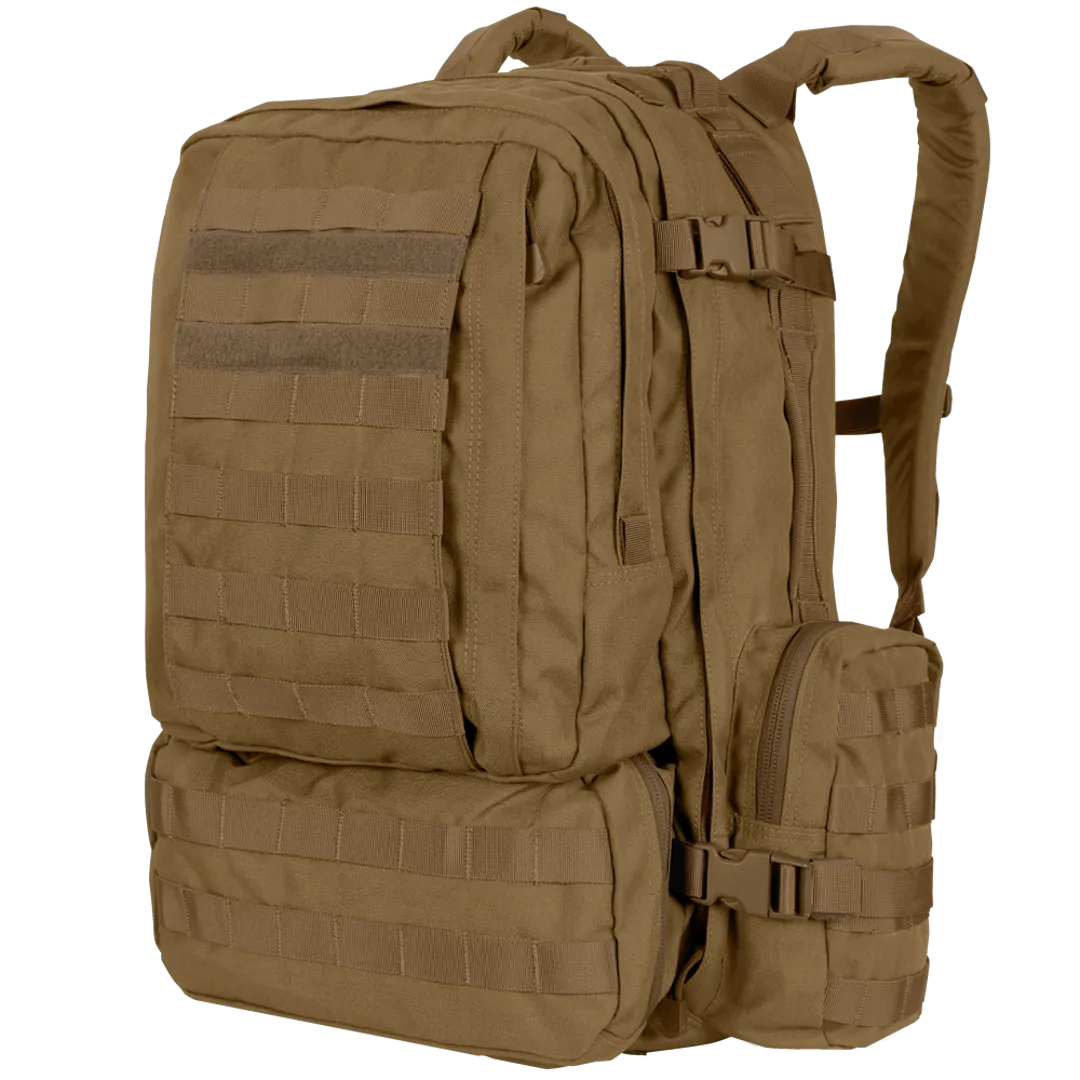
We do not recommend this pack. Its record is printed here so the call can be judged rather than trusted. The pack itself has real strengths. A comfort score of 8.5 and a capacity score of 8.0 stand behind it, and users praise its room.
In 117 owner reports across 4 sources, spanning 2019 to 2026, zippers are the recurring failure. Twelve owners report them at a level that matters, and 6 report zippers failing outright. Seam failures recur behind them at 3 owners. Its durability score is priced for the zipper pattern under our method, which brings the pack to 5.3.
The pattern also stands at the strength our method reserves for outright exclusion. It is a structural failure theme at the stated rates, on a fully qualified record. On that basis the pack is excluded from every pick in this edition. One qualification belongs beside the call.
Half of its Amazon severity weight rests on purchases the listing does not mark as verified. On verified purchases alone, its modeled failure rate halves. The pattern itself does not disappear, because it also stands on reports away from Amazon.
The maker’s own page publishes neither the pack’s main material nor its weight. The record notes that silence rather than filling it. The Condor 3 Day Assault stands in our results with its score shown, and it receives no recommendation from this guide. Readers who came here for this pack’s room at a working price will find the job done better by the picks above, the Wotony small tactical backpack at the budget end and the Matilda overall.
Named without a total
Four packs stand in the register with owner records and no total, each for the same stated reason. A criterion with nothing scored inside it cannot be averaged away. For each of these packs, the tool carry criterion stands wholly undocumented. The method names them and prints their evidence rather than inventing a figure.
The Maxpedition Falcon-III holds the field’s highest durability figure, 10.0, on a qualified record. Its maker’s fetched specification list never says whether it carries tools, so it stands one documentation step from a total. Its record holds one pattern, 3 owners reporting the same missing internal organizer, priced into its organization figure as a record figure. It would contest the premium end if its tool record ever completes. On its converted figures, it still would not take the Sabre’s pick.
The LHI 45L carries a quiet record, and a young one. It holds 100 reports spanning under 3 months. Its largest complaints stand at 4 buyers each, on organization and hardware. A single outright strap failure stands as a flag. It waits on time, like several packs in this field.
The Hannibal Tactical pack’s record spans all but about 9 days of the year our method asks for. A recheck removed one of its reports as a used unit account. Its zipper shape stands at 7 owners with 1 outright failure, weaker than it first read. It is the least expensive name in the register and one of the least evidenced.
The kookoomia 50L carries the strongest warning shape in this entire field, on one of its youngest records. It holds 100 reports spanning about 3 months, against a listing pool of 853 written reviews. Its shape is stated here because it deserves stating plainly. Strap failures stand at 10 owners with 9 outright.
Seam failures stand at 10 owners with 8 outright. Zipper failures stand at 9 owners with 7 outright. And 23 of its 100 reports carry a structural failure at the highest level our coding uses.
No score in this guide rests on that record. The span fails the method’s requirement outright, and for the same reason the pack is no exclusion candidate this edition either. If a deeper read of its reviews extends the record to a full year with the same shape, the candidacy follows on the numbers alone. It is a pack to leave alone until its evidence matures, on the strength of the evidence already here.
Full results
Scores run from 0 to 10 under scorecard OF-BUSHCRAFT-PACK-1.1, with criterion scores in the order the method weights them. This article prints no prices, because prices move. The product links show the current price. Failure patterns are priced into the scores shown and described at each pack’s section. They never appear in this grid, where they would read as ratings.
| Product | Score | Durability | Tool carry | Capacity | Comfort | Weather | Weight | Evidence covered | Status |
|---|---|---|---|---|---|---|---|---|---|
| Helikon-Tex Matilda | 8.6 | 9.0 | 8.5 | 9.0 | 8.0 | 8.0 | 9.0 | 92.8% | Best Overall, Best Overnight and Multi Day |
| Helikon-Tex Bergen | 8.4 | 9.0 | 10.0 | 7.0 | 7.0 | 8.0 | 8.5 | 92.8% | Best Day Pack |
| Karrimor SF Sabre 45 | 8.1 | 6.0 | 10.0 | 8.0 | 8.5 | 9.0 | 9.0 | 71.5% | Best Premium, provisional |
| OneTigris WILD ROCKET 45L | 8.0 | 8.5 | 7.5 | 8.0 | 6.5 | 9.5 | 6.5 | 92.8% | Provisional |
| Wotony small tactical | 6.3 | 7.5 | 5.0 | 6.0 | 5.5 | 6.5 | 7.5 | 81.8% | Best Budget, provisional |
| Maxpedition Falcon-II | 6.2 | 9.5 | 0.0 | 8.0 | 6.0 | 6.0 | 6.5 | 95.0% | Pattern priced |
| Direct Action Dragon Egg Mk II | 6.2 | 9.0 | 0.0 | 8.5 | 8.0 | 4.5 | 6.5 | 87.8% | Pattern priced |
| 5.11 RUSH24 2.0 | 5.9 | 9.0 | 0.0 | 9.5 | 6.5 | 3.0 | 7.0 | 95.0% | Pattern priced |
| Eberlestock Switchblade | 5.9 | 8.92 | 0.0 | 8.0 | 5.0 | 6.5 | 5.5 | 95.0% | Scored |
| Mystery Ranch 2 Day Assault | 5.8 | 8.5 | 0.0 | 6.5 | 8.5 | 4.0 | 8.5 | 87.8% | Scored |
| REEBOW GEAR 40L | 5.8 | 6.5 | 5.0 | 5.5 | 6.5 | 4.0 | 8.0 | 81.8% | Pattern priced, provisional |
| 5.11 Rush 12 2.0 | 5.7 | 9.5 | 0.0 | 8.5 | 4.0 | 4.5 | 6.5 | 95.0% | Scored |
| GOOTIUM Ranger | 5.6 | 9.5 | 0.0 | 6.5 | 3.5 | 5.5 | 9.0 | 95.0% | Best Traditional, provisional |
| Mystery Ranch Blitz 35 | 5.3 | 5.5 | 0.0 | 8.0 | 9.5 | 5.0 | 6.0 | 70.5% | Provisional |
| Condor 3 Day Assault | 5.3 | 7.5 | 0.0 | 8.0 | 8.5 | 2.0 | 5.0 | 90.5% | Excluded, not recommended |
| Maxpedition Falcon-III | No total | 10.0 record | Not documented | 5.45 record | 5.5 record | 6.0 record | 5.0 record | n/a | Named, tool carry undocumented |
| LHI 45L | No total | 7.47 record | Not documented | 6.5 record | 5.0 record | 6.0 record | 7.5 record | n/a | Named, evidence young |
| Hannibal Tactical | No total | 7.83 record | Not documented | 6.0 record | 6.5 record | 3.0 record | 8.0 record | n/a | Named, evidence young |
| kookoomia 50L | No total | 6.10 record | Not documented | 5.5 record | 7.0 record | 3.5 record | 7.0 record | n/a | Named, warning shape stated |
How to choose a bushcraft backpack: our buying guide
Start with your load list and trip length, then choose the litres that accommodate them. Size is the question almost every buyer asks, and the useful answer depends on what you need to carry for a day, a night or longer.
Write down the bulky items as well as the tools. An axe, folding saw, knife, change of clothes, cooking gear, hammock and tarp make a more useful starting point than a capacity figure alone. Decide where each item will ride, including anything you plan to strap outside.
Choose capacity by trip
For a day trip, start around 20 to 30L of total capacity. Our Best Day Pack, the Helikon-Tex Bergen, has an 18.7L main chamber and 25L total capacity, with dedicated places for tools outside the main chamber. For a day list built this way, look at the Helikon-Tex Bergen.
For 1 night out, community guidance commonly points to about 35 to 45L. The question is whether your shelter, sleeping gear, spare clothes and cooking kit fit alongside your tools in the space you intend to use. A pack around 25L can suit a day trip, but for a night out the answer depends heavily on how much gear you carry and where it goes.
Strapping a sleeping bag and bedroll outside can change the capacity you need by 10L or more. Check that the intended external carry leaves your tools accessible and gives the rest of the load a practical home. Our Best Overnight and multi-day pick, the Helikon-Tex Matilda, offers 39L in its main compartment and 50L total, with external pockets and pass-through slots for tools. For a night out packed this way, check the Helikon-Tex Matilda.
For extended trips, community guidance starts around 50L and goes up. Expansion can give a smaller pack room for a longer trip when needed. Zip-on side pockets, sometimes called rocket pockets, and a roll-top that can grow are useful forms of insurance. Our Best Premium pick, the Karrimor SF Sabre 45, has zip-on PLCE side pockets for expansion, and an owner has walked 11 days in one with the pockets fitted.
Give the axe and saw a home
Look for a named axe holder, a sleeve, a pass-through slot or a side pocket long enough for your axe or folding saw. The useful question is where each tool sits when the pack is closed and loaded. External access lets you reach a tool without opening the main compartment, while a separate pocket or holder keeps sharp gear apart from clothing and other soft kit.
Our Best Day Pack, the Helikon-Tex Bergen, provides 3 axe carry points and 2 saw or knife pockets. The Helikon-Tex Matilda uses 3 buckled external pockets with pass-through slots, so an axe can ride outside the main compartment. The Karrimor SF Sabre 45 has twin ice axe holders.
Inspect tool pockets and their attachments with wear in mind. The owner record includes a knife and saw pocket that tore after about 4 to 5 years of constant use, then was sewn back and kept in service. A tool location should suit both the shape of the tool and the wear it will put on the pack.
Choose fabric and care together
Canvas and Cordura nylon offer different combinations of appearance, weight, and upkeep. The traditional camp values waxed canvas for campfire and thorn exposure, claiming that sparks can melt synthetics and thorns can fray lighter fabrics. That is the traditional camp’s claim rather than a tested fact, and it arrives paired with a care routine the synthetic side never asks for.
Waxed and washed canvas need attention to cleaning and thorough drying to guard against mold. Water repellent also needs reapplying over time. Check which canvas treatment a listing actually specifies, since washed and waxed describe different finishes.
Our Best Traditional pick, the GOOTIUM canvas rucksack, uses washed cotton canvas with leather trim and metal hardware. Its Large size is about 30L, and its frameless soft rucksack build weighs 2.1 lb. That combination suits a buyer who wants a heritage style and accepts the associated care. For the heritage route with that care accepted, look at the GOOTIUM Ranger.
For synthetic packs, community buying guidance treats 500D and up Cordura with double-stitched seams as a starting point for field use. Buyers also debate whether 500D is enough or whether they need 1000D. The Helikon-Tex Matilda and Helikon-Tex Bergen use 500D Cordura, while the Karrimor SF Sabre 45 uses 1000D class fabric.
Compare weight with fabric and repairability in mind. The Helikon-Tex Matilda weighs 1,686 g, or about 3.7 lb, while the GOOTIUM canvas rucksack weighs 2.1 lb. Their capacities and builds differ, so use those figures as prompts to inspect the whole pack and the load it is meant to carry.
Fit the back system to the load
Bushcraft loads in this guide commonly run from 25 to 40 lb, so comfort deserves attention before purchase. A hip belt moves weight onto the hips, and a back panel affects how the pack feels over miles. Owners report comfort complaints with military day packs worn high and sweat complaints with flat back panels.
Try a pack on loaded before spending serious money. Use the weight and bulk you expect to carry, then check the hip belt, shoulder fit and back length together. Taller buyers should look for a back length that adjusts.
Keep your expected load in view when considering a budget tactical pack. The owner record places a comfortable load ceiling near 25 lb for a budget tactical pack, while many packed bushcraft loads extend beyond that. Our Best Premium pick, the Karrimor SF Sabre 45, has a removable frame, giving buyers another back system feature to consider.
Pick a layout that suits your tools
MOLLE webbing gives buyers places to attach axe sheaths and tool rolls where they want them. If you like to arrange external gear yourself, check where the webbing sits and how the attached tools will affect access and balance. Full webbing also adds weight and can pull a pack’s balance off.
A traditional layout offers another route. Buyers who prefer clean lines often value 1 or 2 useful external pockets for the gear they reach for most. Choose the arrangement that gives your own tools secure, reachable homes and leaves the load comfortable to manage.
Read the listing closely
Compare total capacity with main compartment capacity. Brands can state both figures, and they can differ by 10L or more. Use total volume to compare size bands, then check the main compartment figure against the items you want inside it.
The Helikon-Tex Matilda illustrates the distinction with 39L in the main compartment and 50L total. The Helikon-Tex Bergen has 18.7L in its main chamber and 25L total. External capacity can be useful, but its value to you depends on what fits in those pockets and how you intend to organize the load.
Check stated empty weight alongside the fabric, pockets and webbing you are getting. Look closely at the closure and lining too. Roll tops and flap tops shed rain differently from a bare exposed zipper, and a separate rain cover is a common backstop. Owners also identify zippers, shoulder strap attachments, coatings, linings and tool pockets as places where problems can develop.
Where a specification is undocumented, seek clarification before relying on it. Check that the listing identifies the real maker, since name collisions occur in this niche, and find out what warranty stands behind the pack. Those checks are especially useful when comparing listings that look similar but provide different levels of detail.
Set a budget around use
The new pack market sorts into 3 tiers, a budget end, a working middle, and a premium end. Knowing which tier you are shopping in helps set expectations before you compare the capacity, tool carry and back system you need.
Our Best Budget pick, the Wotony small tactical backpack, sits at the budget end of the field in the 25 to 35L family. Its owner record is still young, at about 6 months of reviews, so keep that limited history in mind. Our Best Traditional pick, the GOOTIUM canvas rucksack, sits at the budget end too.
The Helikon-Tex Matilda and the Helikon-Tex Bergen sit in the working middle of the field, and the Karrimor SF Sabre 45 sits at the premium end. Grade 1 military surplus, meaning used and serviceable, runs inexpensive, a small fraction of what the premium end costs new, and is a separate route from the new pack tiers.
Think about cost per use as well as purchase price. A pack used weekly for 5 years costs less per use than a cheap pack replaced every year. Match that calculation to how often you expect to go out and whether the pack has the features your load demands.
What to check first between 2 finalists
Start with the load list and confirm where the shelter, clothing, cooking gear and other essentials fit. Next, give the axe and saw accessible homes apart from soft kit. Then compare the closure and fabric, followed by the back system with the pack loaded.
Finish with the listing. Check main and total capacity, stated weight, the maker and warranty, and resolve any specifications the seller leaves undocumented. The better choice is the pack that answers those practical questions for your trips and the way you carry your gear.
How we scored these packs
Every figure in this guide comes from one published method, scorecard OF-BUSHCRAFT-PACK-1.1. The numbers can be audited rather than admired. Six criteria carry the weights. The weights follow what buyers in this class say decides their purchases, and what actually fails on their backs.
| Criterion | Weight | What it covers |
|---|---|---|
| Durability and materials | 30% | Shell fabric graded against the field, and the failure themes owners actually report, zippers, strap attachments, coatings |
| Tool carry | 20% | Named axe and saw accommodation, tools riding outside the main compartment, sharp edges kept off soft kit |
| Capacity and organization | 15% | Right sizing for the trip, expansion, pockets with named jobs, attachment beyond the class floor |
| Carry comfort and fit | 15% | Hip belt and load transfer, demonstrated comfort at bushcraft loads of 25 to 40 lb, back panel form, adjustability |
| Weather resistance | 15% | Closure design, lining and coating, zipper exposure, rain cover provision |
| Weight | 5% | Empty weight against its size class, with dead weight punished harder than honest fabric weight |
Criteria score from 0 to 10 in half point steps. Totals are the weighted sum, shown to 1 decimal place. Price is never part of a score. Price enters only in the pick rules. The budget pick takes the lowest governing price among packs standing in the field’s upper half, with no exclusion against them. The premium pick takes the highest total among packs standing in the premium price band. Totals within 0.2 of each other count as a tie. Inside a tie, we say so and state what decided the order. The Matilda and the Bergen stand in such a tie at the top, 8.6 against 8.4 on the rounded figures. The order between them rests on the depth of evidence behind each. The Matilda stands on 90 owner reports meeting every requirement of this method. The Bergen stands on 30, meeting it exactly at its floor.
This is a researched ranking, and the accounting belongs here. Daniel has not used any of the 19 packs in this field, and this article has always been a research review. No pack was acquired for it. Every product was scored from its maker’s documentation, brand pages first and named retailers where the maker is silent, and from owner reports gathered and read for this edition. Picks are research picks, labeled provisional wherever the evidence behind them is thinner than the standard the method sets for a full total, with the gap named at the pick.
The owner reports. Owner evidence was compiled pack by pack into counted records, 1,562 reports in all, after duplicates and syndicated copies of the same review were collapsed into their original. One report counts per owner per pack. Each report was classified against a fixed list of themes, the failure themes owners in this class actually report. Each theme is stated as a count and a rate per 100 reports that speak to it. One limit belongs in the open. Marketplaces show a reader roughly the first 100 reviews on a listing, most recent first. The marketplace layer of this record is therefore the reachable recent layer of each pack’s reviews, not a census of everyone who ever bought one. The record states its spans pack by pack. A result may move a score only when its record meets the method’s requirements for size, for a span of at least 12 months, and for source diversity. A second, blind classification of 100 of the reports, done without sight of the first, agreed with it at a level statisticians report as strong agreement, a kappa of 0.85. The disagreements were read one by one against the original reviews before this edition was scored.
What the failure evidence can and cannot order. We also fitted the failure reports with a statistical model that treats each pack’s rate as an estimate with uncertainty rather than as a verdict. Its picture governs how this guide talks about failure. The rates it produces are rates of reported problems among owners, not true failure rates for the packs. At the bad end the evidence separates clearly. One pack stands alone in a worst tier on its reported rates, the kookoomia, inside the short window its record covers. The REEBOW forms a second step behind it. Two more, the Hannibal and the Condor, stand together in a contested place behind those, indistinguishable from each other. Through the middle, the packs form one overlapping band whose order the evidence does not support. At the clean end, 7 packs, the Rush 12 2.0, the Matilda, the Wotony, the Switchblade, the WILD ROCKET, the Falcon-III, and the Bergen, sit in a clean band whose intervals overlap almost completely. So this guide never argues a pick on one clean band pack having a cleaner failure record than another. Where the leaders separate, they separate on documentation, tool carry, and capacity, and the rationales above argue them on exactly that.
Failure patterns price scores here. They do not quietly delete packs. A pattern starts when the same failure recurs in a pack’s record. At least 3 owners must report it at a level that matters, on a record that meets the method’s requirements. The pattern then caps the part of the score it belongs to. The cap sits on a schedule that prices harder as the pattern’s outright failures make up more of it. The pattern is stated in plain language wherever the pack is presented, including at its scores. The same failure is never counted twice, once as evidence and once as a penalty. A pattern that recurs on a record too young or too thin to qualify is named a conditional shape. It is stated with the pack, and it prices nothing. One outright exclusion survives in this method. It is reserved for a structural failure pattern at stated rates, at least 5 outright failures per 100 informative reports inside a pattern running at 10 or more per 100, on a fully qualified record. It takes effect only on a named human decision at the pick stage, rather than firing on its own. The Condor’s zipper pattern meets that shape. It stands at 12 owners with 6 outright failures, a rate of 15.0 per 100 and an outright rate of 7.5 per 100, on a record of 117 reports across 4 sources meeting every requirement. Its exclusion was confirmed on that basis for this edition. Its verified purchase sensitivity is stated at its entry above and belongs to the same record.
Record figures and provisional totals. Where a pack’s owner record is full sized but falls short of the method’s span or count requirements, its owner based subpoints are scored on the rates that record shows. They are labeled record figures. No pattern movement is taken from such a record, and the pack’s total stands as provisional, with the gap named. That treatment stands behind the Wotony, the GOOTIUM, and the WILD ROCKET totals. It also stands behind the record figures printed for the 4 packs that hold no total. Where a record is thin in the area itself, the owner part is left unscored and the criterion rests on documentation alone. That is the Sabre 45 and Blitz 35 durability position. A pack whose tool carry stands wholly undocumented receives no total at all, because a missing criterion cannot be averaged away. Those 4 packs are named with their evidence in the open.
The sample ledger, stated once for every pack it touches. Sample inadequate is a completed result in this method, not a missing one. It bars nothing and prices nothing. The Sabre 45, 13 reports across 3 sources with no dated span and no candidate standing. The WILD ROCKET, 49 counted marketplace reports against a floor of 50, its back comfort flag stated at its entry. The Wotony, a full 100 reports spanning about 6 months. The GOOTIUM, a combined record falling about a month short of 12 months, its closure shape at 4 owners stated at its pick. The LHI, a quiet record spanning under 3 months. The Hannibal, a record spanning all but about 9 days of the required year after the used unit correction stated at its entry. The kookoomia, the strongest conditional shape in the field on a span of about 3 months, stated in full at its entry. Each of these packs will be rescored as its record matures, and the budget pick’s refresh is already owed on exactly that basis.
Class membership. A pack belongs in this guide when it carries external attachment, webbing, lash points, or buckled external pockets, on at least 2 faces. It must also hold roughly 15 to 50L in a frameless, stiffened back, or removable frame build. Volume is read on the maker’s total figure, where a maker separates main from total. The smallest packs, 15 to 18L, must additionally show a dedicated tool provision. Fabric weight is scored inside durability against the field rather than gated. A heavier shell presumes durability it does not always deliver, and owner reports weigh more in that criterion than manufacturer claims. The REEBOW stands at the borderline of this definition. That is the ground of its ineligibility, stated at its entry.
The full worksheet behind this guide is attached to this article. It carries every subpoint figure, pattern price, and record the scores rest on. The register, worksheet, and article agree on product count, names, totals, and pick order.
##
Frequently asked questions
What size bushcraft backpack do I need?
Size by the load list, not by the number. A day list, axe, folding saw, knife, tarp, cook kit, food, water, and a warm layer, fits the day band of roughly 15 to 30L. An overnight list adds a sleep system and spare clothing and wants 35 to 45L. Multi day travel in cold weather pushes toward 50L, where expansion matters more than base volume, side pockets and straps that carry a bedroll outside. Decide first whether gear strapped outside counts toward your size. That choice moves the answer by 10 or more litres either way.
What is the difference between a bushcraft backpack and a backpacking backpack?
A backpacking pack carries everything and is judged by ounces, because miles are its work. A bushcraft pack carries the tools and makes the rest on site. Shelter, fire, and camp furniture are built from the woods. It is judged by where the axe goes, by how the fabric takes bark, sparks, and rough ground, and by whether sharp tools ride in designed homes separated from soft kit. The same bushcrafter can own both and reach for them on different weekends without contradiction.
Can I use my regular hiking backpack for bushcraft?
Yes, for a first season, with 2 adaptations. Lash the axe and saw outside the pack with their edges sheathed and secured flat, and keep sharp tools away from clothing and sleep kit inside. What the hiking pack cannot give you is fabric chosen for abrasion and pockets designed around tools. When the wear shows, or the tools start damaging the pack, the difference has made its own argument for a dedicated pack.
Where does the axe go on a bushcraft backpack?
In a designed provision. In the best designs, that means a pass through pocket behind an external pocket, a dedicated sleeve, or side pockets long enough to take the axe with its head secured. A lash system or compression straps holding the axe flat against the pack’s faces is the workable second answer. Loose inside the main compartment is the wrong answer. The edge works against soft kit with every step. Tools ride outside, reachable without unpacking, with their edges covered.
Is canvas or Cordura better for bushcraft?
Each wins on its own ground. Canvas takes rough terrain and campfire sparks with good grace. It repairs with simple stitching. It asks for care in return, drying against mold and a liner in wet weather, since common canvas carries no coating. Cordura nylon runs lighter. It carries factory coatings that genuinely resist water, and it ages toward coating breakdown over years. Choose by your fire habits and your climate rather than by loyalty. Either fabric, honestly built, outlasts a cheap version of the other.
Do I need MOLLE on a bushcraft backpack?
Only if your tools and pouches will actually ride on it. Webbing earns its place when it carries pouches, tool rolls, and sheaths that reconfigure trip by trip. It costs weight either way, and a pack with 1 or 2 strong buckled pockets covers most of what most bushcrafters carry. The honest test is naming, before you buy, the specific things you will attach. A list that comes easily justifies the webbing. A list that stalls argues for clean lines.
How much should a packed bushcraft backpack weigh?
A full bushcraft load at the sizes in this guide usually lands between 25 and 40 lb, tools, food, water, and sleep kit together. Experienced carriers treat the top of that range with respect. Comfort claims should be read at those loads. A pack pleasant at 15 lb can run out of comfort near 25 lb, which is where budget packs in the owner record meet their ceiling. If your list regularly passes 40 lb, the answer is a bigger pack with a real hip belt and a shaped frame, or a shorter list.
Is a cheap tactical backpack enough or is surplus smarter?
Both routes are honest ones. A budget pack that clears a scored floor gives you a new pack with a readable owner record at a known price. Grade 1 military surplus gives you a decades proven design in heavy fabric for similar money. You inspect its wear in person, and no warranty stands behind it. What settles the choice is the same short list either way, zippers, strap attachments, and coatings. Those are the 3 places cheap packs fail first in every record this guide holds.
What warranty should I expect on a bushcraft backpack?
Published terms in this field run from a stated 2 years to lifetime hardware coverage, and several makers publish nothing at all. A stated term is evidence about how a maker expects its pack to age, and silence is evidence too. Check the maker’s own page for the exact model. Listing families in this niche sometimes stand under more than 1 maker’s name, and the warranty follows the maker rather than the listing.
Notes
1. Prices. This guide prints no prices. Prices move, and a printed figure would go stale. The product links show the current price. The Budget and Premium pick rules rest on governing prices held in the worksheet record, from dated checks of October 26, 2026, and no range in that record was padded or rounded into existence. The Direct Action Dragon Egg Mk II carries no recorded governing price point in that record. 2. The Wotony attribution. The budget pick’s listing family stands under 2 maker names, Wotony and CVLIFE, and which maker’s listing is the flagship remains unsettled in our register. The row is scored as 1 product, the documentation of both makers is kept separate in the worksheet, and the budget pick’s governing price in the record stands on either of its 2 recorded readings. 3. The Falcon-II capacity. Maxpedition’s own material states 23L for the Falcon-II, its listing data states 25L, and a retailer states 22L. The pack is scored on the maker’s figure, and the conflict is recorded rather than resolved by preference. 4. The Bergen weight. Helikon-Tex material reads 1,427 g in its current specification table and 1,500 g elsewhere in its own pages. The specifications above carry the current table figure, and the pack’s weight score rests on documented figures across sources, which agree closely enough that the conflict moves nothing. 5. Heritage names outside this guide. Several traditional packs the community rates highly could not be scored here, because this guide’s field is built only from packs sold on the marketplace its owner evidence comes from. Their absence from the results is a scope fact, not a verdict on them.
Update log
First published July 18, 2024, with 3 picks and no scoring. October 2026, this edition rebuilds the article in full under scorecard OF-BUSHCRAFT-PACK-1.1. The field widened to 19 scored or named packs. Every total was built from manufacturer documentation and counted owner reports under the method above. The pick set was redecided on the new record, with 1 pack excluded from the picks on a confirmed failure pattern. Availability and specifications in this edition were last verified October 26, 2026.
—
—