
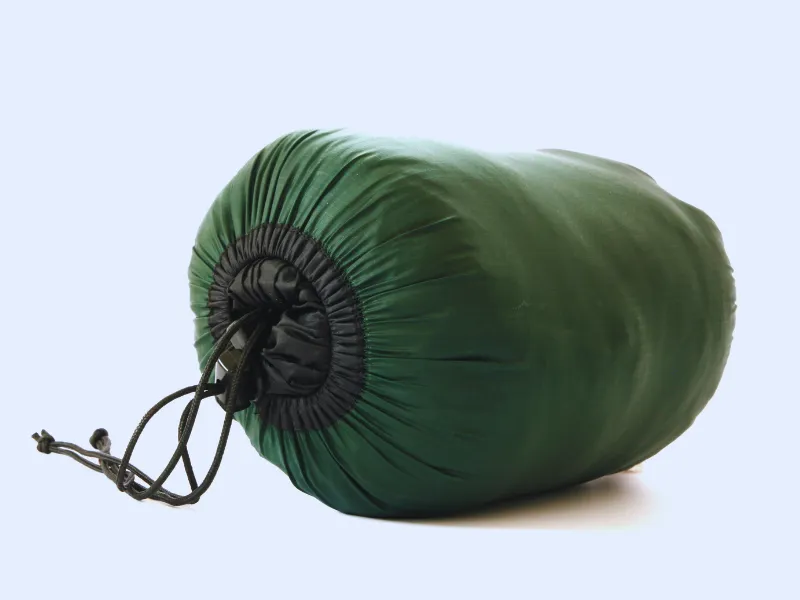
How to store a sleeping bag in 4 steps. It’s not just about tossing it in the closet until your next camping trip. What’s the right way to store your sleeping bag?
In this guide, you’ll learn the 4 steps to properly store a sleeping bag. Whether you’re a backpacking enthusiast or a casual camper, you’ll find tips to store a sleeping bag properly to maximize its life and ensure it is in peak condition for your next journey into the great outdoors.
Key Takeaways
- Keep It Loose: Ditch the stuff-sack when not trekking.
- Keep It Dry: Always air the bag post-adventure, keeping moisture and mold at bay.
- Store It Cool: Store your bag loosely in a large, breathable storage bag or hang it in a dry place
Contents
Step 1 – Remove the Sleeping Bag from the Compression Sack
When you travel or backpack, compression sacks are spacesavers. They compress your sleeping bag down to a manageable size, keeping it compact and easy to carry. But once you’re home, it’s a different story. Compression – great for mobility, not so great for long-term storage. Let’s break down why.
- Fabric and Fibers: The insulation of your sleeping bag whether synthetic or down is made to “breathe”. Prolonged compression can crush the fibers, robbing your sleeping bag of its fluffy warmth—the very thing that keeps you toasty at night.
Step 2 – Air Out and Dry It
Airing out your sleeping bag after each camping trip is crucial. It’s not just about removing the stench of sweat, body oils, or campfire; if any moisture, be it from humidity, rain, or even your own body, lingers, it can become a breeding ground for mold and mildew. Not only is it unpleasant, but such growth can also deteriorate your sleeping bag’s materials, especially the synthetic or down filling.
You don’t need to wash a sleeping bag after every outing. Over-cleaning can prematurely wear your bag down. Spot cleaning does the trick for most parts.
- Outside: Hang your bag up on a clothesline or a large hanger.
- Inside: Turn your sleeping bag inside out and drape it over a railing or chair or lay it flat—just ensure good air circulation around and inside the bag.
- Dryer: If weather’s not on your side, the air fluff/lowest heat setting in your dryer can work wonders. Chuck in a couple of clean tennis balls—they’ll help fluff the filling, making it as good as new.
- Fan: No dryer? No problem. Position a fan nearby to ramp up air movement and whisk away moisture.
Avoid keeping the bag in direct sunlight for too long, which can wear the fabric down. Keep heat sources at bay, too. Too much heat and you’ll risk damaging it.
Step 3 – Loosely Place It Inside a Large Cotton or Mesh Storage Sack
A storage sack isn’t the compression stuff sack you jam your sleeping bag into while moving. Remember, the bag must be completely dry before storing it in a cotton or mesh sack.
Here are some tips for keeping your bag in a mesh or cotton storage sack:
- Use a sizable storage sack: Look for a cotton or mesh sack, which promotes crucial airflow. A large laundry bag works well if your sleeping bag doesn’t have a storage sack.
- Gently stuff your bag inside: The key here is to avoid tight rolls or folds. Your sleeping bag loves space; let it loft naturally.
Spaciousbeats snughere. It should accommodate your sleeping bag without squishing it.
Step 4 – Store It in a Cool and Dry Place
Storing your sleeping bag properly in a cool and dry place is pivotal to maintaining its insulating capabilities and loft.
Option 1) Breathable Storage Bag
When tucking away your sleeping bag in a closet, on a shelf, or under the bed, ensure it’s in a breathable storage bag—preferably cotton or mesh. This will prevent moisture from accumulating and causing damage.
What to Avoid: Airtight Plastic, Garages, Attics, and Basements
Do not store your sleeping bag in airtight plastic bags or bins — even with silica gel packs, airtight compression degrades the bag’s loft over time. Instead, keep the bag loose in a large breathable cotton or mesh storage sack in a cool, dry, climate-stable indoor space such as a closet or under the bed. Avoid garages, attics, and basements, where heat and moisture extremes can damage the insulation.
Option 3) Hanger in the Closet
A unique way to keep your sleeping bag’s loft in tip-top shape is to hang it up on a sturdy hanger. However, don’t just shove it in a tight space – let it hang freely. This ensures even air circulation to every nook and fiber.
Any other tips or suggestions for storing your sleeping bags?
FAQs
How can I avoid pests and dust while storing my sleeping bag?
– Seal any gaps where critters might see an invitation.
– Consider a layer of plastic wrap or a storage cover to shield from dust.