Buy one rated size above your headcount, and check the floor before you believe the box. Tent makers rate capacity by laying 20 inch sleeping pads shoulder to shoulder across the floor. No gear, no gaps, and no room to roll over. A tent rated for your exact family therefore sleeps smaller than your family. Rated at about 14 to 15 square feet of floor per person, a family tent turns comfortable at 23 to 27 square feet per person.
So the chart below does the conversion. It takes your household, your sleep gear, and where your gear sleeps, and returns the rated size that actually fits. Find your row, and the rest of this page shows its work.
Family tent size chart
| Family configuration | Household and sleep gear | Floor target | Rated size to buy | Peak height floor | Named examples |
|---|---|---|---|---|---|
| Couple | Two adults, pads or one queen mattress | 50 to 60 sq ft | 4 person | 54 in | Coleman Sundome 4 Person, CORE 4 Person Dome, Kelty Late Start 4, Kelty Daydreamer 4P, FanttikOutdoor Alpha C4 Ultra |
| Couple with an infant | Two adults on a queen or pads, crib or pack and play on the floor | 75 sq ft | 6 person | 72 in | Coleman Sundome 6 Person, CORE 6 Person Straight Wall Cabin, Coleman Skydome 6 Person |
| Family of three | Two adults and one child, queen plus a child’s bag or three pads | 70 to 75 sq ft | 6 person | 72 in | Coleman Sundome 6 Person, CORE 6 Person Straight Wall Cabin, Coleman Skydome 6 Person |
| Family of four | Two adults and two children, pads, two doubles, or a queen plus child pads | 90 sq ft | 6 person | 72 in | Coleman Sundome 6 Person, CORE 6 Person Straight Wall Cabin |
| Family of four with a dog | The family of four, plus a dog on the floor | 90 sq ft | 6 person at the top of the class, 8 person with gear inside | 72 in | Coleman Sundome 6 Person |
| Family of four with a grandparent | Three adults and two children | 115 sq ft | 8 person | 78 in | PORTAL 10-Person Family Camping Tent, CORE 12 Person Straight Wall Cabin Tent |
| Family of five | Two adults and three children | 115 sq ft | 8 person | 78 in | PORTAL 10-Person Family Camping Tent, CORE 12 Person Straight Wall Cabin Tent |
| Six or more | Six sleepers and up | 140 sq ft and up | 10 person, 12 person at seven sleepers or for divided rooms | 78 in | CORE 12 Person Straight Wall Cabin Tent, PORTAL 10-Person Family Camping Tent, UNP 10-Person Family Camping Tent |
Two rows of that chart deserve a word before the detail. The grandparent and family of five rows tell you to buy a rated 8. They then name rated 10 and 12 person tents. No scored tent sits in the rated 8 class on this site yet. The step is printed rather than smoothed over, and it runs in the size up direction anyway.
The small family rows name tents this page does not score. Their floor dimensions are stated as facts. The family of three and family of four answers live in a class the site’s scored guides have not reached yet. What this page does score, it scores in the roundups the chart links down to.
Run your own household
The chart is the fast answer. The calculator runs the same math on your exact household. It includes the two answers that change the result most. One is a queen air mattress instead of pads. The other is gear sleeping inside the tent instead of in the vehicle.
Why the number on the box is not the number that sleeps
A tent's person rating is a floor packing exercise. Makers follow a shared practice. They fit standard width sleeping pads side by side on the floor and count how many fit. The standard pad behind that practice measures 20 inches wide and 72 inches long. Nobody leaves space between the pads.
Nobody brings a bag, a duffel, or a child who sleeps sideways. The count stops the moment the floor is covered. Treat the rating as a measurement of the floor, not as a promise about your night.
One correction belongs inside that claim, because the makers' own wording overstates it. CORE Equipment's tent size guide calls the pad fit method an industry standard sizing. CORE is also the maker behind several of the tents this page names. REI's expert advice states the other half, that no industry standard defines per person dimensions, so sizes vary from brand to brand. Both halves are true at once.
The pad fit practice is real and shared. No governing standard stands behind any brand's number. That is why this page converts ratings through measured floors instead of trusting the count.
The conversion is not guesswork, because this site has already scored the floors. Across the mainstream family cabins in our multi room scoring, a rating works out at about 14 to 15 square feet of floor per rated person. The range runs from the CORE 9 Person at 14.0 to the Bushnell 9 Person at 15.0. Two exclusions ride with that figure wherever it appears. The big room tents run 28 to 30 square feet per rated person.
Their floor buys separate rooms and living space, not sleeping width. The vehicle tents run lower because the vehicle carries the gear. Inside the cabin class the figure holds. It is the first number to reach for when a listing gives you dimensions instead of a rating you trust.
Comfort runs on the second figure. Correct those same scored cabins to the number of people who actually sleep well in them. The floor then works out at 23 to 27 square feet per person. The PORTAL 10 Person sits at 23.3, the CORE 12 Person Straight Wall at 25.1, and the UNP 10 Person at 27.0. That band is the one the chart is built on.
It is also why sizing up works mechanically rather than as a rule of thumb. The chart's targets are set inside that band. A family reaches them by moving about one rated class above its headcount.
The makers know this, and one of them prints it. CORE stamps two ratings on its family cabins, the industry standard count and a lower most comfortable count with gear counted in. The 6 person cabin named below reads 6 by the standard and 3 plus gear at its most comfortable. That is a manufacturer telling a family of three to buy its 6 person tent. Its 4 person dome reads 4 and 2 plus gear the same way.
When a brand's own comfortable rating lands exactly where this chart lands, the size up answer stops being editorial opinion.
Floor width and the mattress test
Area alone does not decide whether your family fits. Width does, because sleepers lie in rows and rows are made of widths. The rating method assumes 20 inches per sleeper. A comfortable sleeper takes about 25 inches, the width of a wide pad. The floor's length has to clear the 72 inch pad with room at both ends.
Only then does a tall adult sleep straight instead of diagonal. Divide a floor's width by 25 rather than by 20. Most of the gap between the box and the night explains itself.
A 10 foot wide floor fits six rated pads across. It fits four to five real sleepers. The second number is the one to plan a family around.
The queen air mattress is the test that breaks naive capacity math. It is also the family case. A queen measures 60 by 80 inches. It takes 33.3 square feet of floor before anyone walks around it.
Put a child's sleeping bag beside it in the same row, and the row wants about 90 inches of floor width. The floors named for the family of four row deliver that, at 108 to 120 inches wide. A rated 4 person dome floor does not, on the short side where the row would lie.
The one square cabin named in the rated 4 class is the exception, at 94 inches wide. The alternative is a floor long enough to split the layout. The mattress goes across one end and the child along the other, and the dimensions answer that length question before you buy.
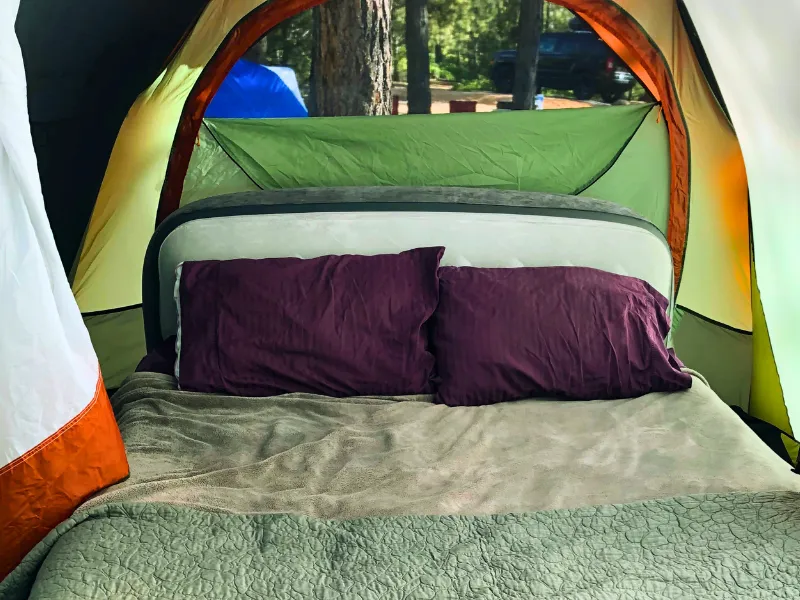
One family's floor, lived in rather than listed, runs on exactly this layout. In our family tent, a large queen air mattress sits in the middle of the room for the adults. Our daughter sleeps in her own sleeping bag on the floor beside it. Three people, one queen, one child's bag, in a dome rated well above three. That is the chart's family of three row played out in a real campsite.
The same three people also sleep in a 2 person backpacking tent. All of us fit, tightly, because a preschooler is small, and it went well. What makes that possible is a child who still fits in the leftover floor. The contrast is the lesson. Sleeping gear decides the size as much as headcount does.
Gear and vestibules
Ask two families of four what size tent they need and the honest answer splits on a question that is not about people at all. Where does the gear sleep? A family tent's floor is shared between sleepers and stuff, and most family cabins carry small vestibules or none. Gear that comes inside competes for the same square feet the chart just allocated to your children. Gear in the vehicle, gear in a vestibule, and gear on the tent floor are three different size answers for the same family.
Our own pattern is the vehicle heavy one the chart's main numbers assume. Personal gear, clothes and the things each person reaches for at night, goes in the tent. Most other gear stays in the vehicle. Nothing in our routine assigns the vestibule a storage job at all.
That is worth stating because it explains this page's comfort band. CORE's most comfortable ratings price gear inside the tent and so run richer per person, up toward 30 or more square feet a sleeper. A household that sleeps its gear in the car needs less floor for the same comfort. It lands in the 23 to 27 band this page uses.
Run your own household the other way and the chart moves. The calculator adds a gear margin when gear inside the tent is selected. The family of four row shows the same step in print. There, the dog row's answer rises to a rated 8 when the household also keeps its gear inside. Neither answer is wrong.
They are answers to different campsites, and naming which one is yours is most of what sizing a family tent honestly takes.
Standing height and wall shape
Peak height is the number on the box that sounds like a comfort figure and behaves like a trap. The scored cabin field on this site peaks between 76 and 86 inches, which reads as standing room everywhere, and is not. A dome gives its peak along a narrow center strip. It takes that peak away toward the walls. Two adults can stand in the middle.
Nobody can stand at the edges, where the clothes and the children are.
Near vertical cabin walls give standing room across most of the floor. Grade a tent's height by the family job. That job is changing clothes standing up, and dressing a child who stands still only under negotiation. Wall shape matters as much as the peak figure.
The chart's peak height column is a floor, not a target, and its lowest entry teaches the honest expectation. At the rated 4 person class the floor is 54 inches. That is the lowest peak among the named tents in that class. It is a sit up and change seated height. Nobody stands in a small dome.
A couple who knows that in advance is not disappointed by a tent doing exactly what its shape says. The class now holds one exception, and the exception is a shape rather than a dome. An instant cabin named below stands 80 inches at its center on near vertical walls. That is standing room at a rated 4 size. The price is a cabin's weight and packed bulk instead of a dome's.
From the infant row up, the floor rises to 72 inches. It holds there through the family of four rows. Lifting and dressing a small child at night is where standing height stops being a luxury in a family tent. On the two five sleeper rows the floor steps to 78 inches, and the six or more row sits there too. That is the lowest peak in the scored large cabin field.
Our own record splits the same way the shapes do. The family stands to change inside the car camping tent, and does not in the backpacking tent. Height is a real feature in the tent the family lives out of for a weekend and a non event in the tent it sleeps in on a trail. When you weigh a taller cabin against a cheaper one, that is the use you are pricing, a minute of standing to change, twice a day, with a child underfoot.
Disclosure. Some of the links on this page are affiliate links. If you buy through them, Outdoor Footprints may earn a commission, and the price you pay does not change. The size classes below name the tents this site has scored first, and name unscored tents by their measured floors where no scored tent exists.
Sizes by family configuration
Rated 4 person for couples and the smallest families
A couple on pads needs 50 square feet of honest floor. A couple on a queen mattress needs 60. That is why the smallest family class is a rated 4, not a rated 2 or 3. This site has not scored this class. The names below are stated as measured facts, floor, peak, and what the maker says fits, with no score and no ranking behind them.
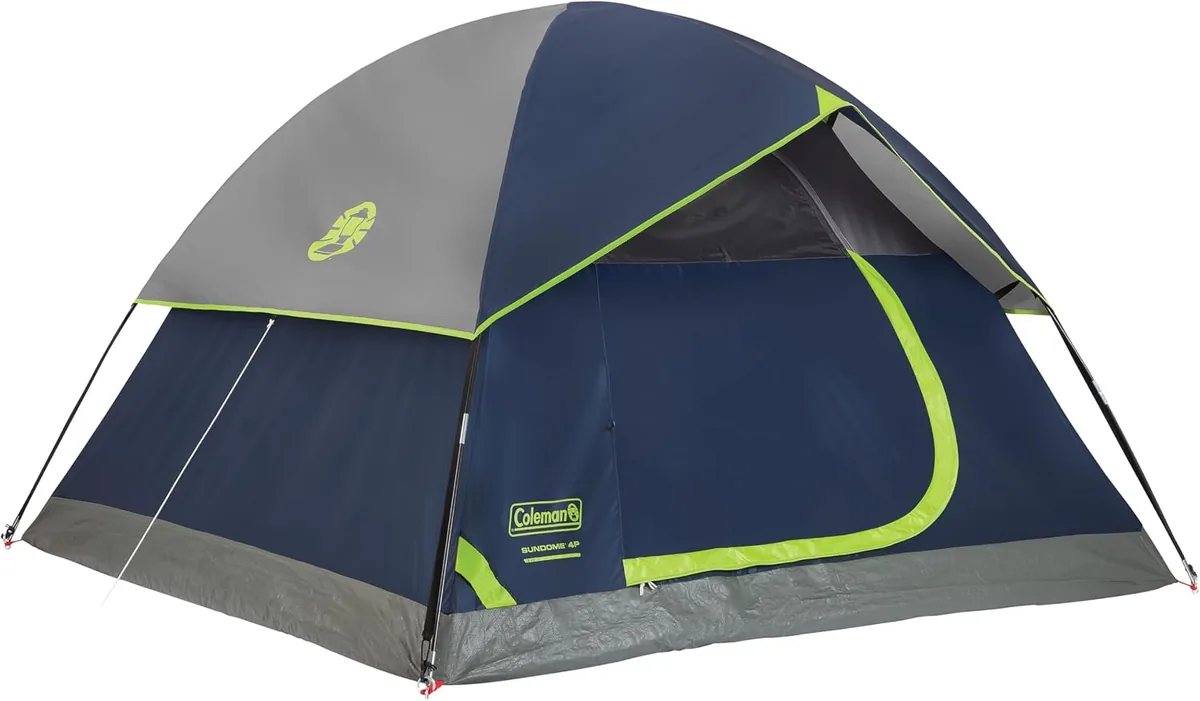
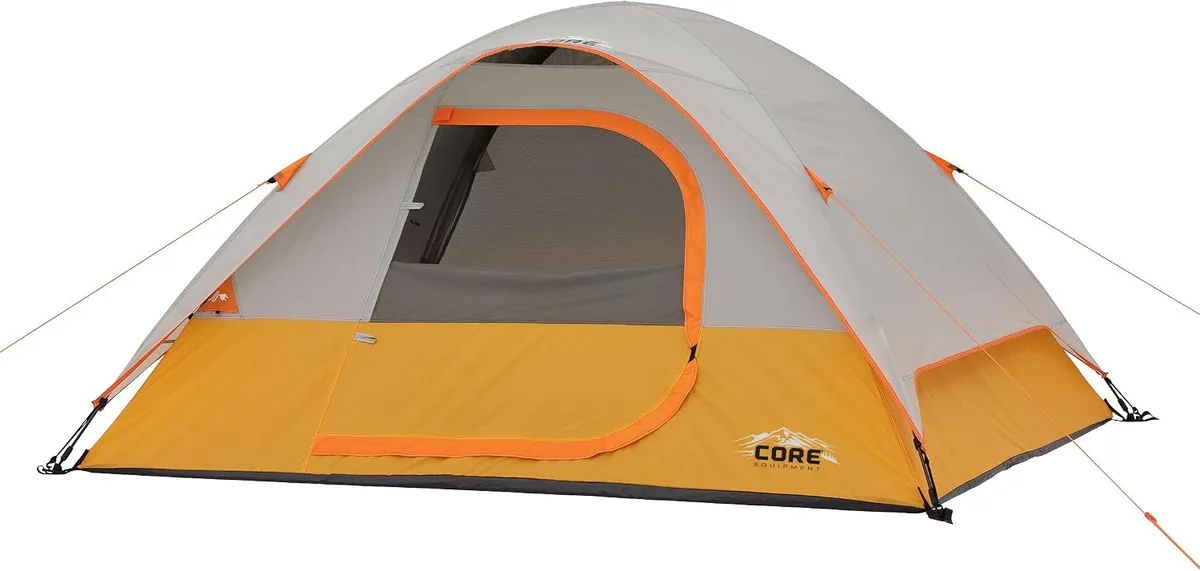
The Coleman Sundome 4 Person Tent runs 9 × 7 ft, 63 sq ft, with a 59 in peak. Coleman rates it to fit 1 queen size airbed. The CORE 4 Person Dome Tent runs 8 × 7 ft, 56 sq ft, with a 54 in peak. CORE's own dual rating reads 4 by the industry standard and 2 plus gear at its most comfortable, fitting 1 queen air bed.
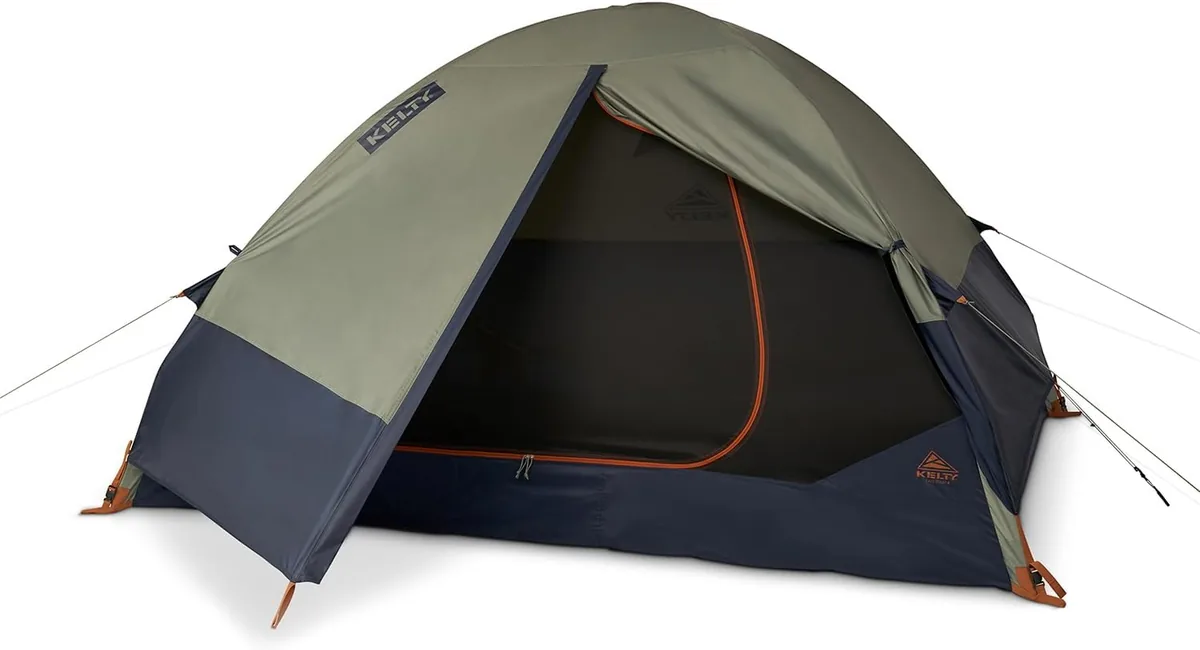
The Kelty Late Start 4 runs 99 × 80 in, 55 sq ft, with a 56 in peak. It is the backpacking form in the class, and the smallest area here. That is itself the sizing lesson of the class. Width and area are different numbers, and a couple choosing between these floors is choosing which one their mattress layout needs.
The Kelty Daydreamer 4P runs 96 × 85 in, 57 sq ft, with a 61 in peak. Its naming reason is a fabric no other tent named in either small class carries. Its Twilight Tech rainfly is a blackout layer, and it carries an oversized vestibule. A measured test of this tent could barely fit four standard pads across its floor. The test rated it realistic for two or three adults, or a family with small children.
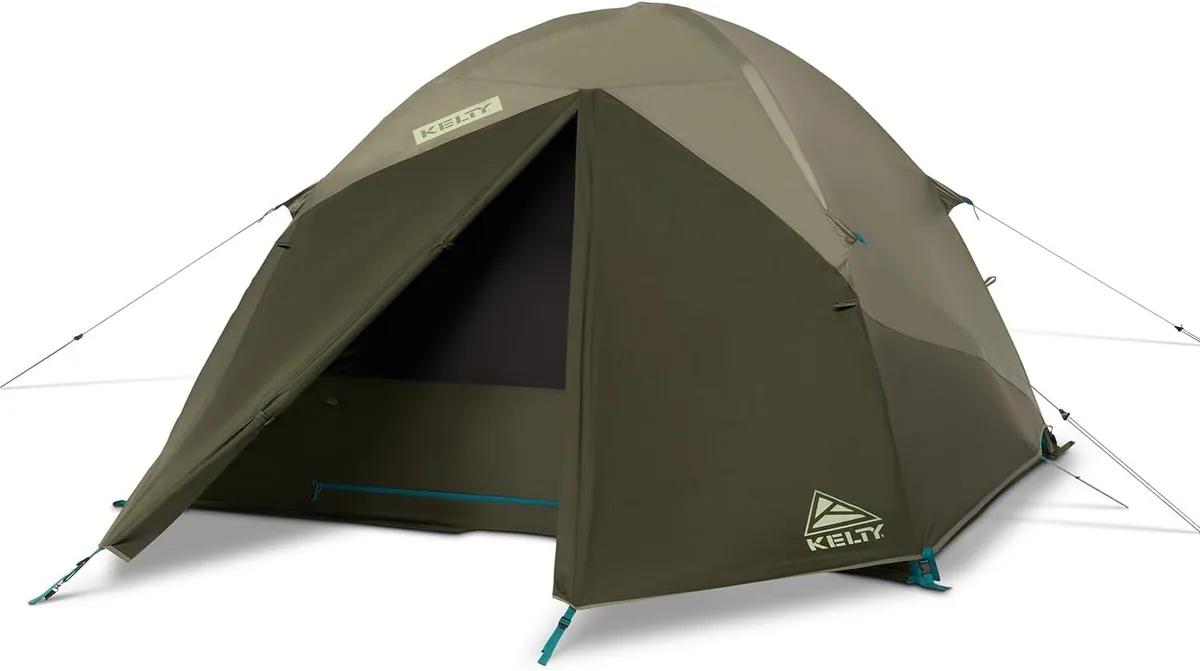
That is the couple row of the chart, stated by a tester with a tape measure. Blackout fabric sits in our own family's record as an idea we have not tested. We think it is a great one. This is the small tent that carries the fact of it.
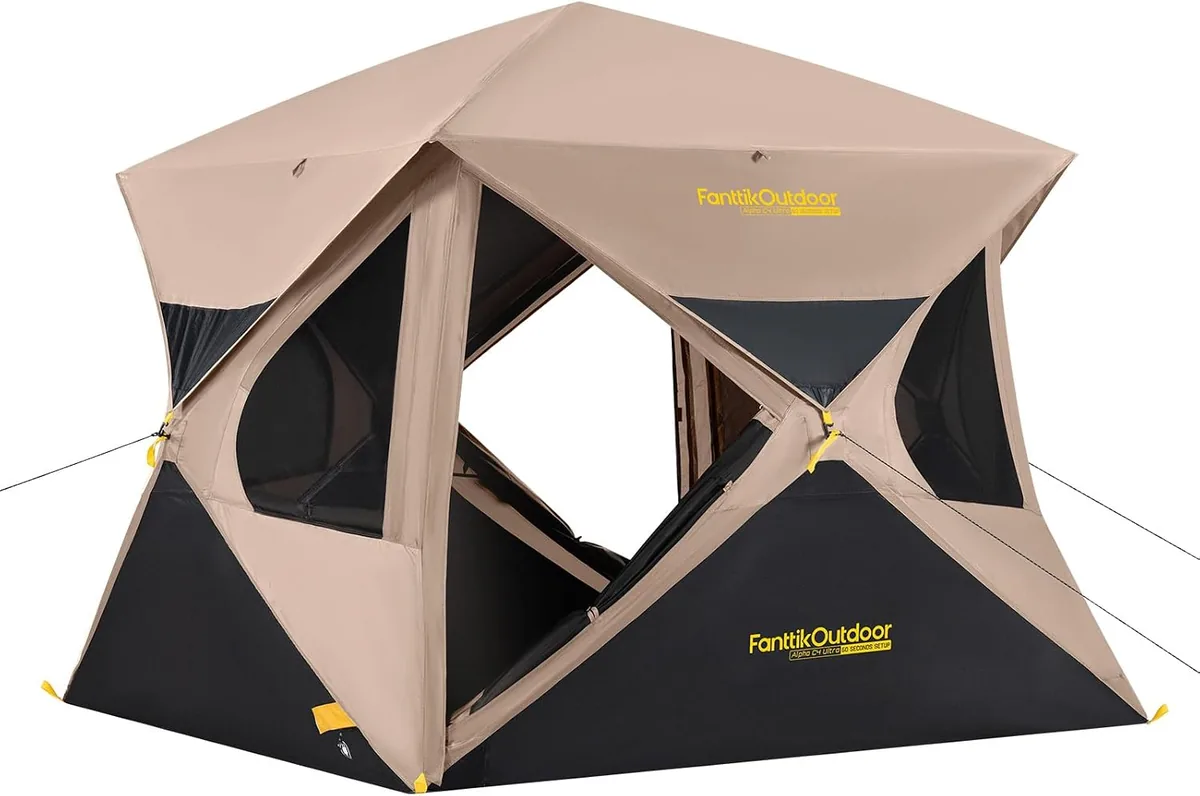
The FanttikOutdoor Alpha C4 Ultra is the class's fourth form, an instant cabin, named and not scored, on the same facts only terms as every tent in this section. Its floor is a 94 × 94 in square at 61.4 sq ft. That is the second largest floor in the class.
It stands under an 80 in center height with near vertical walls. Its hub frame is one the maker pitches as a 60 second setup. It is the only rated 4 floor named here with standing room.
FanttikOutdoor's own fit statement concedes its basis, up to 4 people per industrial standard, fitting 1 queen air mattress. The form carries a cabin's costs. It weighs 27.5 lb, with a packed length just under 5 ft. That is car camping arithmetic, and it reads as such.
Rated 6 person for families of three and four
This is the class where most families land, and the chart sends both the family of three and the family of four here. A family of three on a queen plus a child's bag targets 70 to 75 sq ft. A family of four targets 90. The floors named for the family of four row run 90 to 100 sq ft. That is why the class holds both rows.
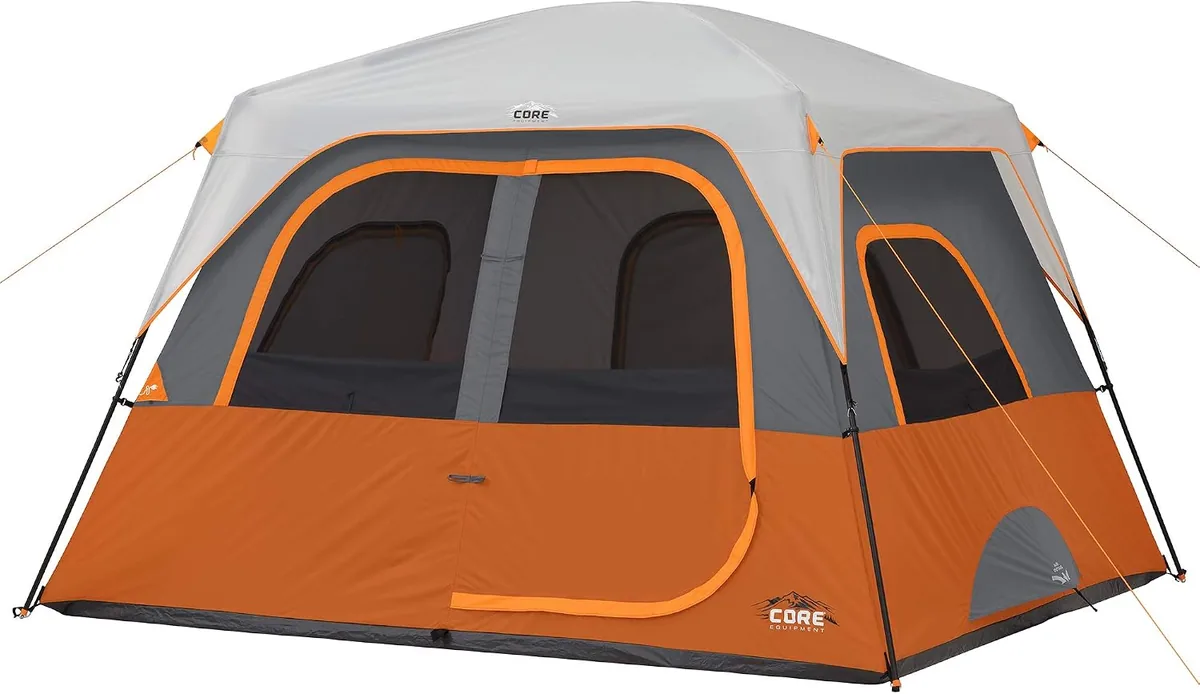
The Coleman Sundome 6 Person Tent runs 10 × 10 ft, 100 sq ft, with a 72 in peak. Coleman rates it to fit 2 queen size airbeds. The CORE 6 Person Straight Wall Cabin Tent runs 10 × 9 ft, 90 sq ft, with a 76 in peak. That peak is the tallest in the class. Its dual rating reads 6 and 3 plus gear, and it fits 1 queen air bed.
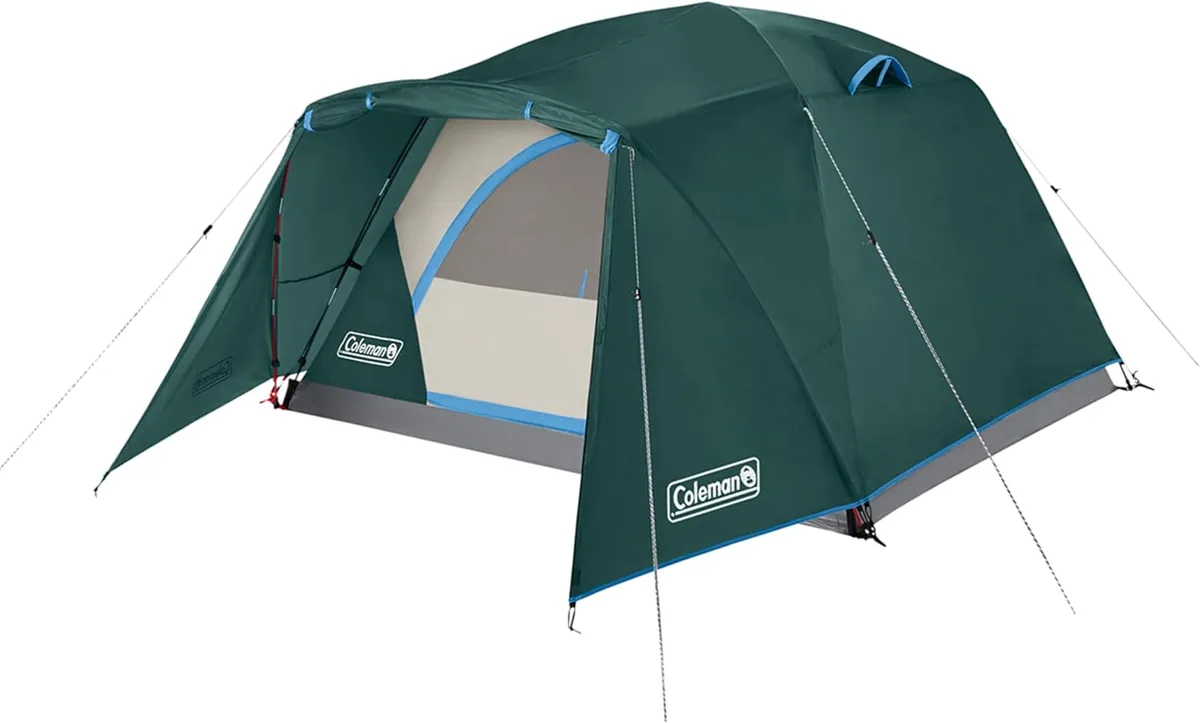
One smaller floor is named in this class for the three sleeper rows only. The Coleman Skydome 6 Person Tent runs 10 × 8 ft 6 in, 85 sq ft, with a 72 in peak. Coleman rates it to fit 2 queen size airbeds. At 85 sq ft it clears the couple with infant and family of three targets, with room to spare. It stops short of the family of four target of 90.
It is not named on that row. No family of four should read it as their floor.
As with the class above, these tents are named on their measured floors, not scored, and a family's choice among them turns on layout. A queen plus two child bags does not fit one row. The widths say why. The mattress takes 60 in, and each child bag takes about 30 in at its honest width. Even a 120 in floor is fully spent, with nothing left for sloped walls or a sleeper who moves.
So the four person layout splits across the floor's length. The mattress sits at one end, and the children lie along the other. The longer floors above are the ones with the length for that split.
Our family of three runs in this same rated class, and the record is worth printing beside it. The tent is an older REI dome with a room divider. Inside it, the queen air mattress sits in the middle of the room. Our daughter sleeps in her own sleeping bag on the floor. Two adults pitch it in 15 to 20 minutes, from start to sleep ready.
A small child wanders, fusses, or steps on the tent as part of the procedure. It has kept this family dry through rain in this class. What a divider is worth to us is visual privacy first. A room of her own changes nothing for our daughter at this age. The failures that would end a tent for this family are the practical ones, a tent that does not fit the gear, leaks, a difficult setup, and zippers that do not work.
The next change in that layout is already decided in our house, and it is the growth answer this chart cannot give a stranger. As our daughter grows, the first thing that changes is a sleeping zone of her own with a pad. A family choosing its first tent with a preschooler aboard is buying for that change as well. That is one more reason the family of three row buys the roomier class rather than the exact fit.
Rated 8 person for five sleepers and the extra adult
Five sleepers target 115 sq ft and buy a rated 8. That holds for two adults with three children, and for three adults with two. On area alone, the 115 sq ft target already clears the rated 6 threshold of 100. The grandparent row is also the one row where the sleeper count check forces the same step by itself. A third adult counts at full size in every honest system, including the maker's own.
No scored tent sits in the rated 8 class on this site. The named tents here are the scored picks from the class above, serving one class down. The step is the size up direction, and both tents carry published realistic occupancies that cover five sleepers with room the chart respects.
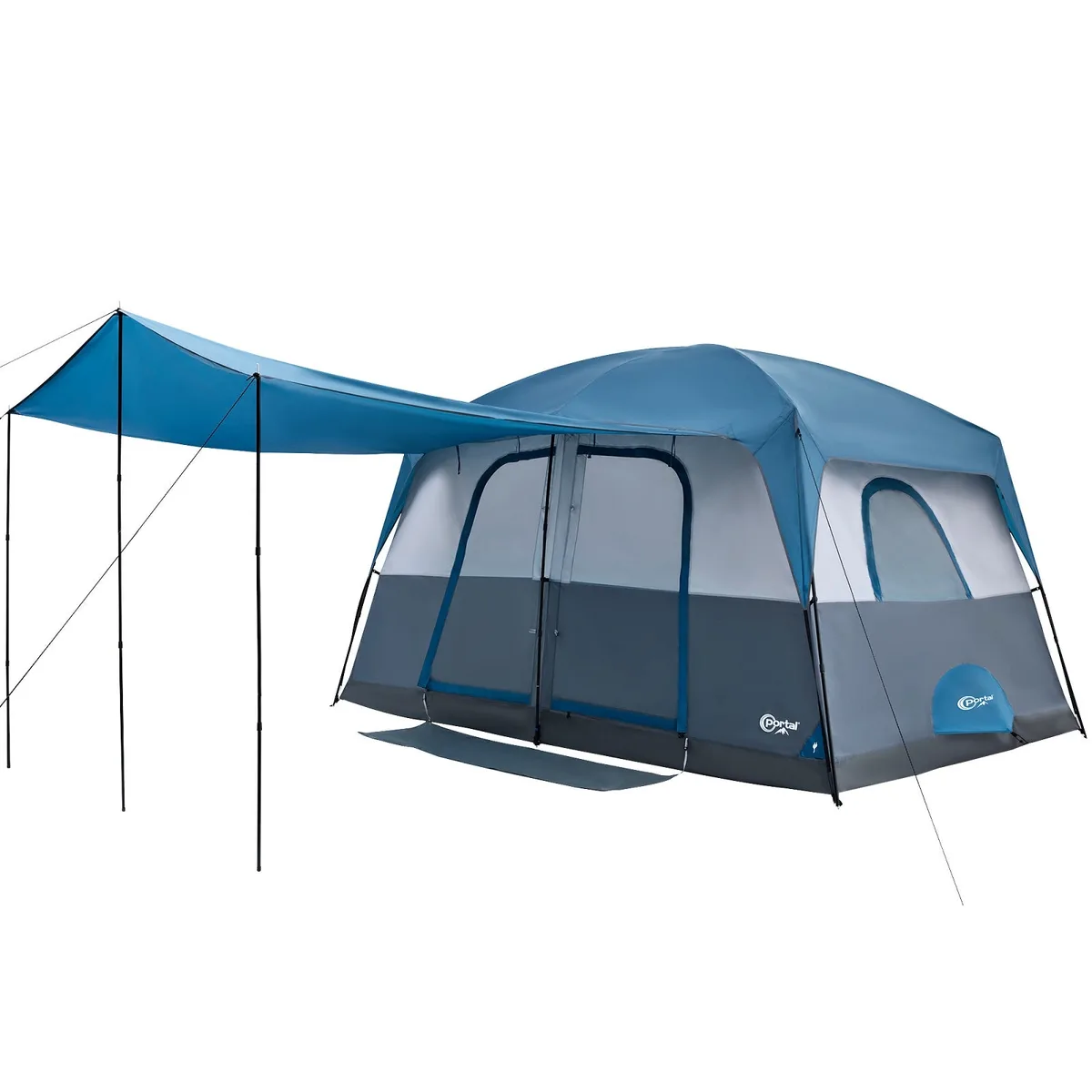
The PORTAL 10-Person Family Camping Tent is the divided room answer at this size. Its floor runs 14 × 10 ft under an 84 in peak. Our multi room guide scored it as the best 2 room tent, with a published realistic occupancy of 6. Five sleepers in a tent honestly rated for six realistic, with a divider when the grandparent or the early riser needs one, is the comfortable version of this row. For a big family cabin with its rooms and value worked through in full, look at the PORTAL 10-Person Family Camping Tent
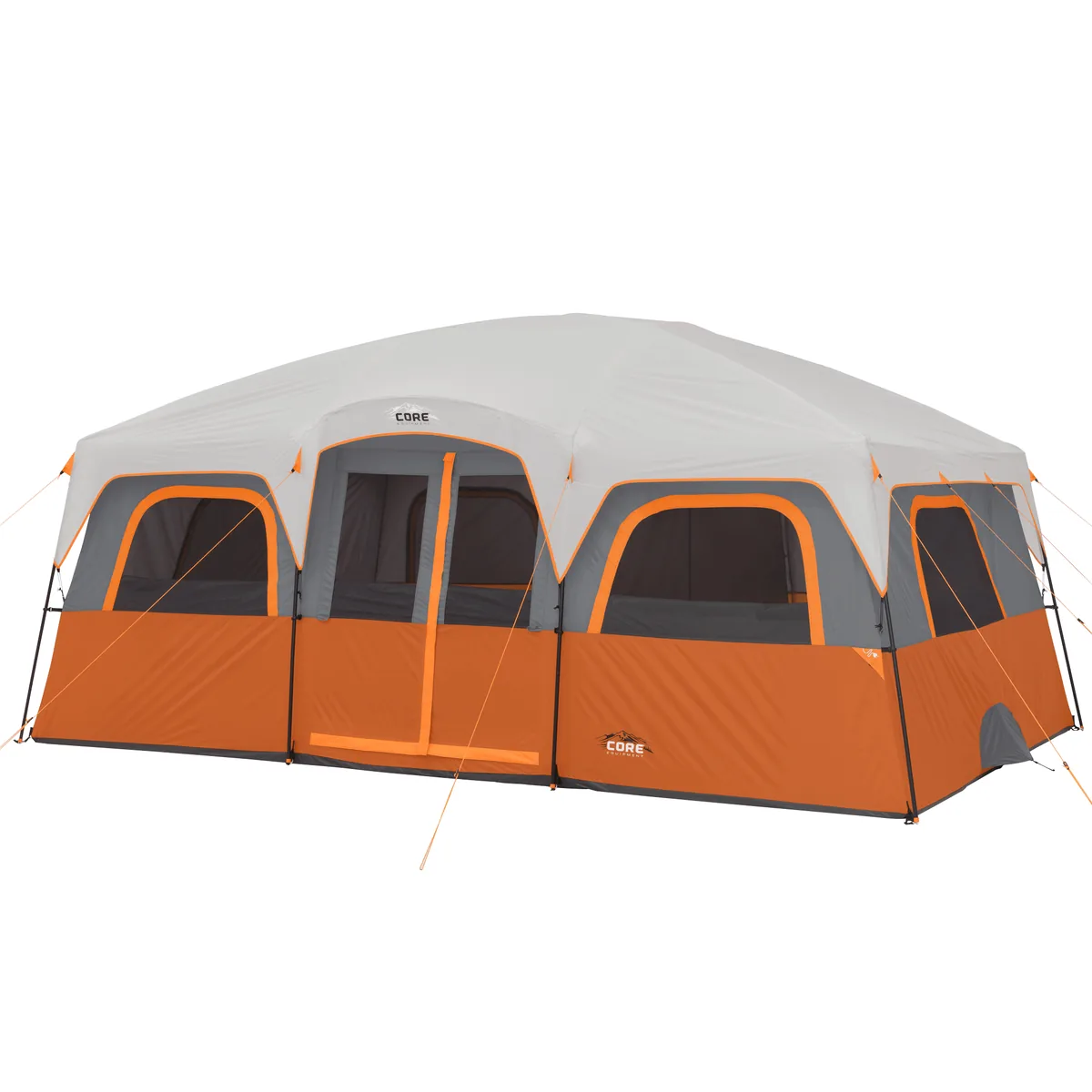
The CORE 12 Person Straight Wall Cabin Tent brings the largest scored floor in this section. It runs 16 × 11 ft under an 86 in peak, with a published realistic occupancy of 7. Its straight walls keep the standing room the peak promises across most of that floor. A family of five that changes standing, dresses children standing, and spreads gear along the walls is the household this tent was scored for. For the tallest walls in the scored field, check the CORE 12 Person Straight Wall Cabin Tent.
Both tents are worked through as scored picks in our guide to the best multi room tents. Their rooms, dividers, and full criterion scores are there. A family choosing between divided and open floor plans should go there next.
Rated 10 and 12 person for six sleepers and divided rooms
Six sleepers target 140 sq ft and up and buy a rated 10, whose scored examples carry a published realistic occupancy of exactly 6. Seven sleepers, or six who want divided rooms, take the rated 12, whose scored example carries a realistic 7. These are the classes our multi room guide scores directly. The three tents below are its picks. They are named here with the floors and occupancies the sizing question needs.
The CORE 12 Person Straight Wall Cabin Tent leads on floor and height together. It runs 16 × 11 ft under an 86 in peak. It holds the best family score in the multi room guide's family weighting. A seven sleeper household, or a divided room plan, builds around it. For the largest scored floor in this guide, pick the CORE 12 Person Straight Wall Cabin Tent.
The PORTAL 10-Person Family Camping Tent is the 2 room pick. It runs a 14 × 10 ft floor under an 84 in peak, with a realistic occupancy of 6. It is the divided layout at the smaller footprint of the two big classes. For divided rooms without the largest footprint, check the PORTAL 10-Person Family Camping Tent.
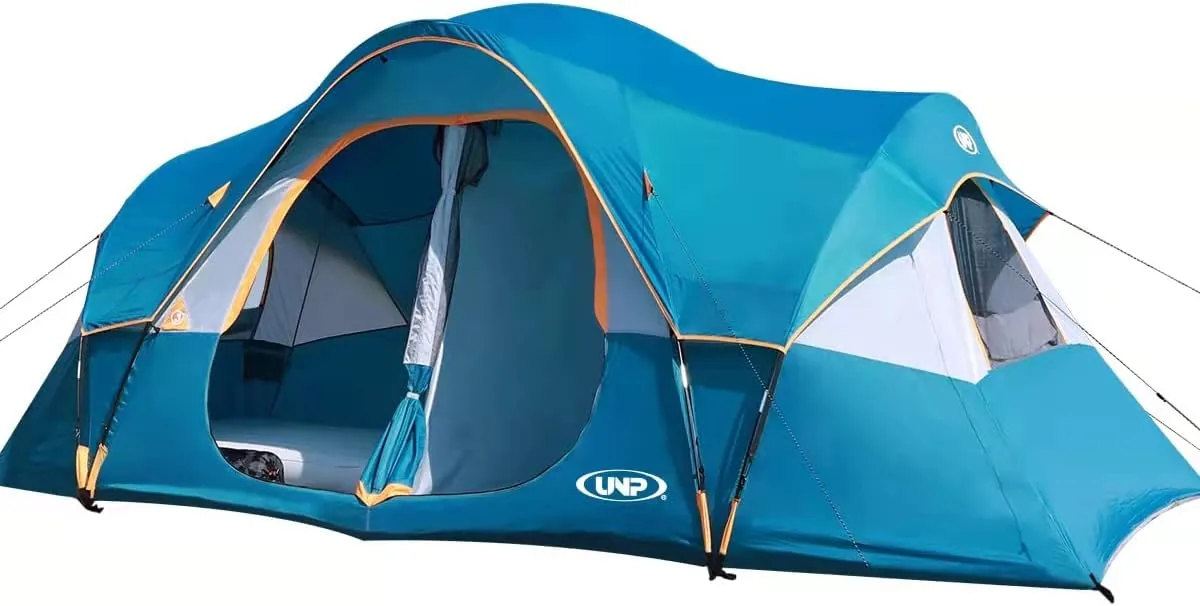
The UNP 10-Person Family Camping Tent runs the widest floor among the scored picks. It runs 18 × 9 ft under a 78 in peak, with a published realistic occupancy of 6. It also holds the budget result in the multi room guide. Width is its argument, six sleepers in a row friendly floor at the class's value end. For the widest scored floor at this size, check the UNP 10-Person Family Camping Tent.
Rooms, dividers, blackout, and the full scoring of this class live in the multi room tents guide. This hub links down to it rather than rescore its field.
Vehicle attached tents that borrow the car
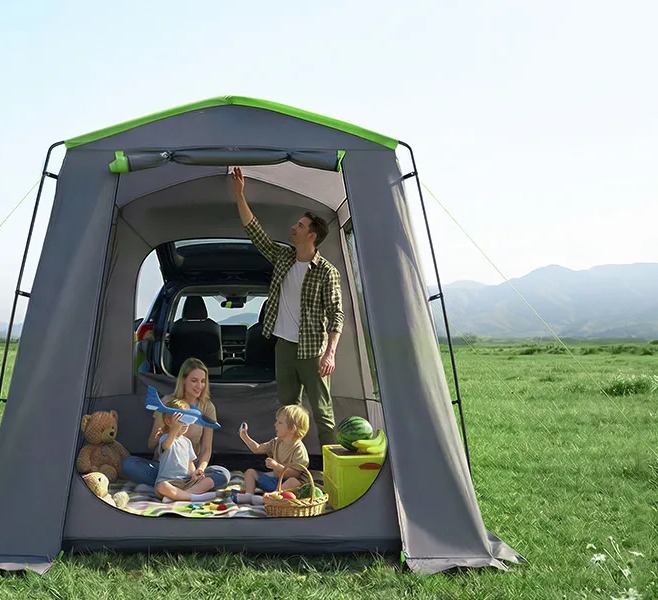
A family that sleeps against its vehicle plays by different floor math. The vehicle carries the gear, and part of the household can sleep in it. The scored vehicle lane on this site lands at about 20 sq ft per person. The Napier Sportz SUV Tent sits at 81 sq ft and a realistic 4 sleepers.
The lane runs below the cabin band for an honest reason. The car does the rest of the work. Sizing, fit by vehicle, and the full scored field live in our guide to the best SUV tents. That guide stands as published, and it owns that lane.
The tested budget mention belongs here because it is the one tent in this article with a family's hands on it. The Vevor SUV Tent 8×8 is the tent our reviewer owns and tested on a Honda Passport. It is listed at 6 to 8 sleepers and honestly sleeps 3 to 5. That is the tightest rating ratio in this article, at about 11 sq ft per listed person. Its floor evidence is the crib test from the chart's second row.
On a family trip the toddler's crib stood on its 64 sq ft floor while the adults slept in the vehicle. That is what a crib zone costs a floor when the layout has to absorb it. Its full tested record, including where it falls short, is in the Vevor SUV tent review.
Site fit
Everything above argues for more tent, so this is the section that argues back. A bigger tent is a bigger footprint on a real campsite. The honest finding from the sourcing behind this page is that there is no typical tent pad size to quote against it. The Forest Service's own recreation guidance states there is no minimum tent pad size. Tent types vary too widely across the country.
Campground booking through Recreation.gov publishes pad dimensions site by site, not as any standard. Listed pads run from very small to very large across different parks. Any guide that hands you one typical pad figure is handing you a number nobody in authority published.
Our own record is the calm version of that finding. The big family dome has never failed to fit a campsite, a pad, or a tight site. No campground has imposed a size limit on this family. That is one household's record, stated as exactly that.
The checkable practice is stronger than any anecdote, ours included. The named large tents in this article run 14 to 18 ft long. The PORTAL runs 14 ft, the CORE 12 Person Straight Wall 16 ft, and the UNP 18 ft. Recreation.gov lists each bookable site's tent pad dimensions on its booking page.
Measure the tent you are buying against the pad you are booking, site by site, before you pay for either. That check takes two minutes and it is the whole of the site fit discipline.
How we sized these tents
The chart and the calculator run on two rules, and both come from this site's scored work rather than from any maker's literature. The first rule prices each sleeper. An adult on pads carries 25 sq ft. That is the middle of the comfortable band our multi room scoring published, 23 to 27 sq ft per realistic person.
An adult on a queen air mattress carries 30. A child carries 15. An infant in a crib or pack and play on the floor carries 15. A dog carries 10.
The second rule sets a floor under the first. No configuration lands below 23 sq ft per sleeper. The row's floor target is whichever rule gives the larger figure, rounded to the nearest 5. Gear sleeping inside the tent adds a tenth to the first rule's total in the calculator. Floor given to gear is floor taken from sleepers.
The rated size is then read off the floors the named tents actually offer. A target of 63 sq ft or less buys a rated 4 person. At 100 or less it buys a rated 6, at 120 or less a rated 8, and at 162 or less a rated 10. Above that, it buys a rated 12.
Behind those thresholds sits a second check on sleeper count, because area alone can flatter a crowded tent. The scored field's rated 10 person tents carry a published realistic occupancy of 6.
Its rated 12 carries 7. Applying that same ratio down the classes caps a rated 4 at 3 sleepers, a rated 6 at 4, and a rated 8 at 5. Children and infants count at partial adult weight.
Where the count check and the area check disagree, the chart takes the larger tent. On the grandparent row the two checks agree, and each one forces the step on its own. The area target of 115 sq ft clears the rated 6 threshold of 100. The count load of 4.2 adult equivalents clears the rated 6 cap of 4.
The floors, peaks, and maker fit statements for the scored tents come from our multi room and SUV scoring worksheets. Every figure there was checked against manufacturer specifications during those guides' own builds. The unscored tents named in the 4 and 6 person classes carry manufacturer stated floors and peaks. Those figures were checked against their Amazon listings during this page's build.
The listing governed where the two disagreed. They are presented as facts without scores, because this site has not scored their class. One family's experience runs through the article in its own lane. It is labeled as that family's record wherever it appears, and it is never used as evidence about a tent it did not sleep in.
The figures are rechecked when this page's edition is rescored. The chart's thresholds move only when the scored fields underneath them move.
Frequently asked questions
What size tent do I need for a family of 4?
Buy a rated 6 person. Two adults and two children target about 90 sq ft of floor. The 6 person floors named for that row run 90 to 100 sq ft. A rated 4 tops out near 63 sq ft. It sleeps its four rated sleepers shoulder to shoulder, with no gear.
If your gear sleeps inside the tent rather than in the vehicle, the top of the 6 person class still holds. The same holds when a dog joins the floor. A rated 8 then becomes the comfortable answer.
What size tent do I need for a family of 5?
Buy a rated 8 person. Five sleepers target about 115 sq ft at this page's comfort band, and no rated 6 floor reaches it. The scored tents this page names for the row are the rated 10 and 12 person picks, serving one class down. No scored tent sits in the rated 8 class yet. The size up step is printed in the chart rather than hidden.
How many people really fit in a 10 person tent?
Six, in family comfort. Across this site's scored field, the rated 10 person tents carry a published realistic occupancy of 6. They sit at 23 to 27 sq ft per person. The rating counts 20 inch pads laid edge to edge, with no gear and no room to move. Ten is a pad count, the rating method's own arithmetic, not a sleeping plan, and six is the number to plan a family trip around.
Does a queen air mattress fit in a 6 person tent?
Yes, and it is the layout the class is best at. A queen takes 60 by 80 inches and 33.3 sq ft. The 6 person floors named for the family rows run 90 to 100 sq ft and 108 to 120 inches wide. The makers of two of the named tents rate them to fit 2 queen air beds. Add children beside the mattress and the layout splits across the floor's length rather than across its width, which the longer floors in the class handle best.
Is a 4 person tent big enough for a family of 4?
Not for a family camping trip, whatever the box says. The largest named floor in the rated 4 class is 63 sq ft. That is the rating method's own arithmetic. Four 20 inch pads, and nothing else. A family of four targets 90 sq ft, with its gear patterns counted.
The makers agree in their own fine print. The named 4 person dome's maker rates it most comfortable for 2 plus gear. Buy the rated 6.
What is the difference between tent sizes for car camping and backpacking?
Width, weight, and what the vehicle carries. The family classes in this chart are car camping tents, where the vehicle hauls the gear and the tent's job is floor and standing room. A backpacking tent prices every ounce. It assumes pads, no air mattress, and gear discipline. That is how our family of three sleeps in a 2 person backpacking tent, tightly.
The chart puts the same three people in a rated 6 car camping tent. The rating method is the same in both lanes. The layouts it has to absorb are not.