Washington has more than a hundred state parks, and one reservation system handles their campsites. At the parks families want most, campers book the best summer weekends nine months ahead, so families usually plan a July trip the previous fall. That shortage shapes our own summers too, and it is part of why we take fewer car camping trips than we would like.
We have camped at some of these parks and would like to camp at others. We have camped at five Washington state parks, Bogachiel in 2017, Joemma Beach in 2017, Twin Harbors in 2018, Lake Chelan in 2017, and Rasar, where we stayed in the group camp on a trip with friends. The four family trips were summer trips from the south Seattle area with a daughter we have taken camping from infancy to preschool.
Our household holds a Discover Pass, and the scarcity in this system is something we feel directly.
This guide covers the state parks system. Washington campgrounds by region covers the state region by region.
That guide also covers national parks and forests. Use Washington campgrounds by region to choose a region for your next free weekend. Use a camping checklist to decide what to pack.
In this guide
- At a glance
- Choosing among more than a hundred parks
- Reservations
- First come first served
- Resupply, tides, and emergencies
- The most popular parks
- Family parks, quiet picks, and the first overnight
- Facilities, Bathrooms, and Showers
- Seasons and the winter schedule
- Cabins, yurts, and vacation houses
- Mount St. Helens, the gorge, and Palouse Falls
- Island parks
- Discover Pass vs Northwest Forest Pass
- Frequently asked questions
At a glance
Reservations open nine months ahead of the first date of a trip. Campers book summer weekends at the best known parks on the day the reservation window opens for those dates.
Same day reservations run online or by phone until 2 p.m. on the arrival day. That has applied at every park with reservable campgrounds since March 2025. Sites still unreserved after 2:30 p.m. that day go to whoever walks up, first come, first served.
A Discover Pass covers parking at state parks. Campers staying overnight do not need one for the park they are staying in. Our family season runs May to September.
Loop closures begin in mid September at named parks. In winter, fewer campsites are available, and most operate on a first come basis. We have not camped in winter, so we researched those conditions.
A park that suits a trip on paper can still fail it on noise, spacing, or season. Read the full profile before booking anything.
The names in the Read more column are the sections of this guide where each row is covered in full, and each name jumps to that section.
| Trip type | Park | The honest catch | Read more |
|---|---|---|---|
| First family overnight | Rasar State Park | Showers reported free but unconfirmed by Parks, and water off November to April | Family parks, quiet picks, and the first overnight |
| First taste close to home | Saltwater State Park | Campground closed as of this writing, day trip only for now | Family parks, quiet picks, and the first overnight |
| Beach trip | Twin Harbors State Park | Sites sit close together, camper reported, and part of the park closes for winter flooding | Family parks, quiet picks, and the first overnight |
| Lake swim trip | Lake Chelan State Park | Hot dry summers, and grassy center sites with little buffer | Family parks, quiet picks, and the first overnight |
| Quiet midweek | Moran State Park | A ferry ride away, with loop closures through the off season | The most popular parks |
| Hardest to book | Deception Pass State Park | Reported fully booked day after day in high summer | The most popular parks |
Count back nine months from the first night, book that morning for a popular park, and treat same day booking and cancellation watching as the real second chance. Pick the park by the trip, not by the fame.
Choosing among more than a hundred parks
The official park finder shows where parks are. A family choosing a park is choosing a kind of trip. Families might choose a park for the beach, swimming, shade and quiet, or a first trip close to home.
The finder cannot rank those trips, because it treats a hookup row and a tent loop as the same product.
| Filter | What it settles | Quick takeaway |
|---|---|---|
| Region | The part of the state, and the drive that comes with it | Distance quietly decides more trips than any amenity |
| Feature | The kind of trip a park gives, beach, swim, or forest quiet | Judge the park’s character, not its amenities list |
| Popularity | Whether the park books out, and when | A few parks book out at the window, most stay reachable midweek |
| Site fit | The room and buffer a site gives a tent | Weigh spacing the way you weigh distance |
Region
Distance decides more trips than any amenity does, so consider region first. The coast and the Olympic Peninsula hold the rainforest and beach parks. Bogachiel sits on the west side of the peninsula, and the Olympic campgrounds guide covers the national park’s campgrounds in full. Twin Harbors and Cape Disappointment offer beach trips on the outer coast, and the Washington Coast camping guide covers the outer coast’s campgrounds in full.
Puget Sound and the islands hold the close to home parks and the ferry parks, running from Joemma Beach in the South Sound to Deception Pass, Fort Worden, and Moran in the north, and Best Camping Near Seattle covers the metro area’s campgrounds in full. The Cascade edges and the dry east hold the lake parks, Lake Wenatchee and Lake Chelan. Washington campgrounds by region can help you choose a region.
Feature
Judge each park’s character rather than its amenities list. Beach parks such as Twin Harbors and Cape Disappointment offer sand but can be windy and exposed. Lake parks such as Lake Wenatchee, Lake Chelan, and Moran offer swimming for children. Forest parks such as Rasar, Bogachiel, and Penrose Point offer shade, buffer, and quiet, and the appeal is the site itself. Campers describe Lake Chelan’s swim area as rocky underfoot.
Hookup heavy parks are often less suitable for tent campers because loops designed for large rigs rarely give tents enough space. Tent campers do better aiming at standard sites and primitive corners where they exist.
Popularity
Campers report that a small set of popular parks book out when their windows open. Deception Pass drew more overnight campers in 2024 than any other park in the system, and Cape Disappointment drew the most camping searches of any park in this guide, so those two stay full through high summer. Lake Chelan belongs in the same group on booking difficulty, with campers reporting January bookings for June trips and a reservation window that can fill in hours. Campers report that many more parks stay reachable, especially midweek, and moving a trip from Saturday to Wednesday or driving one park farther can make booking easier. Availability improves in September, which campers who know the system call the locals’ month.
Site fit
Consider site spacing when you choose a park for tent camping. Campers reporting on family trips complain more about close sites across the system than about weather or bugs. On our stays, we found close sites at Twin Harbors and Lake Chelan; at Bogachiel, forest growth between sites softened the closeness. A reader comparing two parks should weigh spacing the way they weigh distance, since a roomy site an hour farther on often makes the better trip. See how to choose a campsite for help comparing individual sites.
Reservations
The nine month reservation window is important. Count back nine months from the first night of the trip, not from its middle. Put that opening date on a calendar the way you would a school enrollment.
Campers book summer weekends at the best known parks on the day the window opens. Campers who want those weekends book on the morning the window opens. That is community practice across the camper record.
Washington State Parks publishes no release hour for general campsites on its reservation pages. Be ready to book on the day the window opens. Choose the park, the loop, and two backup sites in advance.
Same day booking offers another chance to reserve a site. Since March 2025 it has applied at every park with reservable campgrounds. A camper can book online or by phone until 2 p.m. on the arrival day itself.
Parks reported that campers made more than 7,000 same day reservations under the pilots that led to the expansion. The pilots showed that sites previously sat empty after campers’ plans changed. If you missed the nine month window, check same day availability before giving up on a weekend.
You can change a reservation, but only within the same park. Campsite fees vary by site type and across three seasons in the Parks fee structure. Standard sites cost the least of the developed types, and utility sites cost more.
Winter is the cheapest season at most parks. Primitive sites carry a flat low fee across the year. A reservation fee applies to a booking. A non resident reservation fee exists on top of it. A site includes one vehicle, and extra vehicles cost a fee per night.
Cancellations create another chance to find a site. Campers report that cancelled sites reappear in the booking inventory quickly. They surface most often in the final week before a trip.
Campers describe manual refreshing of the booking page as their working method. Alert services exist for this system, but no service earned an endorsement in the community record we read.
The feeling that automated bots sweep the good sites in the first minutes is widespread in camper forums. Campnab, which tracks cancellations in this system, argues directly that bots are not the cause.
It points instead to demand, long booking windows, and large numbers of tentative bookings that campers later cancel. This argument has supporting sources, but it is not a settled fact. Check cancellations and same day availability when sites are scarce instead of blaming bots.
Listings and groups exist where campers try to hand reservations to one another. Parks publishes no route for handing a reservation to another camper.
No transfer workaround is recommended, and none is named. Book in your own name through the system. Look for cancellations and same day bookings.
We have felt this system’s scarcity from the outside. It shows in the trips not taken, and in the car camping we do less of because campgrounds are so hard to get into. We never recorded how we booked our four state park stays. Our booking advice does not come from personal use of the state system. Our Recreation.gov booking experience is with the federal system, not state parks.
We checked this booking advice against the agency’s pages and camper reports.
Arriving works the same way at every park in this guide. Check-in for a campsite is 2:30 p.m. and check-out is 1 p.m. Roofed stays run later at both ends, with check-in at 4 p.m. and check-out at 11 a.m. A reserved site is held for the camper who booked it, and the change and cancellation rules in this section govern what happens when plans move.
Walk-up campers register themselves at the campground bulletin board or at the park office or welcome station, using the fee envelopes provided when the booth is unstaffed. The automated pay stations in the parks sell the Discover Pass; campsite fees do not run through them, and the two should not be confused at the board.
When bookings open for your trip dates
Nine months ahead is a rule. These are the dates the rule produces, counted back from the Fridays campers actually fight over. Find the trip, and the morning to be at the screen is beside it.
| The trip | Bookings open | The shape of it |
|---|---|---|
| Memorial Day weekend, arriving Friday May 28, 2027 | Friday August 28, 2026 | The first big weekend of the year, and the one that teaches the countback |
| Fourth of July weekend, arriving Friday July 2, 2027 | Friday October 2, 2026 | The hardest dates in the system at the popular parks |
| A mid July weekend, arriving Friday July 16, 2027 | Friday October 16, 2026 | Peak season at full pressure |
| An August weekend, arriving Friday August 6, 2027 | Friday November 6, 2026 | August books a little softer than July at most parks, and not at the popular ones |
| Labor Day weekend, arriving Friday September 3, 2027 | Thursday December 3, 2026 | The last full pressure weekend of the season |
| A mid September weekend, arriving Friday September 17, 2027 | Thursday December 17, 2026 | Shoulder season. The window still opens nine months out, and the scramble is smaller |
| The same day itself | Bookings stay open until 2 p.m. on the arrival day | What is left after that goes to the walk up line |
| Later that same day | Sites still unreserved after 2:30 p.m. go to walk up campers, first come | The last door into a full park, and the subject of the next section |
What a site costs
The Parks fee schedule, as the agency publishes it on its fees page, checked in November 2026. The schedule sets a range inside each site type, and the park and the site set where in the range a night lands. The agency notes that fees are subject to change, and this table rides the guide’s seasonal recheck.
| Site type | Peak season, May 15 to September 15 | Shoulder season, April 1 to May 14 and September 16 to October 31 | Winter season, November to March |
|---|---|---|---|
| Primitive and water trail sites | $12 | $12 | $12 |
| Standard sites | $31 to $43 | $20 to $30 | $20 |
| Partial utility sites | $41 to $51 | $30 to $40 | $30 |
| Full utility sites | $46 to $56 | $35 to $45 | $35 |
Shoulder rates run through the winter at Cape Disappointment, Grayland Beach, Pacific Beach, and Fort Worden. Sales and lodging tax, where it applies, is included in the listed fees. A site includes parking for one vehicle, and an extra vehicle costs $10 a night. A shower costs 50 cents for three minutes. The booking itself carries the reservation fee, $8 online and $10 by phone, with a non resident reservation fee on top of it.
Stay limits and park rules
A camper may stay no more than 10 nights in one park within a thirty day period, and no more than 90 nights in a calendar year across all state parks, under the rule in force since August 19, 2024. One camping party occupies a site, with a maximum of eight people per site, and a site cannot be held for someone arriving later. Alcohol is allowed only in a registered camper’s own campsite or overnight accommodation, in designated picnic areas, in reservable group day use facilities under permit, and in concession operated areas, and containers over two gallons need the park manager’s written approval first. Developed campgrounds provide trash cans and dumpsters, and recycling is encouraged; in pack it in, pack it out parks, visitors carry out everything they brought in. Fireworks are prohibited on all state park land, the beaches fronting it included. No one may discharge a firearm in a state park, and hunting and shooting are not allowed on state park land. Cannabis use is not permitted in public spaces, state parks included. Drones and other remote controlled aircraft need a permit for each instance of use.
Campfires and firewood
Campfires belong in the designated fire rings and pits, and no park in this guide allows a fire outside them. Firewood is part of the trip plan rather than an afterthought. Buy it close to where it will burn, within about 10 miles of the park on Parks’ own Washington guidance, and know that out of state wood must be heat treated and labeled to be legal in Washington. Firewood is sold on site or by the camp host at a number of parks in this guide, among them Millersylvania, Twanoh, Fort Worden, and Cape Disappointment, and the entries name the channel wherever Parks publishes one.
Burn restrictions run on a level system that tightens as conditions dry out, and a raised level can ban wood fires while gas stoves and other devices stay allowed. The level in force is a dated fact, so this guide prints the system and not a status. The current level for any park stands on the State Parks alerts page, and checking it in the last day of trip preparation is the habit that keeps a fire plan honest.
Pets
Pets are welcome on campsites across this system, under one set of rules. Dogs stay on a leash of 8 feet or less, and dogs are barred from designated swim areas and the beaches beside them. The roofed stays set their own pet rules park by park, and this guide names the pet friendly cabins and yurts where Parks publishes them, including the single cabin exceptions at Belfair and Battle Ground Lake. Service animals are welcome throughout the parks, including in areas where pets are barred, under the agency’s accessibility policy.
Food storage
Store food the way Parks directs. Car campers keep food in coolers or plastic bins with snap on lids, and walk in campers hang food in a stuff sack or carry their own bear can. No park in this guide provides a bear locker or a food locker on any page Parks publishes, so the container is part of the camper’s own kit.
RVs and trailers
Hookup sites book like any other campsite, on the same nine month reservation window, in two classes: partial, with electric and often water but no sewer, and full, which adds the sewer connection. Full hookups are fewer: the Beach Campground at Fort Worden, the Lower Campground at Fort Flagler, and sites at Twanoh, Seaquest, Lake Chelan, Lake Easton, Cape Disappointment, and Belfair. Partial hookups reach further, taking in Lake Wenatchee, Bay View, Birch Bay, and Bogachiel, while Moran, Spencer Spit, Scenic Beach, and Penrose Point offer no hookups. Camper reports add one caution: at several parks the hookup and utility loops are the campground’s tightest ground, and Millersylvania’s utility field draws that complaint most often.
Published maximum combination lengths run from 32 feet at Dash Point to 75 feet at Fort Worden. The tight end is real: 35 feet at Twanoh, Twin Harbors, and Battle Ground Lake, and 40 at Bogachiel and Beacon Rock. At the roomy end, 60 feet covers Birch Bay, Lake Easton, Maryhill, Millersylvania, and Rainbow Falls; Bay View, Fort Flagler, and Seaquest sit at 50, and Moran and Cape Disappointment at 45. Several parks publish no single maximum, and a park maximum is a ceiling, not a promise for any one site; each park’s limit stands in its Quick facts line. The reservation system sets lengths, hookup types, and availability site by site, so check the site, not just the park.
Most parks in this guide have a dump station in the park; Penrose Point and Spencer Spit list one nearby. The dump fee is $5 per use, waived for anyone who has paid for a site in the park. Generators may run from 8 a.m. to 9 p.m., and quiet hours run from 10 p.m. to 6:30 a.m. Each site includes parking for one vehicle, an extra vehicle costs $10 a night, and a towed vehicle is not charged while the RV stays on site.
First come first served
Many sites in the system are first come and do not require a booking. First come sites vary by park. Some sites are first come by design all year. They include primitive sites, hiker and biker sites, marine trail sites, and walk in sites across the roster. Other sites become first come when a park removes them from the reservation system for the off season.
Check same day availability first. Arrive midweek and in the morning. Hold a backup park.
The Parks Winter Schedule governs those seasonal arrangements park by park. There is no system wide switch date.
Sequim Bay has the clearest layered pattern on the roster, with different seasonal arrangements for different blocks of sites. A block of its sites stays reservable all year. Another block runs first come from September 16 to May 15. A third block closes on those same dates. Water is off from November 15 to April 1, with winter water at site 3.
Moran has the same layered pattern in the islands. Mountain Lake sites and part of its Midway sites run first come from November 1 to March 31. The rest of Midway closes in that window.
Steamboat Rock runs its Bay loops first come from November 1 to March 31, while its other loops close. Sun Lakes-Dry Falls operates first come, first served from September 16 to April 14. Potholes operates first come, first served from November 1 through the end of February.
Other parks have smaller first come sections. Penrose Point keeps a set of sites open all year and accepts reservations for all open dates. Its marine trail site stays open year round.
Bogachiel keeps a block of sites reservable year round, while a named set closes from November 1 to March 31.
Deception Pass supplies the contrast. Its Quarry Pond campground stays reservable all year. The park’s other campgrounds close for winter around it. Check each park’s dates before assuming its sites are first come or closed for winter.
We do not claim personal experience using Washington first come sites. Arrive Thursday or midweek rather than Friday; camper reports suggest Friday evening is the worst time to try.
Arrive in the morning and circle the campground across the late morning checkout window, when departing campers free their sites. Choose a backup park close enough to reach before dark in case your first choice is full.
Most of the worked examples come from federal campgrounds. They are labeled by their system, because the timing pattern is what transfers rather than the place. At Staircase in Olympic National Park, one party arrived to a full campground on a Friday afternoon. That party camped at Potlatch instead, and returned Saturday morning to open sites.
Campers also recommend Thursday arrivals at Fairholme and Heart O’ the Hills, both federal campgrounds. Rainier’s White River campground offers a counterexample. A camper reported open sites there mid morning and again in the afternoon on a 2024 visit.
Check same day booking before trying for a walk up site. Since March 2025, campers can book an unreserved site the same day until 2 p.m. Only what remains unreserved after 2:30 p.m. goes to walk up campers.
A site that is open when you leave home may be booked before you arrive. Campers used to assume every open site would wait for whoever arrived. Check availability before you drive.
Resupply, tides, and emergencies
Towns and camp stores
Most parks in this guide sit in or beside settled corridors, and resupply is a short drive rather than an expedition. The Seattle and Tacoma area parks stand inside their suburbs, the Hood Canal and Kitsap parks sit minutes from their canal towns, and the gorge parks pair with the Columbia River towns. Twin Harbors is the roster’s walk-to case, with Westport’s stores reachable on foot from the campground. A camp store or sales point stands in ten of the parks in this guide, and firewood alone is sold at eleven more; the entries name what each sells, because Parks publishes no system list of stores. Bagged ice is sold at four of the open stores: the Cable House Canteen at Fort Worden, the Beachcomber Café at Fort Flagler, the Camp Store at Lake Wenatchee, and Paninis in the Park at Lake Chelan.
The exception class is the set a camper reaches by boat or ferry, where a missed item cannot be fixed by a drive. Blake Island is the pure case, and its park store at the ranger station is the resupply point, selling souvenirs, supplies, snacks, sodas, charcoal, and firewood. Spencer Spit and Moran depend on their island towns once the ferry lands, and Parks’ own notice warns that Spencer Spit’s hiker and biker sites reach capacity on weekends and names a private fallback nearby. On the coast, Cape Disappointment’s Cape D Store is the park’s own source for groceries, firewood, ice, and propane in its normal years, and it is closed in 2026 and into 2027 while a new contact station is built, which moves that park’s resupply to Ilwaco and Long Beach for the closure’s span.
Tides and beach hazards
Sixteen parks in this guide stand on salt water, and the water sets terms a lake never does. On the open coast at Cape Disappointment and Twin Harbors, sneaker waves run up the beach without warning and beach logs roll in the surf, so the standing habit is to face the water and keep children within reach. Puget Sound and Hood Canal water stays cold in every month, and a fall from a dock or a boat is a cold shock event, not a swim. Where a park designates swim areas, swimming belongs inside them; at Deception Pass, Parks allows swimming in designated areas only.
Shellfish harvesting carries its own check. Seasons, limits, and toxin closures change through the year, and closures post park by park as tests come in, so no printed line in this guide can carry them. Before harvesting anywhere on this coast, check the Washington Department of Health’s current shellfish safety closures for the beach in question, and treat a beach with no current clearance as closed.
Emergencies and alerts
In an emergency, call 911 first. The county system dispatches help to every park in this guide, and the on site layer is the ranger station and the camp host. County alert systems carry the warnings that matter at a campground, and the Washington Emergency Management Division alerts page routes to each county’s own signup. The hospital towns below name the nearest town with a hospital emergency department open around the clock, read from the Department of Health facility search and the hospitals’ own pages and checked on November 9, 2026.
For the island and northwest parks, the hospital towns are Friday Harbor for Moran and Spencer Spit, Anacortes for Deception Pass, Bay View, and Birch Bay, Coupeville for the Whidbey Island shore, and Port Townsend for Fort Worden and Fort Flagler. For the Sound and canal parks, they are Silverdale for Scenic Beach, Shelton for Twanoh, Belfair, Joemma Beach, and Penrose Point, Olympia for Millersylvania, and Seattle for Blake Island, reached the way everything reaches that island, by boat first. On the coast, Aberdeen serves Twin Harbors and Ilwaco serves Cape Disappointment. Inland, Longview serves Seaquest, Vancouver serves Battle Ground Lake, White Salmon serves Beacon Rock, and Goldendale serves Maryhill, while the east side parks run to Chelan for Lake Chelan, Leavenworth for Lake Wenatchee, and Ellensburg for Lake Easton. Bogachiel, Rasar, Dash Point, Saltwater, and Rainbow Falls sit between the catchments named here, and the facility search above is the check to run for those five before a trip.
The most popular parks
Deception Pass State Park
Quick facts. No site count is published by Parks. Quarry Pond Campground takes reservations year round, and the Forest Loop closes November 1 to March 31. Many of its sites carry water and electric hookups, and a trailer dump stands in the park. Nightly fees run $12 to $51 by site class and season. Check-in is 2:30 p.m. and check-out is 1 p.m.
The trailer dump fee here is $5 per use, and swimming is allowed in designated areas only. The Lake Store at Cranberry Lake, between the campgrounds, sells firewood, ice cream, gifts, and necessities. The Kukutali Preserve on Kiket Island, co-owned and co-managed by Parks and the Swinomish Indian Tribal Community, allows no pets anywhere, and Flagstaff Point is off limits to people.
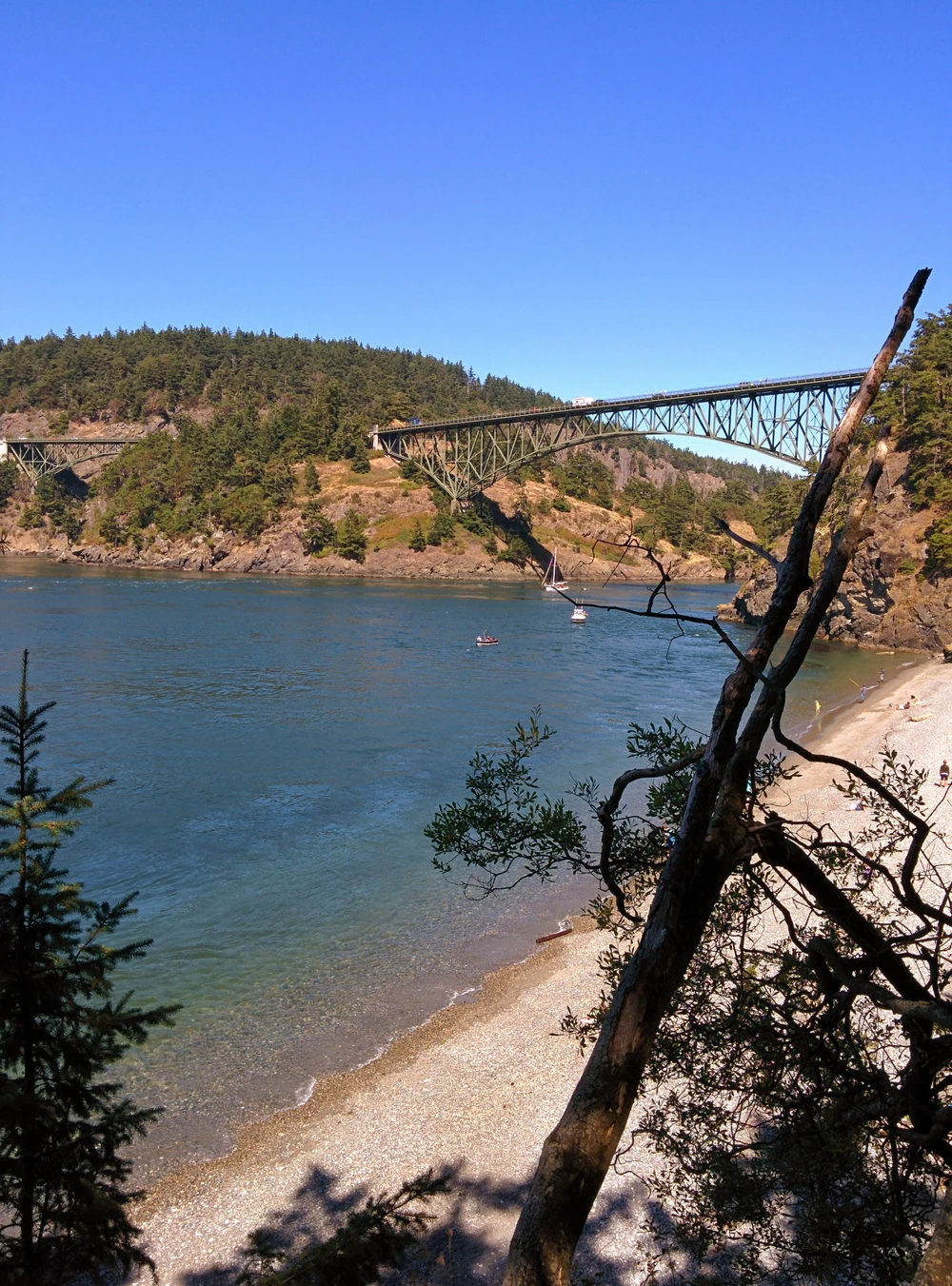
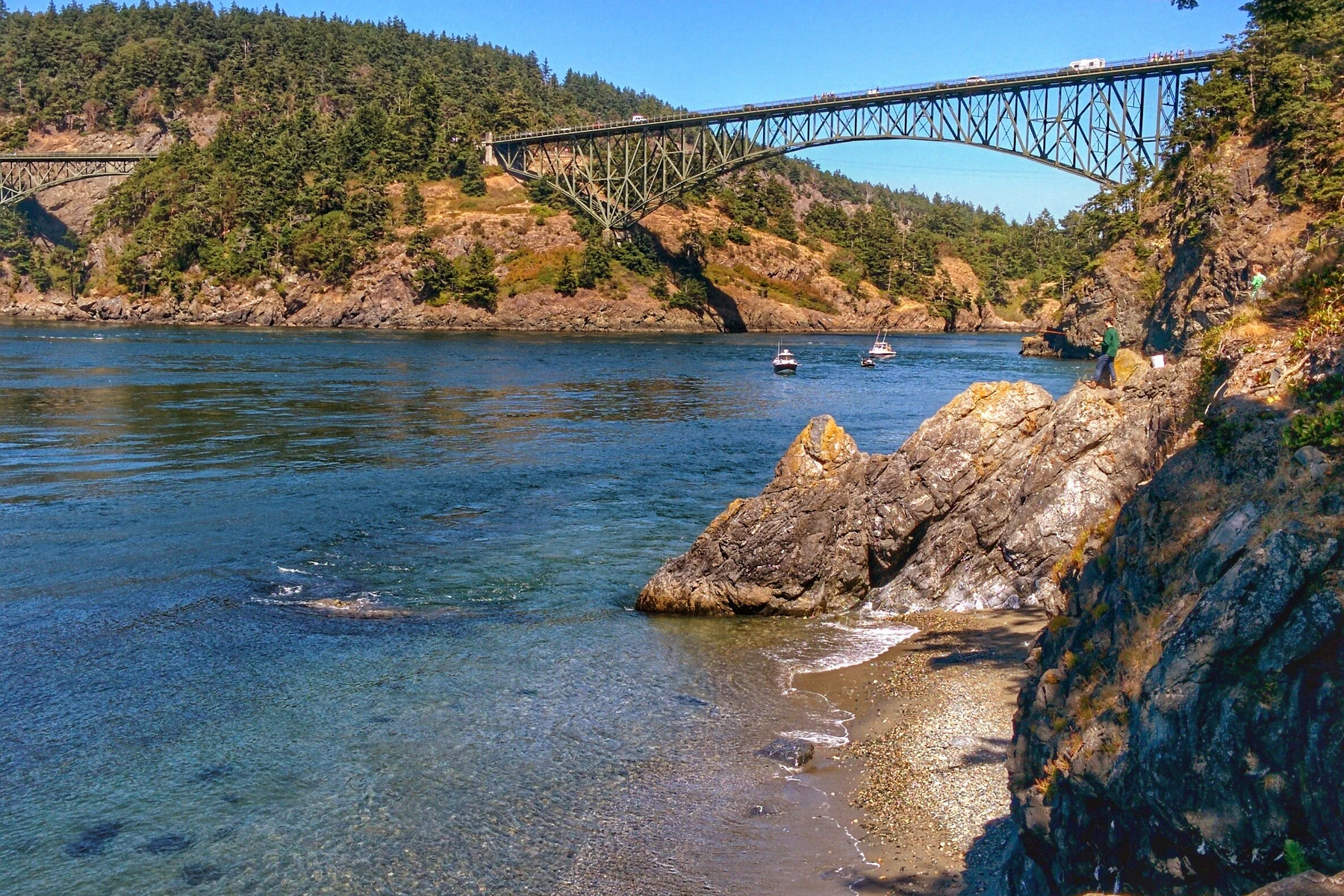
Deception Pass is one of the most sought-after parks in the system. We have visited Deception Pass on day trips several times, most recently a few years ago, but we have not camped there, so the camping account here relies on community reports. We visited in August 2014, and took these photographs then. Campers and guide writers who know the park say it books up completely in summer. Campers give the Forest Loop the park’s strongest privacy, with large sites, level pads, and real separation between them.
It is full every day from late June through Labor Day, with weekends filling as early as April. Book the day the nine month window opens for the dates you want.
Midweek days in May and September are the realistic opening for a camper who missed the window. The same day and cancellation methods are the other honest route in.
The park’s camping spreads across three campgrounds. The three campgrounds are Cranberry Lake, Bowman Bay, and Quarry Pond. Named loops include Forest Loop, Lower Loop A, and Lower Loop B. The campgrounds and loops close on different dates, according to the Winter Schedule.
Forest Loop closes from November 1 to March 31. Bowman Bay and Lower Loop B close from October 1 to March 31. Lower Loop A closes from November 1 to February 28, with a named set of lower loop sites reopening May 16. The lower loop sites that reopen on May 16 are sites 170 to 196. Campers warn that the campground roads run narrow with tight corners for rigs of 24 feet and up.
Quarry Pond stays reservable all year, and it is the park’s winter answer. Water turns off in mid November, weather depending. Parks does not state a site count for Deception Pass in any source we read. Campers describe Quarry Pond as smaller and more private than the park’s main campgrounds.
Tent-camping families should consider jet noise and swimming conditions at Deception Pass. The first is jet noise.
The park sits near Naval Air Station Whidbey Island. Camper reports describe flights into the late evening, loud enough to drown conversation at their worst. Tent campers have less protection from the noise. Camper reports split on the jets by venue, with many Dyrt reports calling the noise dominant while Campendium reports say the jets were not loud.
Campers recommend Cranberry Lake for families with small children; the lake is shallow and has a roped swimming area. Campers report dangerous currents at the pass beaches, and families should follow that routing.
Parks provides limited information about facilities at Deception Pass. According to the Winter Schedule, showers exist at the park’s Cornet Bay area and close in winter. Campers describe the bathrooms as clean, while the token showers draw friction, including machines found out of service.
The community record names no playground at the park.
Drive times from the city and the metro alternatives sit in Best Camping Near Seattle, which gives this park its pointer treatment from the Seattle side.
Moran State Park
Quick facts. 130 sites, 124 standard and 6 hiker and biker, with no hookup sites. Reservable in season through the state system, with first come blocks in winter. The Northend Loop closes October 1 to May 1. Water is off October 31 to April 1. One dump station stands in the park. Nightly fees run $20 to $43 for the standard sites by season. Check-in is 2:30 p.m. and check-out is 1 p.m. Maximum site length is 45 feet with limited availability.
Moran carries the first firewood vending machine in Washington State Parks, selling locally sourced bundles from two locations in the park, cash and cards accepted. The LEANTO concession rents five furnished canvas wall tent sites on platforms in the South End Campground, reservable June through September. The Sugar Shack at Cascade Lake sells beverages, snacks, ice cream sandwiches, and espresso, plus souvenirs and beach gear.
Moran State Park is on Orcas Island in the San Juan Islands. Campers book Moran through the same state reservation system and nine month window. The Parks record gives it 124 standard sites and 6 hiker and biker sites across four campgrounds, with no electrical hookup sites.
Its park wide facility count is five restrooms and ten showers. Campers go for Cascade Lake as much as for the campsites. Campers describe Cascade Lake as warm and gradual, making it a family swimming spot.
Parks does not assign facilities by loop, so campers report those distinctions. Campers steer families toward the Southend area over Northend. They describe Northend sites as sloped, with a single bathhouse reached uphill, which places Northend at the hard end of this system’s shower record. Campers report limited privacy between sites and road noise at the sites near the road, with the upper loops reading more private. Campers also describe the sites as small, with backing a rig into them hard.
Northend closes from October 1 to May 1. Southend closes from November 1 to April 1. Water is off from October 31 to April 1, with winter water near the park office and at Midway site 35.
Moran’s off season first come pattern makes it one of the more usable winter state parks on paper. Mountain Lake sites run first come from November 1 to March 31. In the Midway area, sites 18 to 40 run first come across that same window. Campers praise the Midway sites that come with private lake access.
Sites 41 to 66 close from October 16 to May 1. A winter camper still faces the ferry and the water limits above. That makes the islands a two reservation trip.
Moran sits on Campnab’s most watched list for this system alongside Deception Pass. Campers who book when the window opens get its summer weekends.
Fort Worden Historical State Park
Quick facts. No site count is published by Parks; the Beach Campground is full hookup and the Upper Forest Campground partial hookup. Reservations are necessary year round. The Upper Forest Campground closes October 31 to March 15. Winter water stands at the Beach Campground near site 24. The park’s own campground map puts full hookup at Beach Campground sites 1 to 50 and partial hookup at Upper Forest sites 51 to 80, and a dump station stands at the camp entrance. Nightly fees run $30 to $56 by campground and season. Check-in is 2:30 p.m. and check-out is 1 p.m. The maximum site length is 75 feet with limited availability.
The Cable House Canteen across from the beach sells snacks, cold drinks, camping and beach gear, firewood, sunscreen, and ice, and the park office sells souvenirs and Discover Passes. A prickly native ground cover called sandmat stands in the grassy areas around the Beach Campground, and Parks publishes a flyer warning about it in English and Spanish.
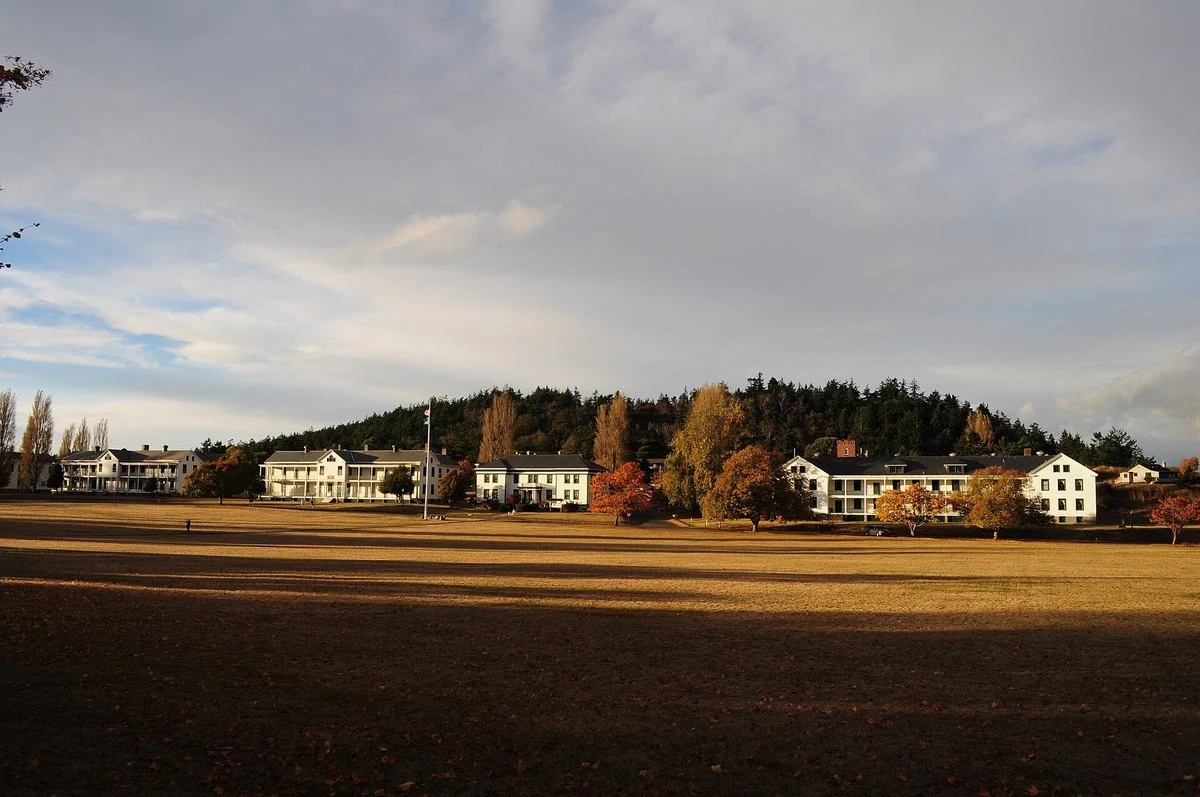
Fort Worden Historical State Park is in Port Townsend. Parks describes two campgrounds at Fort Worden, and choosing between them is the booking decision.
The Beach Campground has full hookup sites, level and spacious, most with views of Admiralty Inlet. The Upper Forest Campground has partial hookup sites in a forested and more private setting. According to Parks, both campgrounds have restrooms with showers. Campers describe the restrooms as modern and clean, with hot showers running on tokens.
Parks states that reservations are necessary year round at Fort Worden. Its sites are popular and fill quickly. The Upper Forest Campground closes from October 31 to March 15. Winter water is available at the Beach Campground near site 24. Parks states no site count for either campground in the record we read.
The caveats are practical rather than damning. The beach side is exposed to wind. The beach sites offer space without privacy, so a tent family trades shelter and buffer for the inlet view. Campendium campers lean the other way on the Beach Campground, praising extra large sites arranged for door side privacy.
The park’s historic bunkers attract children, but children need supervision there. They have no handrails and uneven floors. Family writers advise close supervision and headlamps for a preschooler underground.
Seattle’s Child counts Fort Worden a family favorite. Book as soon as the nine month window opens, pick the forest side for a tent if privacy matters, and pack for wind either way.
Fort Flagler Historical State Park
Quick facts. 116 campsites, 47 in the Upper Campground and 69 in the Lower, with 59 standard, 55 full hookup, and 2 primitive sites, plus one Cascadia Marine Trail site. The Lower Campground takes reservations all year, and reservations are necessary April to October. The Upper Campground closes October 1 to April 30. Winter water stands at site 93. One dump station stands in the park. Nightly fees run $12 to $56 by site class and season. Check-in is 2:30 p.m. and check-out is 1 p.m. Maximum site length is 50 feet with limited availability.
The Beachcomber Café sells snacks and grocery items, beach toys, clothing, camping supplies, bagged ice, and firewood. The sandmat warning covers the Lower Campground and the reservable shelter here. A small playground stands in the day use area across from the Lower Campground, with swings at the end of Flagler Road.
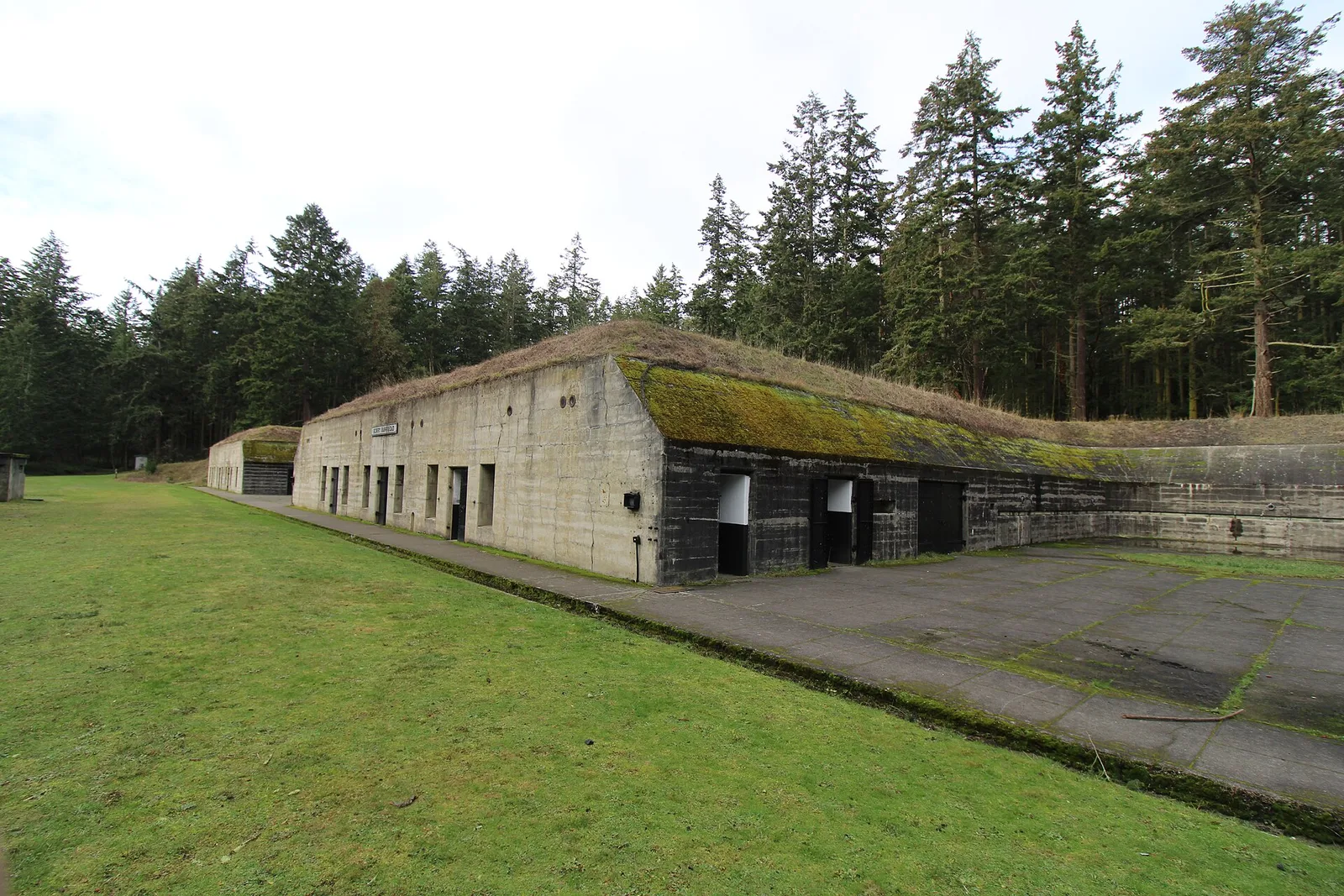
Fort Flagler Historical State Park stands at the north tip of Marrowstone Island, facing Port Townsend across Admiralty Inlet. Like Fort Worden, it is a Triangle of Fire fort with historic houses above its campgrounds, and its campground splits in two, an upper ground and a lower ground on the beach.
The Upper Campground holds 47 sites, all standard, and runs a short season, May 1 to September 30. The Lower Campground holds 69 sites on the beach side, standard and full hookup in the published count, with partial hookup sites also listed but not counted, and Parks describes them as level and spacious. From January 1, 2026, the Lower Campground takes reservations all year; before that change it ran first come, first served through the winter.
Both campgrounds have restrooms with showers. Water turns off from mid November to March, with a winter supply at site 93, and one dump station serves the park. Two primitive group camps stand apart from the numbered sites, the Scout area for tents only and up to 40 people, and Wagon Wheel for RVs and tents with no hookups. Both have vault toilets and no showers, and both close for part of the winter.
The five vacation houses on the bluff, fort quarters sleeping four to eight, rent through the state reservation system and are covered in the roofed stays section of this guide.
Millersylvania State Park
Quick facts. 138 campsites, 93 standard and 45 utility. Reservations for camping are taken all year. Sites 1 to 7 and 226 to 248 stay open all year. Water is turned off around November 1 to March 31, with a winter water supply near the dump station; hookup sites keep water through winter. A trailer dump stands in the park. Nightly fees run $20 to $51 by site class and season. Check-in is 2:30 p.m. and check-out is 1 p.m. The utility sites carry a 60 foot maximum with limited availability, while the standard section limits total vehicle length to 35 feet and trailers to 18 feet.
Boy Scout troops sell firewood at the woodshed near campsite 132 from Memorial Day through Labor Day, with pre-order and campsite delivery; firewood is also sold by the camp host and at the ranger station and gift shop, and gathering firewood in the park is prohibited.
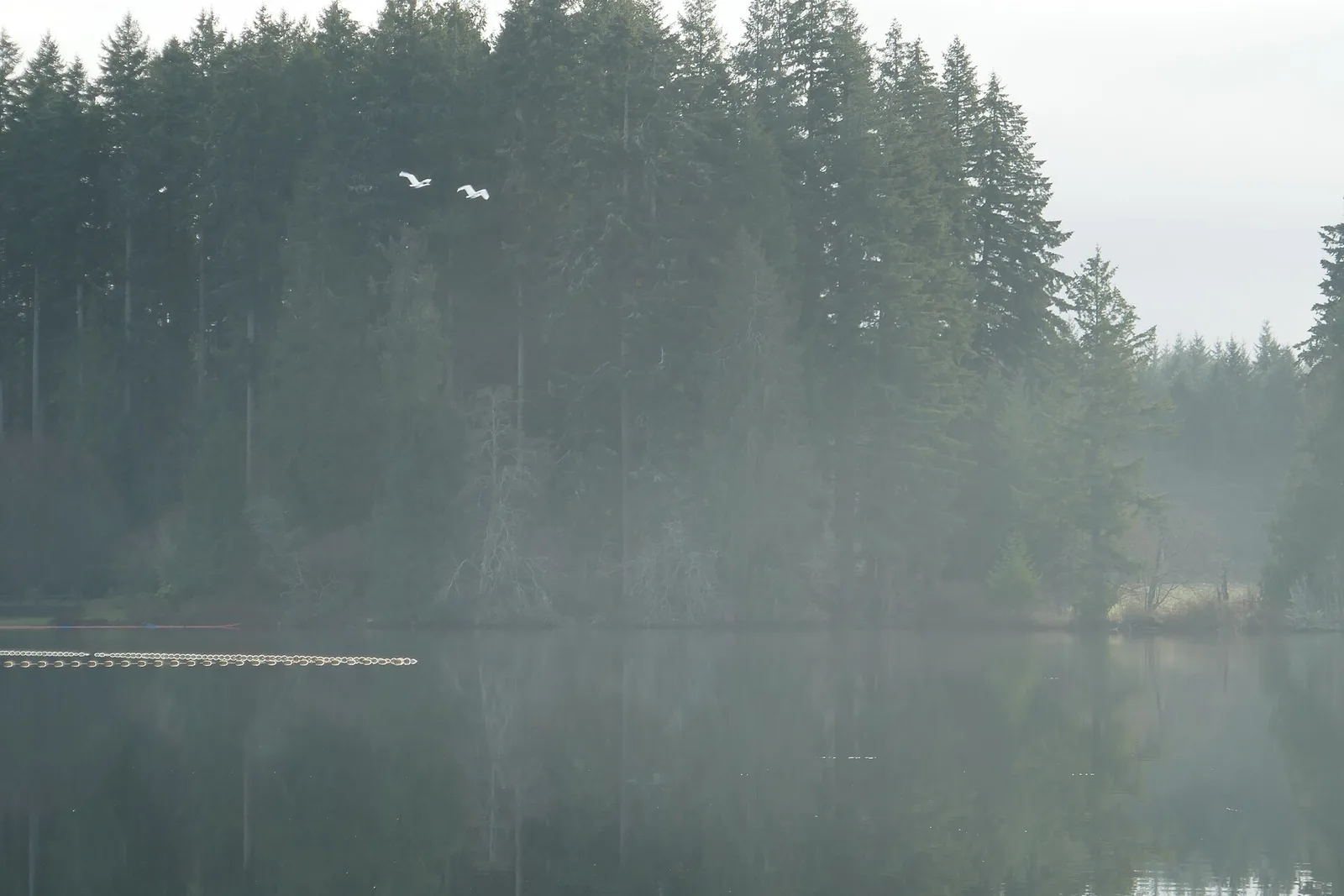
Millersylvania State Park stands in forest on the shore of Deep Lake, south of Olympia. Its 138 campsites split between a standard section on tight, narrow roadways and a utility section, and that split shapes who fits where. Campers describe the utility field as packed close with little or no privacy, while the tent sites in the trees sit better but still close.
Reservations run all year, and the winter form is a smaller ground rather than a closure. Campers report Deep Lake drawing a midday crowd in summer, and low ground turning muddy with pooling water after rain.
The length limits split by section, and they are the booking fact that matters most here. Utility sites take up to 60 feet with limited availability. The standard section’s narrow roads cap total vehicle length at 35 feet, with no trailers over 18 feet, so a long rig belongs in the utility rows.
Restrooms and showers serve the campground, and a trailer dump stands in the park at $5 per use, waived for campers who have paid for camping. Campers describe the bathrooms as clean. A walk in group camp takes 20 to 40 guests, tents only. The park’s one roofed stay, the Lakeside Cottage, sleeps up to six and is covered in the roofed stays section of this guide.
Cape Disappointment State Park
Quick facts. Standard, partial hookup, and full hookup campsites plus 5 primitive hiker and biker sites, all first come. The campground runs in a reduced form after a renovation closure that lasted into 2026, and Parks publishes no current count by site type. Nightly fees run $12 to $56 by site class and season. Check-in is 2:30 p.m. and check-out is 1 p.m. The park takes RVs and combinations of 45 feet or less.
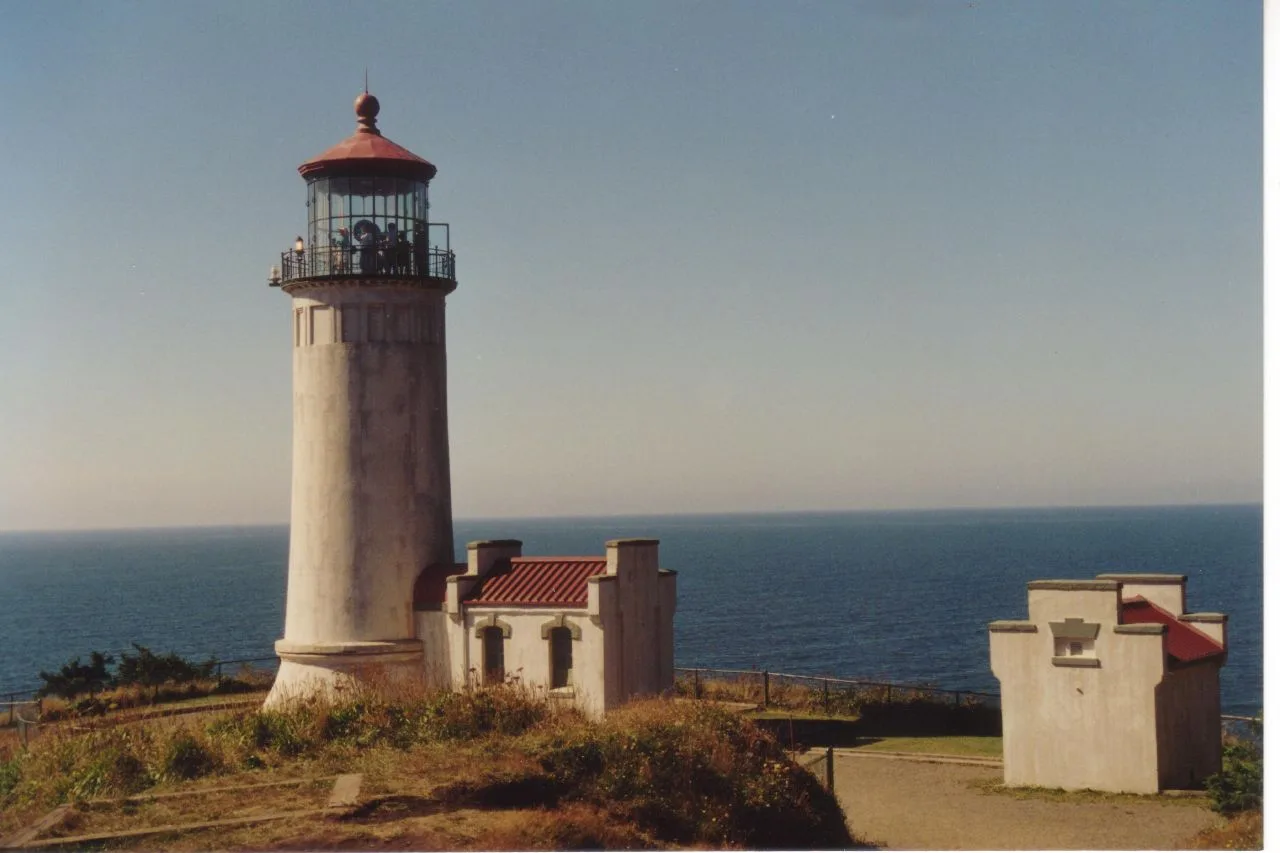
Cape Disappointment State Park fills 2,023 acres where the Columbia River meets the Pacific, fronted by ocean beach and looking into the river’s mouth. The North Head Lighthouse stands over the bar, open from May to September 30. The Lewis and Clark Interpretive Center sits on a 200 foot cliff above the surf, and Baker Bay behind the park holds a boat ramp and 135 feet of dock. Its yurts and lighthouse keeper houses stand in the roofed stays section of this guide. Campers identify Section A as the full hookup area, the dry sites as the closest to the beach, and the lakeside row of Loop D, at sites 189 and 198, as having no privacy.
The renovation still shapes a trip. The Winter Schedule keeps sites 7 to 10, 21 to 25, and 101 to 110 closed until winter storms have passed and the sites are evaluated, with water and sewer always on at the rest. The North Jetty closes on January 1, 2027 for a federal project expected to run to November 30, 2029, and the park store is closed into 2027 while a new contact station is built.
Campers praise the free hot showers, though their reports on cleanliness vary. Campers’ own reports lean toward little or no cell service at Cape Disappointment, even though both review sites rate its cell service far better.
Family parks, quiet picks, and the first overnight
A first overnight asks less of a park than most guides assume. A short drive matters more than scenery. A tired child and a dark campsite punish distance.
The Junior Ranger program runs at 21 of the parks in this guide. A child aged 4 or up picks up the free booklet at a participating park, works through it during the visit, and is sworn in as a Junior Ranger on completion, with acts of service earning further pins. Deception Pass, Lake Chelan, and Lake Wenatchee carry the booklet in English and Spanish. The parks in this guide that do not run the program are Cape Disappointment, Bogachiel, Saltwater, Belfair, Lake Easton, Beacon Rock, and Blake Island. Staffed interpretive programs run as a dated, per park events calendar rather than a standing schedule, and the entries name the programs Parks publishes park by park.
A real bathroom matters as much, along with a site with some buffer from neighbors and an easy morning after. We based these criteria on camper reports and on our own practice camping with a daughter from infancy to preschool.
Rasar State Park is the reported sleeper
Quick facts. Parks publishes no site count for this park. Camping and cabin reservations are taken all year. Water is off November 1 to April 1, with winter water at the dump station. A trailer dump stands in the park. Nightly fees run $20 to $43 for the standard sites by season. Check-in is 2:30 p.m. and check-out is 1 p.m. Parks lists a maximum RV and trailer length of 35 feet at Rasar.
Rasar runs interpretive and Junior Ranger programs on weekends between Memorial Day and Labor Day. A playground stands in the park, and firewood is sold on site.
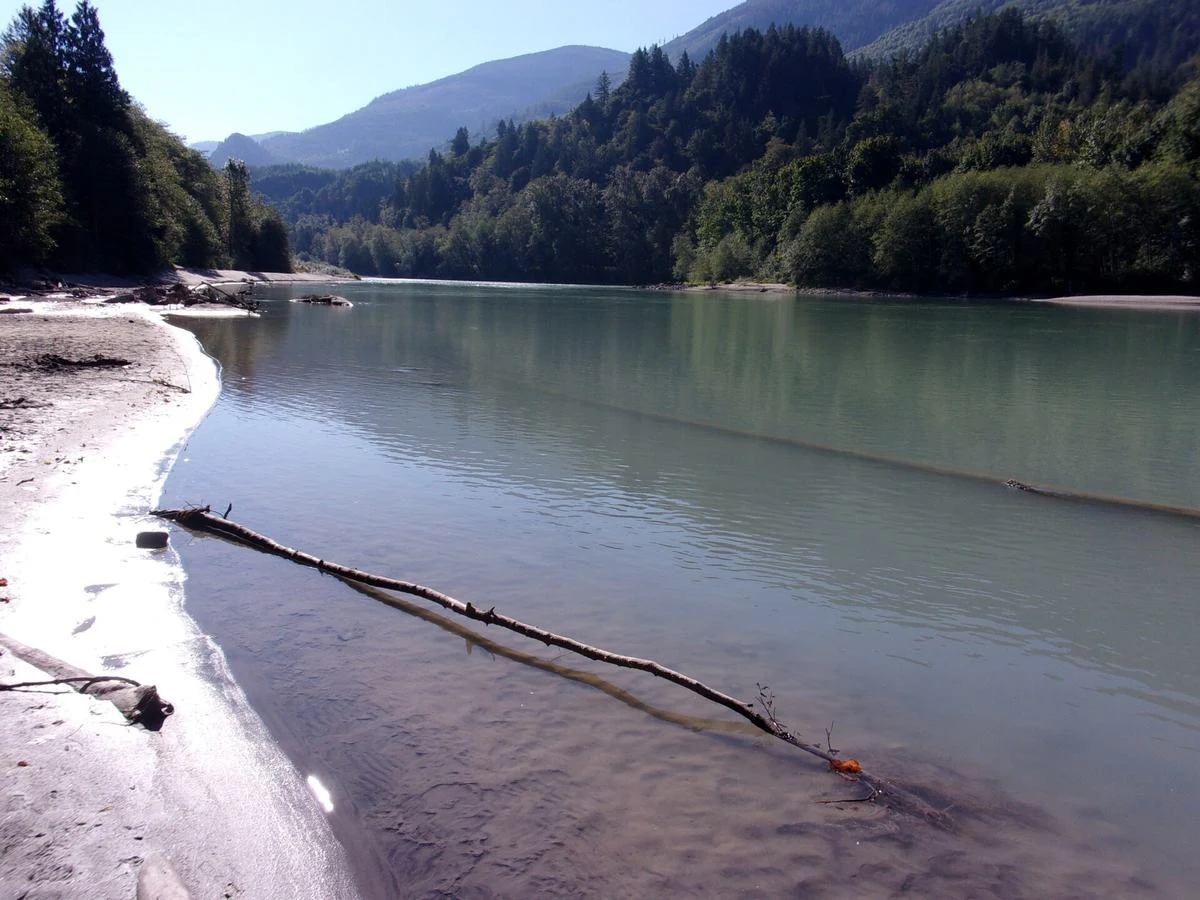
Rasar State Park sits on the Skagit River. Campers with families report Rasar as the strongest under the radar family pick in this system. We have camped at Rasar once ourselves, in the group camp with a group of friends, and it was a good stay for group camping.
Two review bodies agree that its wooded sites are spacious, level, and private. Campers describe very clean bathrooms at a park that feels managed for quiet rather than for volume.
Rasar is a 180 acre camping park with 4,000 feet of freshwater shoreline on the Skagit River.
Parks names one playground, and campers report a second. A playground beside a river where a family can spread out is the core of Rasar’s appeal. Campers report that the park sits roughly ninety minutes from Seattle outside peak traffic.
Parks confirms that showers exist at Rasar, and campers now report those showers as free. That report is not an agency promise. Parks does not say how its showers run, so check on arrival.
Rasar accepts reservations for campsites and cabins all year. Water turns off from November 1 to April 1, and winter water is available at the dump station. Campers report that a main season trip gives the fullest Rasar experience.
Bogachiel State Park camped 2017
Quick facts. Standard, partial hookup, and hiker and biker sites; Parks publishes no total. Sites 1 to 25 take reservations year round. Sites 32 to 40 close November 1 to March 31, and water is off over the same span. A trailer dump stands in the park. Nightly fees run $20 to $51 by site class and season. Check-in is 2:30 p.m. and check-out is 1 p.m. The park takes RVs and combinations of 40 feet or less.
Elk have the right of way in this park. Campers stay back 100 feet from elk and never offer them food.
Bogachiel, south of Forks off Highway 101, was our rainforest gateway stay in the summer of 2017. The park sits on the west side of the Olympic Peninsula, near the Hoh corridor. Daniel has also backpacked in the Hoh corridor and the Olympics. Campers report 42 sites at the park.
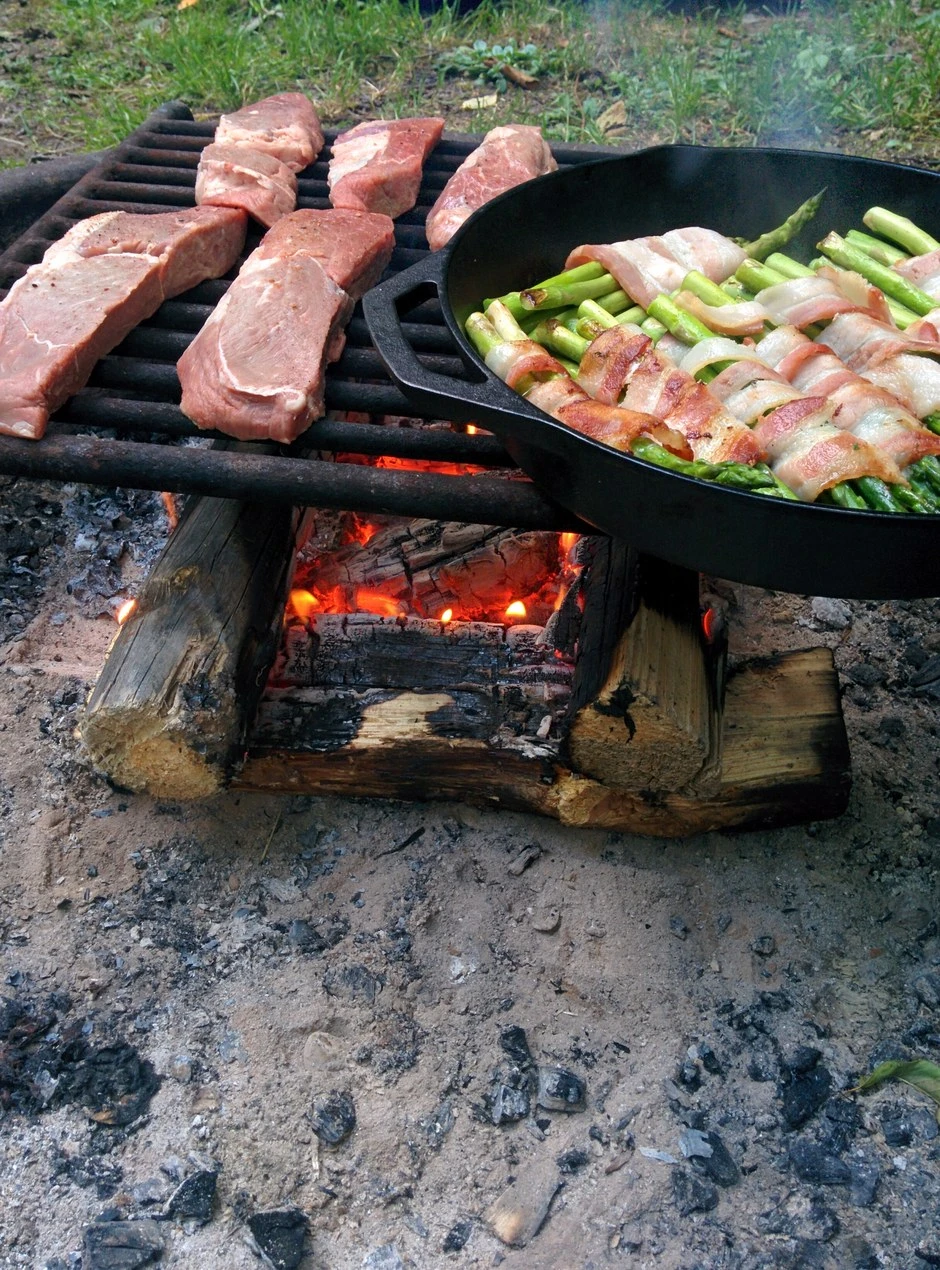
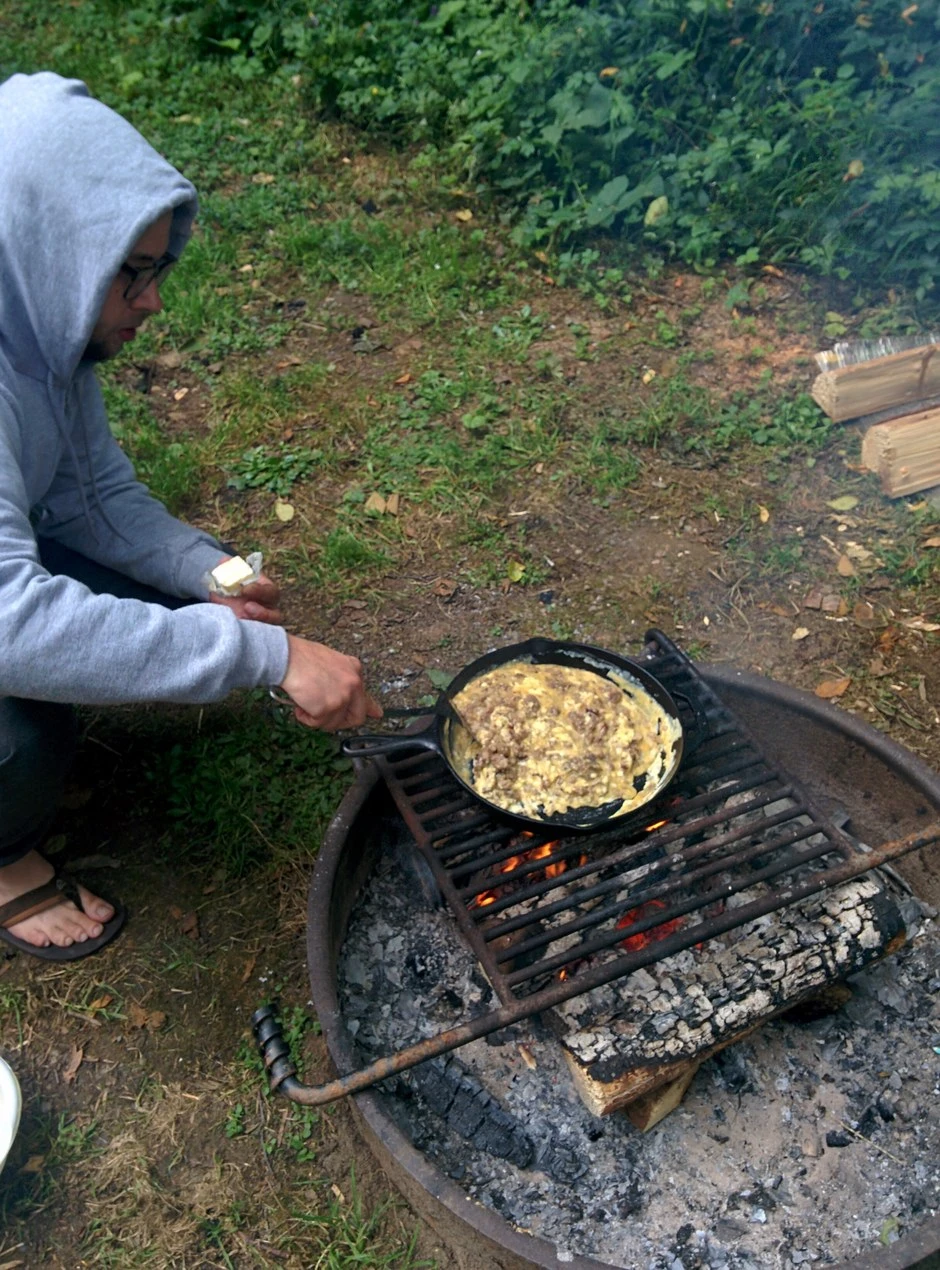
Campers report highway noise through the night. River side sites mask it better than the rest. Sites sit close together, with forest growth between them.
Parks lists restrooms and showers for Bogachiel. Campers describe the showers as coin operated and hot. Parks lists flush toilets in its general description of standard sites.
Campers also describe firm ground where tent campers need a mallet for their stakes. Some reports mention rust tinted water at the spigots.
In winter, the Winter Schedule keeps only part of Bogachiel open. Sites 1 to 25 stay reservable year round. Sites 32 to 40 close from November 1 to March 31.
Water turns off across those same dates. In winter, campers can get water near the dump station and at site 12.
See the Olympic guide for Bogachiel’s country in full. Bogachiel is a practical choice for a family aiming at the Hoh with a tent and a need for showers, as its record describes.
Twin Harbors State Park camped 2018
Quick facts. Standard, full hookup, and hiker and biker sites; Parks publishes no total. Sites run first come September 15 to May 1 and take reservations in season. The Eastside loop and Westside loop sites 232 to 299 close November to May 31 for seasonal flooding. The trailer dump fee is $5 per use, and the dump station closes from November to April. Nightly fees run $20 to $56 by site class and season. Check-in is 2:30 p.m. and check-out is 1 p.m. Maximum site length is 35 feet with limited availability.
The Welcome Center park store offers firewood, snacks, and some camping supplies from May 15 to September 15. Vehicles are no longer allowed on the Schafer Road beach access, which is pedestrian only as the beach conditions deteriorate.
Twin Harbors, at Westport, was our coastal state park stay in the summer of 2018. It is the big beach park where the wilderness coast we backpack meets a beach town. Campers call Twin Harbors a family workhorse.
Campers describe clean bathrooms and facilities that stay stocked, with rangers coming through regularly. They also describe sites that sit very close together with little privacy, close enough that neighbors’ conversations carry.
Campers report the shower setup more than any other small friction at this park. Parks confirms that bathrooms and showers are available at Twin Harbors. Campers report that the showers use tokens sold at the ranger station. The token machine takes dollar bills and does not take coins.
Pack small bills for Twin Harbors. We learned that from other campers, not from our 2018 stay.
Campers also report mosquitoes in wetter periods that standard repellent does not fully deter.
The entire Eastside loop closes from November to May 31 for seasonal flooding. Westside loop sites 232 to 299 also close for seasonal flooding, with dates that may change depending on weather. All other sites run first come from September 15 to May 1.
The dump station closes from November to April. Cabins and yurts take reservations all year. Twin Harbors gets its second full treatment in our Washington Coast camping guide, where it stands as that guide’s one camped park.
Joemma Beach State Park camped 2017
Quick facts. Primitive sites, plus 2 hiker and biker sites and 2 marine trail sites. The primitive sites take reservations May 15 to October 1, and the hiker, biker, and marine trail sites are first come. The main campground season runs May 15 to October 1. Parks publishes no dump station for this park. Primitive sites cost $12 a night. Check-in is 2:30 p.m. and check-out is 1 p.m.
Joemma Beach, on the Key Peninsula in the South Sound, was our 2017 stay. Joemma Beach is a beach and dock park, with a caveat on amenities. Parks lists it as a primitive campground. Campers can reserve its primitive sites from May 15 to October 1.
Joemma Beach also carries a full entry in Best Camping Near Seattle, the one camped park in that guide. Its Cascadia Marine Trail sites are first come, and the watercraft arrival condition applies only to those sites. Parks lists restrooms and drinking water in its amenities and lists no showers.
Parks does not state a bathroom type for Joemma Beach. Campers describe vault toilets and potable water as the park’s whole amenity line. Recent reports mention parties by locals, which families looking for a quiet weekend should consider.
We stayed at Joemma Beach in 2017 and have not used that stay to assess its current amenities. We have not used our past stays to assess current amenities at any of the five parks. The park’s appeal is the water, the dock, and the South Sound setting.
The Winter Schedule lists Joemma Beach’s main campground as closed from October 1, 2026 to May 15, 2027.
The marine trail site stays open all year. Do not plan to camp elsewhere in the park during winter.
Joemma Beach is within reach of the south end of Seattle.
Lake Chelan State Park camped 2017
Quick facts. 144 sites, 109 standard and 35 utility. Loops take reservations from April 15, most of them into September, and Trailer Loop sites 8 to 17 take them year round. Winter water stands near the restrooms, and the restrooms stay open all year. The utility sites split 18 partial and 17 full hookup, and one dump station stands in the park. Nightly fees run $20 to $56 by site class and season. Check-in is 2:30 p.m. and check-out is 1 p.m. The agency’s campsite profile warns that rigs longer than 30 feet cannot enter or use the utility sites.
Paninis in the Park carries camp supplies including ice and firewood alongside food and espresso. A playground stands in the park.
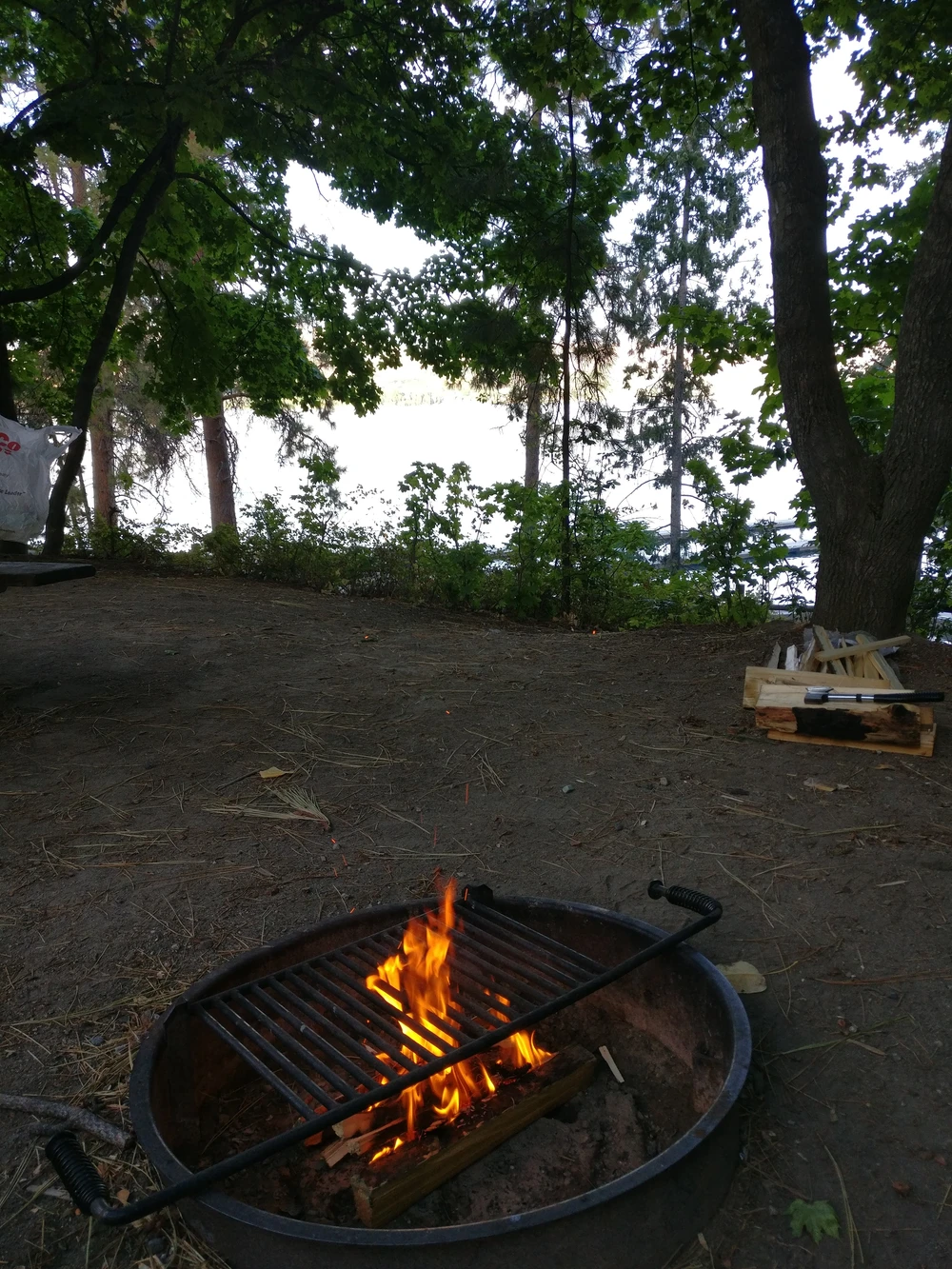
Lake Chelan was our dry side stay in September 2017. Campers and Parks describe Chelan summers as hot and dry. Campers and Parks describe a busy lake town atmosphere, with a social camp rather than a quiet one.
Clean facilities hold up through the season. Campers also describe grassy center sites with little buffer between neighbors. The sites have the same close spacing as those at the coast parks, despite the different climate.
Families come for the playground and lake access.
Parks lists restrooms and showers at Lake Chelan. The Winter Schedule adds that its restrooms stay open all year. Winter water is available near the restrooms and site 21.
Campers report that the park fills fast when the window opens, because dry weather does not mean sites stay available. Families seeking a July week at Chelan book the previous October, as they would for a popular coast park; later bookings depend on second chances.
The Winter Schedule’s pattern is the one that stands for Lake Chelan. An inaccurate older community account of its winter schedule still circulates. You can reserve sites in the Beach Loop from April 15 to September 30. You can reserve sites in the West Loop from April 15 to September 14.
You can reserve Trailer Loop sites 8 to 17 all year. You can reserve the remaining Trailer Loop sites from April 15 to September 30.
Our campground stay here was in September 2017. The head of the lake is still ahead of us, and we hope to ride the ferry from Chelan up to Stehekin someday and camp there or rent a cabin. The sites we camped in were tight and grassy, with little shelter from sun or wind; a small stretch of waterfront sites looked like the better ground in the park.
Saltwater State Park is our pick and currently closed
Quick facts. The campground is closed while Parks reevaluates camping in this park, and the park is day use only for now. No current site inventory stands.
One park rule stands even inside the closure’s day use frame: wood fires are not allowed in this park at any time.
Saltwater State Park is the park we would recommend for a family just getting into camping. We have visited Saltwater and we have not stayed overnight there. Saltwater is a day-use park with a sandy beach, a short drive from the south end of Seattle and two miles from Interstate 5.
Campers who have slept there describe planes directly overhead every few minutes, day and night, on the Sea-Tac flight path. They describe sites close together with no privacy. Those conditions make Saltwater a poor choice for a quiet first overnight.
Saltwater’s campground is closed as of this writing. A Parks notice posted in June 2026 describes flood and erosion projects in development in the campground area. Parks is reevaluating camping within the park while the closure stands. The Parks Winter Schedule states the same position, campground and trailer dump closed. Parks has not announced a reopening date.
For now, visit Saltwater on a day trip. You can enjoy the beach and picnic areas, then drive home to sleep. For a first overnight while Saltwater’s campground is closed, try Rasar. Dash Point and Belfair are other options; check campers’ reports before choosing. Saltwater also leads the entries in Best Camping Near Seattle, where its closure stands first.
Lake Wenatchee State Park
Quick facts. 197 campsites in two campgrounds, standard sites and 42 partial utility sites with water and electric, plus ADA sites, and no full hookup sites. Reservations in the main season, with first come camping from September to May. A trailer dump stands in the North Campground at $5 per use. Nightly fees run $20 to $51 by site class and season. Check-in is 2:30 p.m. and check-out is 1 p.m. The South Campground takes combinations under 20 feet.
An adaptive beach wheelchair and Mobi-mats stand at the swim beach. The Camp Store near the swim beach sells prepared foods, snacks, beverages, ice cream, espresso, camping supplies, firewood, and ice, and the boat rentals run with the store season, May 1 to October 31, weather dependent. Self-registration here runs in cash or check, with a credit card machine in the South Park.
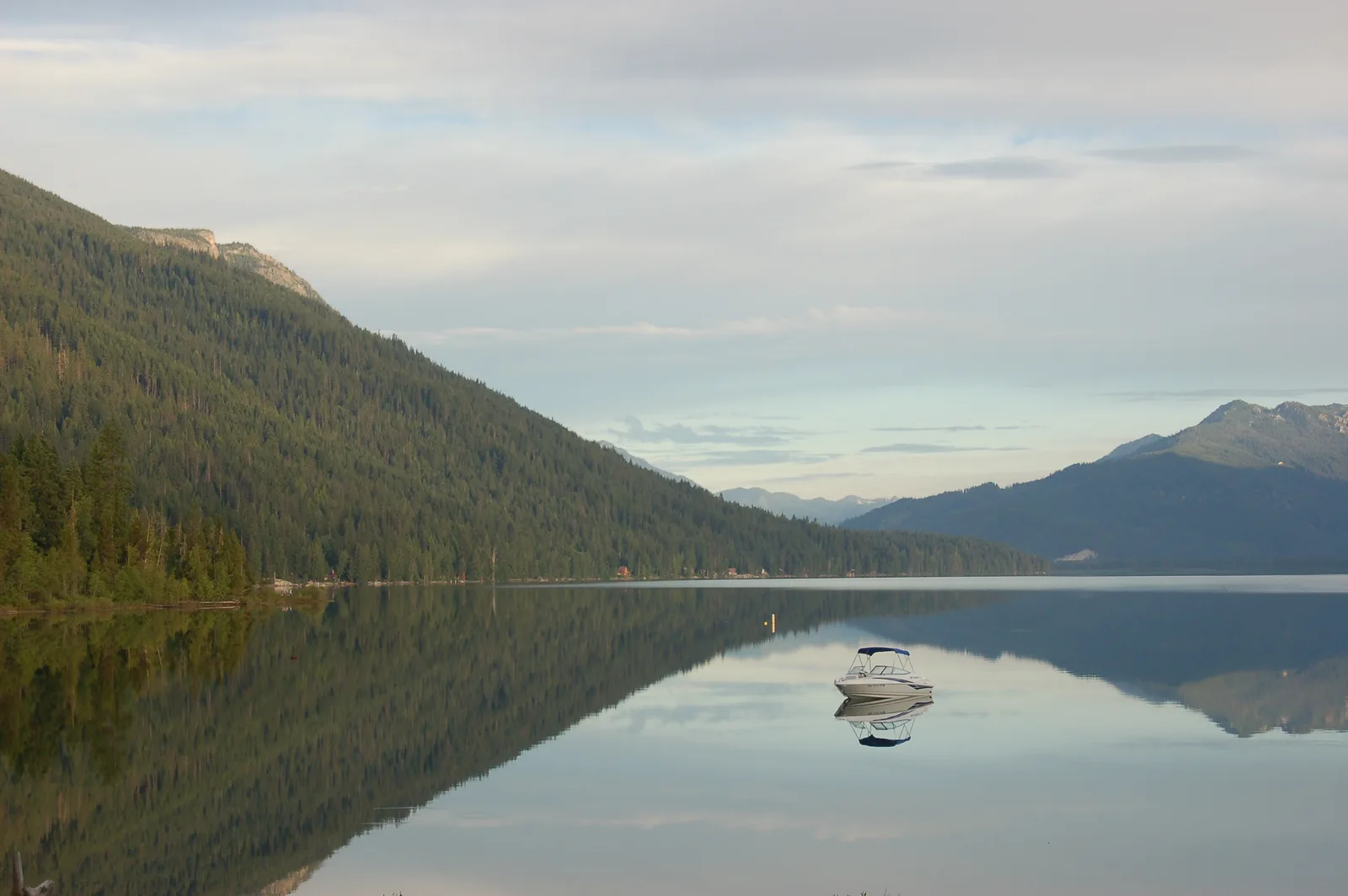
Lake Wenatchee State Park spreads along a five mile, glacier fed lake and the Wenatchee River east of Stevens Pass, not far from Leavenworth. The South Campground holds 100 standard sites, and the North Campground holds the rest, including the 42 partial utility sites beside its trailer dump. Campgrounds have centrally located comfort stations with hot showers, and the park pairs its swim beach with a camp store and boat rentals from May into the fall.
Campers report heavy mosquitoes in early summer and a lake wind that is worst in the afternoon. Campers report good cell service in the campgrounds, against one review site’s limited rating.
Winter is this park’s second season. Once the snow arrives the campgrounds close, and winter camping runs first come in a designated part of the South Park day use area. Heated restrooms and showers stand nearby, and groomed ski trails, a sled hill, and snowshoe routes run out the door. A Sno-Park permit covers the stay.
Scenic Beach State Park
Quick facts. 50 standard campsites and 2 hiker and biker sites, and no hookup sites. The standard sites take reservations, with sites 1 to 25 reservable year round. Sites 26 to 50 close from November 1 to March 31, and water is off from November to March 1. One dump station stands in the park. Nightly fees run $20 to $43 for the standard sites by season. Check-in is 2:30 p.m. and check-out is 1 p.m.
A playground stands in the park, and firewood is sold on site.
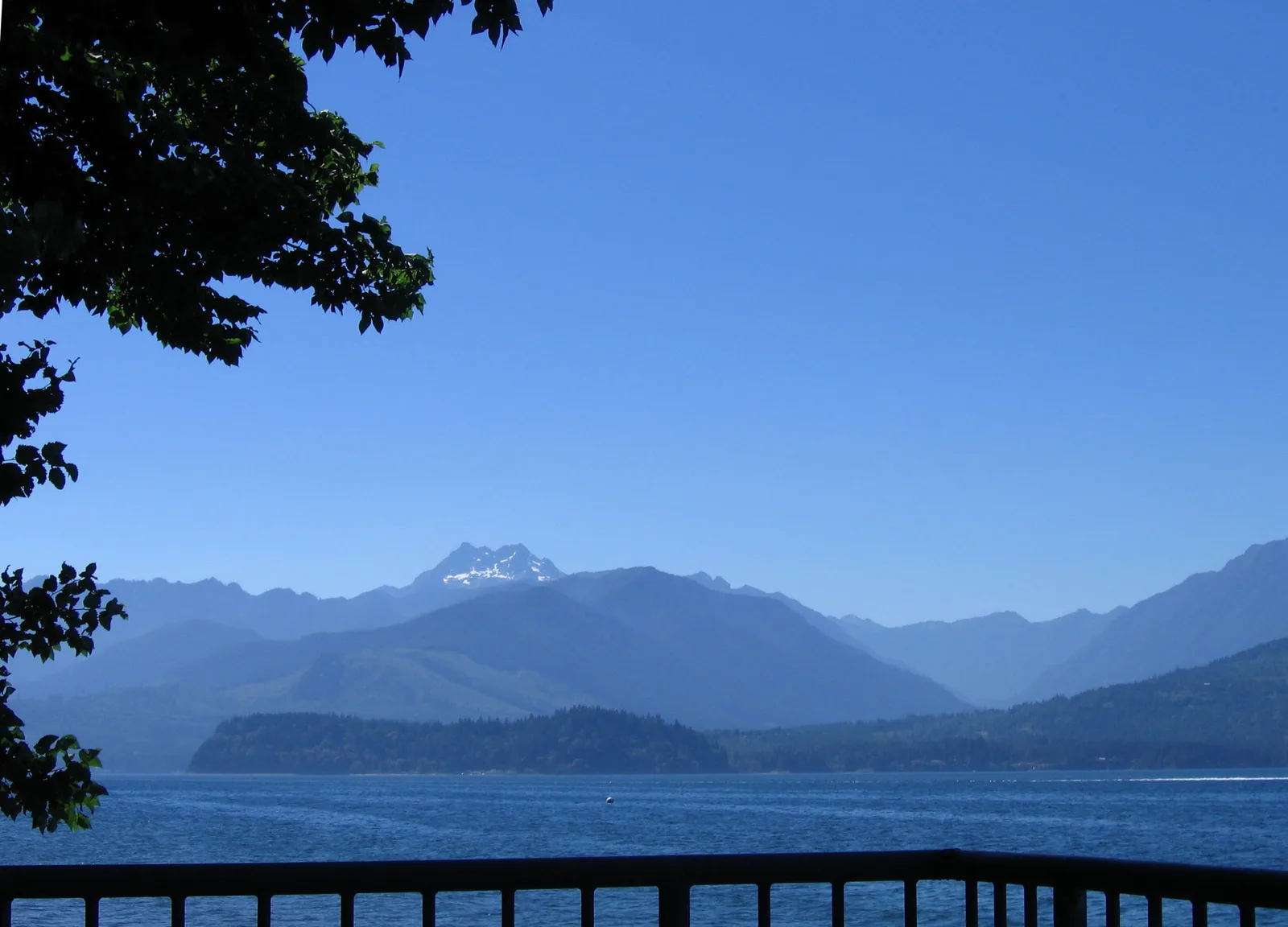
Scenic Beach State Park sits on Hood Canal at Seabeck, looking across the water at the Olympic Mountains. The park brochure counts 18 pull through campsites among its sites, and the grounds hold two restrooms and four showers. Rhododendrons fill the woods in season, and the historic Emel House, built in 1911, anchors the day use area and takes reservations nine months ahead for weddings and reunions. Clamming and oyster harvesting at the park are closed until further notice.
Penrose Point State Park
Quick facts. 82 standard campsites, 1 hiker and biker site, and 1 Cascadia Marine Trail site, and no hookup sites. Reservations are taken for all open dates. Sites 1 to 21 and site 52 stay open all year, more open from May 15. A dump station stands near the campground. Nightly fees run $20 to $43 for the standard sites by season. Check-in is 2:30 p.m. and check-out is 1 p.m.
There is no boat launch in this park, and the marine pumpout is no longer in service; the nearest public launch is in Home, three miles away, and the nearest state park launch is Joemma Beach, 4.8 miles away. Junior Ranger programs run on Saturdays in summer, beside a self-guided interpretive trail. Firewood is sold on site.
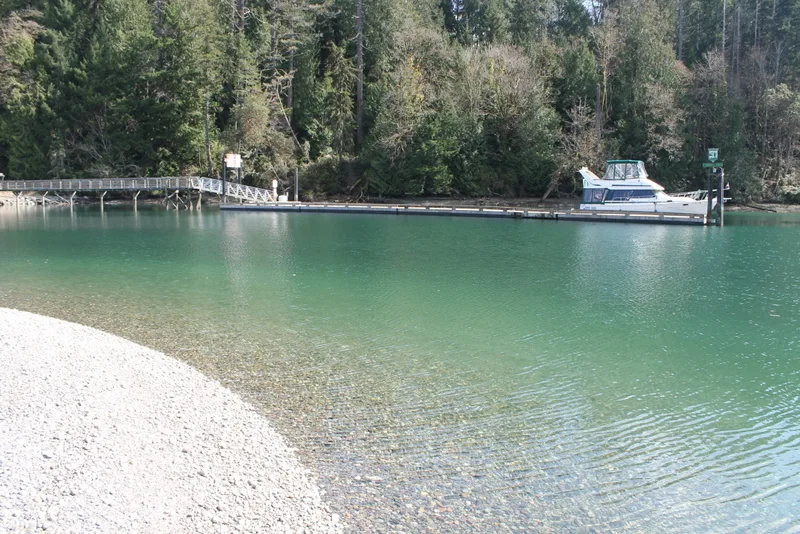
Penrose Point State Park fills 237 forested acres on the Key Peninsula with nearly two miles of Puget Sound shoreline. Every site sits in shade or partial shade, and most campsites park a vehicle in about 35 feet, on campground roads Parks describes as narrow and winding. Three pairs of double sites, 13 and 14, 26 and 27, and 58 and 59, must be rented together. Showers run from May 15 to October 1, split across its restrooms. The park is closed to shellfishing through 2026, and it has no designated swim area.
Spencer Spit State Park
Quick facts. 37 standard reservable campsites, 16 hiker and biker sites, and 3 Cascadia Marine Trail sites, with no hookups and no showers. The standard sites are reservable, the rest run first come, and every open site runs first come from September 16 to May 14. Sites 1 to 42 close from November 1 to March 1 while the walk in sites stay open. The water and dump station turn off in the same window. Nightly fees run $20 to $43 for the standard sites by season. Check-in is 2:30 p.m. and check-out is 1 p.m.
The park carries a second reservable group camp beside the one this guide names above: G-1, three walk-in sites including an Adirondack shelter with eight bunks, takes up to 24 people and 3 vehicles, while G-3 carries a kitchen shelter with an electrical outlet and a water spigot, up to 24 people, a trailer, six tents, and 5 vehicles. A playground stands in the park, and firewood is sold on site.
Spencer Spit State Park wraps a rare sand spit and saltwater lagoon on Lopez Island, with large, private campsites split between the woods and the open beach side. Two restrooms serve the campground and a composting toilet stands near the beach sites, with eleven moorage buoys offshore. Two flat miles of trail circle the lagoon and run down the spit, and the hiker and biker sites can reach capacity on summer weekends.
Bay View State Park
Quick facts. 76 campsites, 46 standard and 30 partial hookup, plus six cabins. Reservations are taken all year. Sites 39 to 76 close October 15 to May 15. Water turns off November 1 to April 1, with a winter water supply at the dump station. A trailer dump stands in the park. Nightly fees run $20 to $51 by site class and season. Check-in is 2:30 p.m. and check-out is 1 p.m.
Firewood is sold on site.
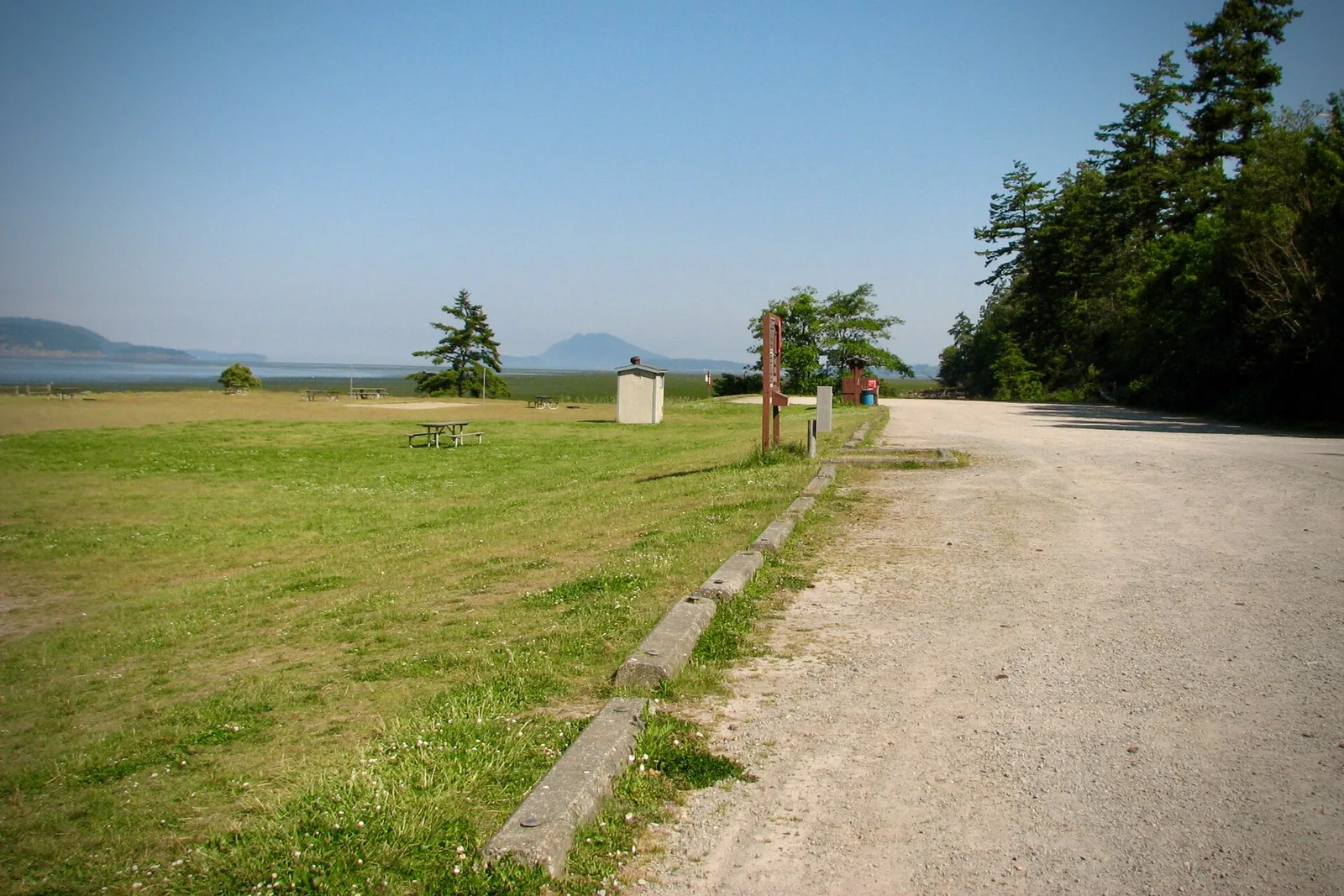
Bay View State Park is a small campground on Padilla Bay in Skagit County, near Burlington, with views across the bay toward the San Juan Islands. Its 76 sites split between standard sites and partial hookup sites carrying water and electric.
The six cabins are the park’s distinction in this part of the guide. Two have bathrooms, and all but one allows pets. A group camp takes up to 24 people, tents only, and the campground has full restrooms and showers.
Birch Bay State Park
Quick facts. 169 campsites, 147 standard, 20 partial hookup, and 2 primitive. Campsites are reservable for arrival dates May 15 to September 15, and the North Loop runs first come from September 16 to May 14. The park typically winterizes from late November to late March, with a winter water supply in the North Loop. A trailer dump stands in the park. Nightly fees run $12 to $51 by site class and season. Check-in is 2:30 p.m. and check-out is 1 p.m. The partial hookup sites take RVs to 40 feet, and the park takes combinations to 60 feet.
Birch Bay runs an active summer interpretive program, and a playground stands in the park. Wi-Fi is listed among the park’s amenities, the only park in this guide where Parks publishes it. Firewood is sold on site.
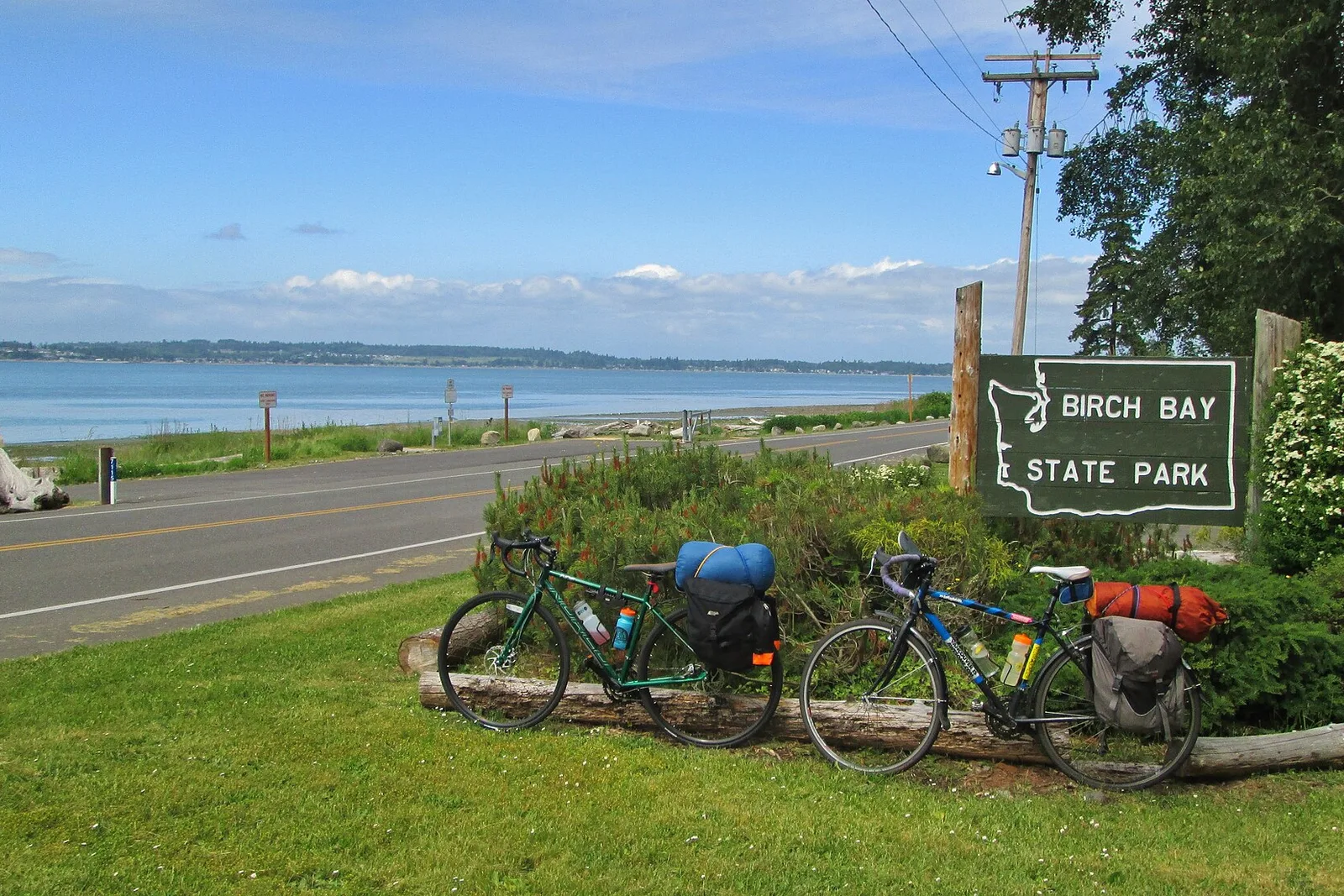
Birch Bay State Park fronts its namesake bay ten miles south of Blaine, near the Canadian border. The campground splits between a North Campground, sites 1 to 74, and a South Campground, sites 75 to 166, and the brochure counts 8 restrooms, three of them accessible, and 16 showers.
Summer arrivals book ahead, and the off season belongs to the North Loop’s first come ground. A primitive group camp takes up to 40 guests, and separate group camps hold five standard sites each. The park rents no roofed accommodation.
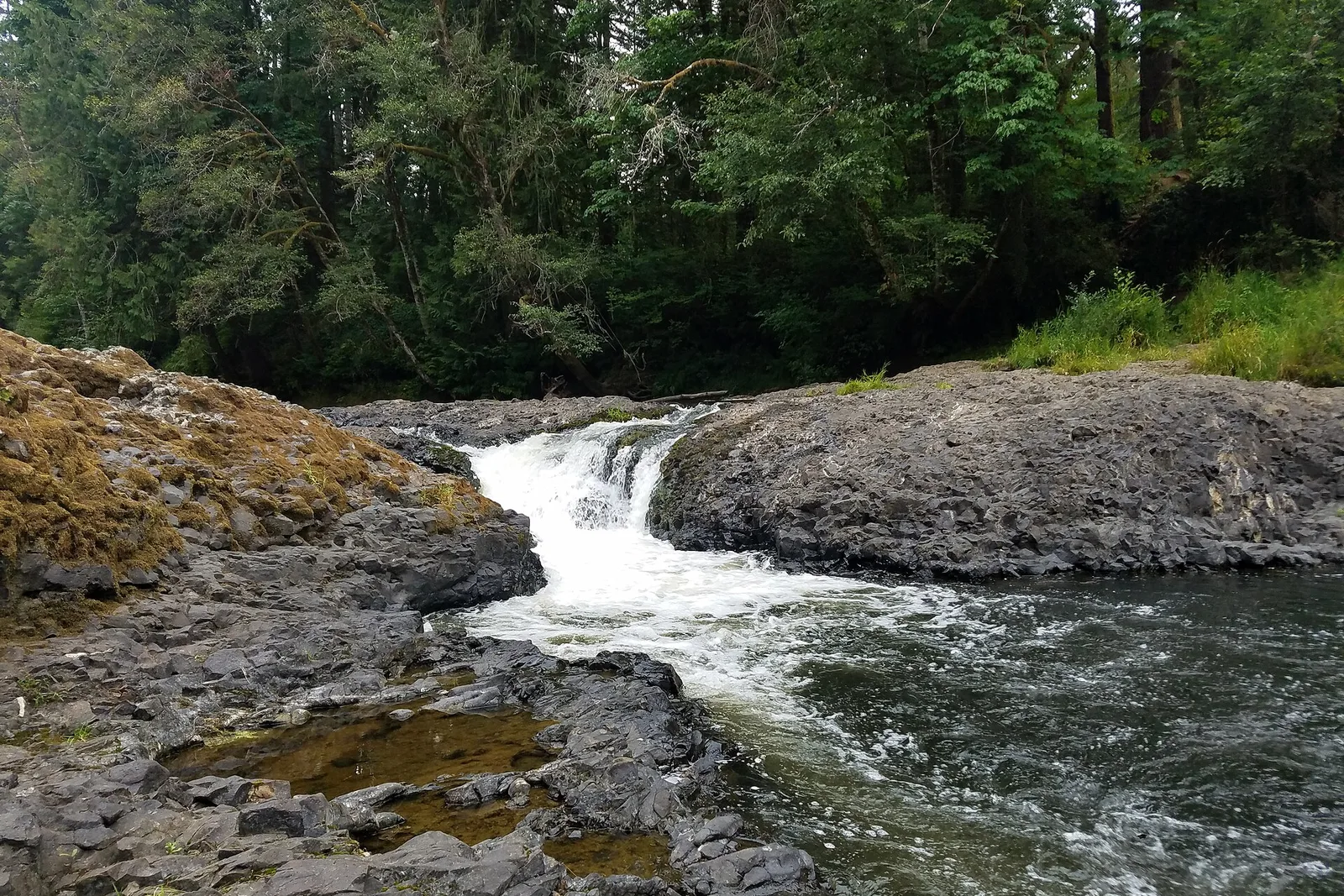
Rainbow Falls State Park stands west of Chehalis, where the Chehalis River runs through its namesake falls. The campground is a small forest ground of 53 sites behind the falls, and it is the quiet half of a park most visitors reach for the water.
Quick facts. 53 campsites, 40 standard, 8 partial hookup, 3 hiker and biker, and 2 equestrian. It closes in winter, from December 1 to March 31 in the 2025 to 2026 season. Nightly fees run $20 to $51 by site class and season. Check-in is 2:30 p.m. and check-out is 1 p.m. The campground takes RVs and combinations to 60 feet.
Firewood is sold on site.
Parks with split reports and cautions
Dash Point State Park, between Tacoma and Federal Way, draws split reports. Some review bodies describe it as a good first family trip, close to home with a beach day attached. Others describe dirty bathrooms, cold showers, and theft warning signs. They report having no after-hours contact when noise continued late, as well as hearing planes at night. Camper reports split on cell service, with some campers finding it unusable for work despite the strong ratings the review sites carry.
Quick facts. Standard and utility sites plus cabins; Parks publishes no total. Reservations are taken all year. The upper loop closes September 15 to May 15. A trailer dump stands in the park. Nightly fees run $20 to $51 by site class and season. Check-in is 2:30 p.m. and check-out is 1 p.m. The park page limits RVs and combinations to 32 feet or less.
Clamming is not recommended here, in the park rules’ own flat form. Alcohol is prohibited in the day use area; registered campers of legal age may have it only in the campground and only at their campsite. Interpretive events run June through August, with amphitheater programs on Fridays and Saturdays and walking talks Fridays through Sundays, times posted at the park. Firewood is sold on site.
Parks confirms that restrooms and showers exist. Parks does not specify how the showers work or describe their condition. Its upper loop closes from September 15 to May 15. The park takes reservations all year for the rest of the campground. Campers praise the wooded separation between sites, even though the sites run tight and sit on a grade, so leveling gear earns its space.
Campers with a 30 foot trailer describe the campground roads as narrow and difficult.
Belfair State Park, on Hood Canal, is the steadier near option in this group, and campers treat it kindly. Campers value its shallow and relatively warm Hood Canal water, one of the saltwater exceptions.
Quick facts. Primitive, standard, and full hookup sites plus a marine trail site; Parks publishes no total. The campsites take reservations year round and the marine trail site is first come. The Tree Loop closes September 15 to May 15. A trailer dump stands in the park. Nightly fees run $12 to $56 by site class and season. Check-in is 2:30 p.m. and check-out is 1 p.m. Its Tree Loop cannot take trailers or motorhomes longer than 18 feet.
Firewood is sold on site.
Campers describe Belfair’s sites as close with little privacy, the waterfront loop most of all, while the tree and tent loop reads a bit more private. Campers describe the bathrooms as newer and very clean. Campers report the beach loop filling fast, with every site taken on busy local weekends. Campers name clam and oyster harvesting among the park’s draws.
Parks lists restrooms, showers, and playgrounds among its amenities. Its tree loop closes from September 15 to May 15. The park takes reservations all year outside that loop.
Belfair is a longer drive and has calmer reviews; Dash Point is closer but has mixed reviews.
Noise cautions decide first overnights more often than any amenity does. Campers report train noise at Larrabee State Park, south of Bellingham. Freight trains pass several times daily and at night, with horns in the small hours.
Campers also report small sites. Larrabee’s campground is closed from September 15, 2026 to June 15, 2027 while crews replace water lines throughout the park.
Day use facilities close intermittently during construction.
Campers also report noise at Fort Casey, on Whidbey Island. Campers report naval jets low and loud for stretches at a time, and ferry noise at intervals. Despite the noise, campers express affection for the park. Families with light sleepers should not expect either park to be quiet.
Families should know about the layout of Twanoh State Park, on Hood Canal across from Belfair, before booking. Campers describe a campground split by Highway 106. The beach is a road crossing away, and campers walk through sites on their way to restrooms. Campers describe a shallow, roped-off swim area at the park. That swim area makes Twanoh the second Hood Canal saltwater exception.
Quick facts. 47 sites, 25 standard and 22 full hookup. Campsite reservations are closed June 1, 2026 through spring 2027 for a shoreline restoration project, and the campground runs first come in that period. The upper campground closes September 16 to May 15. Winter water is available in the lower campground next to site T42. Nightly fees run $20 to $56 by site class and season. Check-in is 2:30 p.m. and check-out is 1 p.m. Maximum site length is 35 feet with limited availability.
Oysters must be shucked on the beach here. The day use areas run pack it in, pack it out, with no trash service, food scraps and packaging included; the campground’s trash service stands separately. A playground stands in the park, and the campground host sells packaged firewood.
Twanoh is not taking campsite reservations from June 1, 2026 through spring 2027 because of a shoreline project. The campground runs first come through that period. Its upper campground closes from September 16 to May 15. Winter water is available in the lower campground next to site T42.
Swim water decides summer family trips more than any other single feature. For little legs, campers point to freshwater. Cranberry Lake at Deception Pass has a shallow, roped-off swim area, and Cascade Lake at Moran has warm water and a gradual entry.
Both are better choices for young children than saltwater beaches with currents or cold water. Belfair and Twanoh are exceptions among saltwater beaches. Their shallow Hood Canal water warms more than water on the open coast.
Facilities, Bathrooms, and Showers
Showers and bathrooms vary more from park to park than almost anything else in this system. Most parks charge per shower, by token, coin, or a small fee, and a few parks have free showers, while Spencer Spit and Joemma Beach have no showers at all. Bathrooms run from flush restrooms with showers to vault and composting toilets at the primitive parks. The table sets out what each listed park offers.
| Park | Showers | The catch | Bathrooms | Source |
|---|---|---|---|---|
| Bogachiel | Showers exist. Coin operation reported by campers | Carry quarters | General standard site form, flush restrooms nearby | Parks lists it. Campers report the coin mechanic |
| Twin Harbors | Showers exist. Tokens reported by campers | Tokens at the ranger station, dollar bills only | Bathrooms and showers available. No type stated | Parks lists it. Campers report the token mechanic |
| Joemma Beach | No showers, by primitive design | Plan around no shower at all | Vault toilets reported by campers only | Parks lists no showers, by the park’s primitive design. Campers report the vault toilets |
| Lake Chelan | Showers exist | No mechanic stated by Parks | Restrooms open all year. No type stated | Parks lists it |
| Deception Pass | Cornet Bay showers close in winter. Campground status reported by campers | No winter shower at Cornet Bay | No campground bathroom type stated by Parks | Parks lists it, Cornet Bay only. Campers report the campground status |
| Rasar | Showers exist. Now reported free by campers | Check current status on arrival | No bathroom type stated by Parks | Parks lists it. Campers report the showers are free |
| Moran | Five restrooms and ten showers park wide | Northend uphill bathhouse reported by campers | Five restrooms park wide, no loop assignment | Parks lists it park wide. Campers report the Northend layout |
| Saltwater | Campground closed. No current shower status prints | Campground closed, no shower planning applies | Campground closed, no current status prints | Parks lists the closure |
| Dash Point | Showers exist. Condition split in camper reports | Condition and temperature both split in reports | No type stated by Parks. Condition split in camper reports | Parks lists it. Campers report the condition, and their reports split |
| Belfair | Showers exist | No mechanic stated by Parks | No type stated by Parks | Parks lists it |
| Cape Disappointment | Not stated by Parks | Renovation and storm caveats govern any visit | Not stated by Parks | Campers report it, or the detail was dropped |
| Lake Wenatchee | Hot showers in the campgrounds. Camper reports split on shower cost, with free showers in some accounts and coin or per-minute charges in others. | Highly rated in recent camper reports | Heated restrooms with showers for winter camping | Parks lists hot showers. Camper reports split on whether the showers are free or coin operated. |
| Fort Worden | Restrooms with showers at both campgrounds | No mechanic stated by Parks | Restrooms with showers. No type stated | Parks lists it |
| Fort Flagler | Restrooms with showers at both campgrounds | No mechanic stated by Parks | Restrooms with showers. No type stated | Parks lists it |
| Millersylvania | Restrooms and showers listed | Water off around November 1 to March 31; winter water near the dump station | General standard site form, flush restrooms nearby | Parks lists it |
| Scenic Beach | Two restrooms and four showers | Mechanic dropped, because camper reports conflict | Group camp vault toilet on the Parks record | Parks lists it |
| Penrose Point | Showers exist, open May 15 to October 1 | Middle showers close September 16, upper October 1. Lower restroom open all year, no showers | Group camp vault toilet on the Parks record | Parks lists it |
| Twanoh | Showers listed, restrooms nearby | Reservations closed this season, arrival is first come | No type stated by Parks | Parks lists it |
| Larrabee | Showers exist on the Parks record | Campground closed to June 15, 2027, so no current shower use | No type stated by Parks | Parks lists it, and the park is under its closure |
| Fort Casey | Restrooms and showers listed | Noise matters more than facilities here | No type stated by Parks | Parks lists it |
| Steamboat Rock | Restrooms and showers listed | Winter supply at the Bay loop restroom across from the cabins | No type stated by Parks | Parks lists it |
| Sun Lakes-Dry Falls | Six restrooms and twelve showers | Water off mid October, weather depending | No type stated by Parks | Parks lists it |
| Potholes | Restrooms and showers listed | Water off October 24 to April 1 | No type stated by Parks | Parks lists it |
| Lake Easton | Four accessible restrooms and showers | Main campgrounds close through winter | No type stated by Parks | Parks lists it |
| Dosewallips | Restrooms and showers listed | Water off from November 15, with winter water at the dump station | No type stated by Parks | Parks lists it |
| Grayland Beach | Restrooms and showers listed. Restrooms open all year | Flood prone sites first come in winter | No type stated by Parks | Parks lists it |
| Sequim Bay | Restrooms and showers listed | Water off November 15 to April 1 | No type stated by Parks | Parks lists it |
| Spencer Spit | No showers, stated by Parks in those words | Plan around no shower and no hookups | Composting toilet near the beach campsites | Parks lists it |
| Bay View | Showers exist | Water off November 1 to April 1; winter water at the dump station | Full restrooms | Parks lists it |
| Birch Bay | 16 showers | No mechanic stated by Parks | 8 restrooms, 3 of them ADA accessible | Parks lists it |
| Rainbow Falls | Not stated by Parks | Campground closed in winter | No type stated by Parks | Parks lists the campground |
| Seaquest | Showers exist. No ADA showers, stated by Parks | No mechanic stated by Parks | Five restrooms park wide, one ADA | Parks lists it |
| Battle Ground Lake | 4 showers | No mechanic stated by Parks | Two restrooms park wide | Parks lists it |
| Beacon Rock | Restrooms and showers listed | Campgrounds split between the Upper and Woodard Creek areas | No type stated by Parks | Parks lists it |
| Maryhill | Restrooms and showers listed | Winter water only at the dump station | No type stated by Parks | Parks lists it |
Seasons and the winter schedule
Campers trade fewer crowds for reduced services. Loop closures begin in mid September at the named parks, and water shutoffs generally run between November 1 and April 1, with dates varying widely by park. In winter, parks often provide water at only one location.
Check the Parks Winter Schedule for the specific park before a cold season trip. A system wide closure date would be wrong in both directions.
| Park | What changes | When |
|---|---|---|
| Belfair | Tree Loop closes | September 15 to May 15 |
| Dash Point | Upper loop closes | September 15 to May 15 |
| Millersylvania | Only sites 1 to 7 and 226 to 248 stay open; water off, winter water near the dump station | Water off around November 1 to March 31 |
| Twanoh | Upper campground closes | September 16 to May 15 |
| Twanoh | No campsite reservations this season because of a shoreline project; the campground runs first come | June 1, 2026 through spring 2027 |
| Camano Island | Upper loop closes | September 30 to May 1 |
| Bay View | Sites 39 to 76 close; water off, winter water at the dump station | Sites closed October 15 to May 15; water off November 1 to April 1 |
| Deception Pass | Bowman Bay and Lower Loop B close | October 1 to March 31 |
| Deception Pass | Forest Loop and Lower Loop A close; Quarry Pond stays reservable all year | Forest Loop, November 1 to March 31; Lower Loop A, November 1 to February 28 |
| Fort Flagler | Upper Campground closes; water off, winter water at site 93 | Upper closed October 1 to April 30; water off mid November to March |
| Scenic Beach | Sites 26 to 50 close; sites 1 to 25 stay reservable year round | November 1 to March 31 |
| Penrose Point | Sites 1 to 21 and site 52 open all year; the rest open on staggered dates | Sites 22 to 51 open May 15 to October 1; sites 53 to 83 open May 15 to September 15 |
| Larrabee | Campground closed for water line replacement | September 15, 2026 to June 15, 2027 |
| Birch Bay | North Loop runs first come, with winter water in the North Loop | September 16 to May 14 |
| Cape Disappointment | Sites 7 to 10, 21 to 25, and 101 to 110 stay closed until winter storms pass and the sites are evaluated; water and sewer always on | The current reduced pattern |
| Steamboat Rock | Sage, Dune, and Cove loops close; the Bay loops run first come; winter water at the restroom across from the cabins in the Bay loop | November 1 to March 31 |
| Steamboat Rock | Jones Bay campground closes | October 1 to April 1 |
| Sun Lakes-Dry Falls | Runs first come; sites 1 to 31 may close depending on weather; winter water near the welcome station | First come September 16 to April 14; possible closure October 31 to March 16 |
| Potholes | Runs first come; water off | First come November 1 through the end of February; water off October 24 to April 1 |
| Grayland Beach | Some sites are flood prone; the flood prone sites run first come and non refundable; many other sites and the yurts stay reservable all year, and restrooms stay open all year | November 1 to April 15 |
| Battle Ground Lake | Primitive sites, group camp, and equestrian camp close; water stays on | November 1 to April 14 |
| Seaquest | Sites 32 to 54 and 57 to 76 close; winter water near the dump station | October 1 to May 1 |
| Dosewallips | Water off, with winter water at the dump station; Parks pages conflict on the end date, so no end date is given | From November 15 |
| Rainbow Falls | Campground closes for the winter | December 1 to March 31 |
| Moran | Water off, with winter water near the park office and at Midway site 35 | October 31 to April 1 |
| Sequim Bay, Bogachiel, and Rasar | Each park has its own November water shutoff schedule and one winter water point | November into spring |
| Curlew Lake | Three sites without utilities stay open on a first come basis | Mid winter |
Arrive with water, or find out where the winter water spigot is.
September is the locals’ month for midweek availability. A Wednesday arrival can succeed at parks that turned away Saturdays for months. It is also still busy at the popular parks. September is not reliably dry or empty, and the record contradicts both claims.
Our own season is May to September, with no winter camping in it. Families camping from May to September should still check loop closure dates. The first loops close in mid September, while the weather can still feel like summer.
Lowland state parks that stay open in winter offer reduced services, and much of the camping is first come, first served. Loop closures and water limits apply; check the Winter Schedule for details. Campers identify two options for beginners interested in snow camping. Both carry permit conditions.
Lake Wenatchee offers winter camping first come in a designated area in its South Park day use area, once its main campgrounds close. It has heated restrooms with showers and a winter water fill station. Overnight campers there hold a Sno-Park permit and pay a nightly fee.
Lake Easton offers winter camping only as Sno-Park permit camping in its day use and boat launch areas. Campers need permits from December 1 to March 31. Its main loops close through winter, after a short first come window from October 16 to 31.
Lake Easton State Park
Quick facts. Sites run from full hookup to non hookup; Parks publishes no total on its park page. The campground closes November 1 to May 1, and winter camping is Sno-Park permit camping in the day use and boat launch areas. Winter water is available in the day use area. A dump station stands in the park. Nightly fees run $20 to $56 by site class and season. Check-in is 2:30 p.m. and check-out is 1 p.m. Two Parks brochures count 90 standard and 45 full hookup sites, and some sites take RVs to 60 feet. Campers report Interstate 90 noise as the park’s dominant drawback, with rail noise behind it, and the lower loop and lake side sites reading quieter.
A playground stands in the park, and firewood is sold on site.
Campers report good cell service at Lake Easton.
Cabins, yurts, and vacation houses
Not every trip needs a tent. Nineteen of the parks in this guide also rent a roof, from heated yurts and rustic cabins to the historic houses at Fort Worden, and they book through the state reservation system. The rates in the two tables are the agency’s published 2026 nightly rates, checked in November 2026, given as ranges where the weeknight and weekend prices differ. Cabins and yurts carry a two consecutive night minimum from May 15 to September 15 and on weekends all year, and vacation houses carry a two consecutive night minimum all year. Unlike the campsite fees in this guide, roofed prices do not include tax.
Yurts
Four parks in this guide rent yurts. Seaquest holds the only counted set, and Grayland Beach carries the highest yurt rates in the system. Cape Disappointment’s yurts stand under the same renovation caveat as its campground, so check the park’s current status before planning around one.
| Park | The yurts | Peak | Shoulder | Winter |
|---|---|---|---|---|
| Seaquest | 5 yurts in a wooded area, each sleeping up to five | $79 | $59 to $69 | $55 |
| Twin Harbors | Heated yurts, year round, some pet friendly; no count published | $79 | $59 to $69 | $55 |
| Cape Disappointment | Yurts on the park’s record; no count published | $79 | $64 to $74 | $64 to $74 |
| Grayland Beach | Most ADA accessible, some pet friendly, reservable all year; no count published | $89 | $69 to $79 | $69 to $79 |
Cabins
Thirteen parks in this guide rent cabins. Most sit in one rate band, and the exceptions are the point. Camano Island’s forest cabins price above the band in every season. Deception Pass holds two flat rate cabins that never discount. Potholes carries the only minimum stay in the roofed record, a 2 night minimum on weekends through the winter.
| Park | The cabins | Peak | Shoulder | Winter |
|---|---|---|---|---|
| Belfair | At least 4 cabins, all heated; pets allowed in cabin C1 only | $79 | $59 to $69 | $55 |
| Twin Harbors | Rustic cabins, year round, some pet friendly; no count published | $79 | $59 to $69 | $55 |
| Dash Point | Cabins confirmed on the park page; no count published | $80 | $70 | $65 |
| Dosewallips | Cabins confirmed on the park page; no count published | $79 | $69 | $55 |
| Ike Kinswa | Cabins reservable all year, beside the year round Loop B | $79 | $69 | $55 |
| Schafer | Cabin reservations taken all year | $79 | $69 | $55 |
| Steamboat Rock | Cabin reservations taken all year | $79 to $84 | $59 | $55 |
| Camano Island | 5 forest cabins, each sleeping up to five | $105 | $105 | $80 to $95 |
| Deception Pass | 7 cabins, numbered C2 to C8; C7 rents flat at $100 and C8 flat at $120 in every season | $79 to $84 | $69 to $79 | $55 |
| Potholes | 5 cabin units in two classes; in winter they open weekends only, with a 2 night minimum | $69 to $84 | $64 to $74 | $55 to $64 |
| Rasar | Cabins in the agency’s top tier, with a restroom in the cabin; no count published | $103 | $87 | $69 to $79 |
| Bay View | 6 cabins, two with bathrooms; all but one allows pets | $79 to $89 | $69 to $79 | $55 to $65 |
| Battle Ground Lake | 4 cabins, each sleeping five; pets in cabin C21 only | $79 | $69 | $55 |
Vacation houses
Fort Worden rents ten types of historic houses on the old fort grounds, from the Corporal’s houses at $200 to $325 across the year to the Reunion House at $900 to $1,450, booked through the Fort Worden vacation rentals page. At Cape Disappointment, the two North Head Lighthouse keeper houses rent on the agency’s vacation table, $164 to $447 across houses and seasons in 2026, under the same renovation caveat as the rest of that park. Fort Flagler rents five historic vacation houses on the bluff above Admiralty Inlet, the Hospital Steward’s House, the two Non-Commissioned Officers Quarters, the Engineer’s House, and the Waterway House, at $101 to $207 across houses and seasons in 2026, booked through the state reservation system. Millersylvania rents the Lakeside Cottage on Deep Lake, sleeping up to six, at $109 to $169 across the year in 2026.
For reservations from January 1, 2027, the agency moves yurts onto one schedule system wide, $100 to $110 in peak season, $85 to $90 in the shoulder, and $70 to $75 in winter, with shoulder rates running through winter at Cape Disappointment and Grayland Beach. Cabins sort into three tiers, Economy, Basic, and Popular Deluxe, the last with a restroom in the cabin. Prices span $70 to $95 at the Economy end and $115 to $140 for Popular Deluxe, depending on season and night.
Mount St. Helens, the gorge, and Palouse Falls
Seaquest State Park, at Castle Rock on the Spirit Lake Highway, is a state park camping base for Mount St. Helens. Mount St. Helens itself is not a state park. It is a national volcanic monument in the Gifford Pinchot National Forest, and Parks counts it 47 miles east of Seaquest. Seaquest offers camping for the monument’s west side on the shore of Silver Lake, with a short pedestrian tunnel connecting the park to the Mount St. Helens Interpretive Center and its exhibits on the 1980 eruption and the regrowth since.
Quick facts. 88 sites, 52 standard, 18 partial hookup, 15 full hookup, and 3 hiker and biker. The park suggests reservations in summer, and the group camp takes them May 15 to September 15. Sites 32 to 54 and 57 to 76 close from October 1 to May 1. Winter water stands near the dump station. One dump station stands in the park. Nightly fees run $20 to $56 by site class and season. Check-in is 2:30 p.m. and check-out is 1 p.m. Maximum site length is 50 feet with limited availability, and the full hookup sites stand in the T loop only.
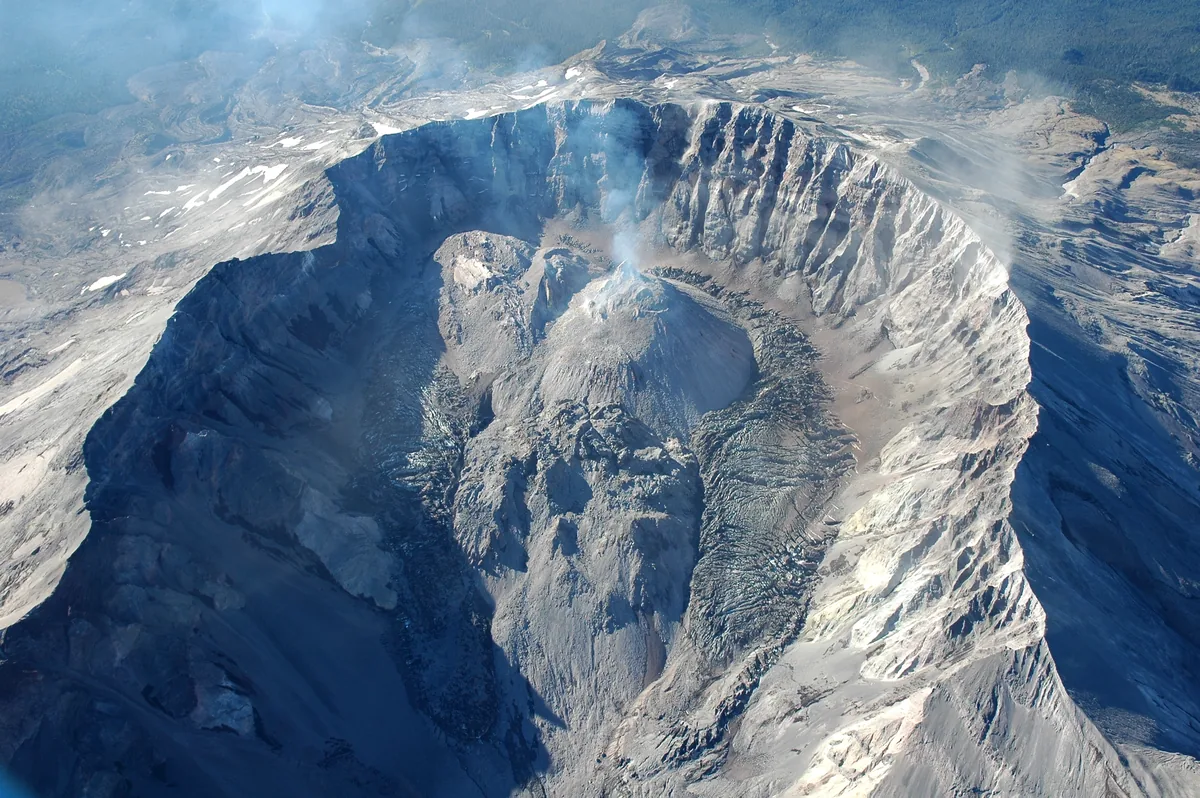
The park is a 475 acre year round camping park in fir forest. Parks counts 52 standard campsites, 18 partial hookup sites, and 15 full hookup sites, with three hiker and biker sites and five yurts sleeping up to five each. A group camp for up to 25 takes reservations from May 15 to September 15 and runs first come the rest of the year. Parks suggests reservations in the summer. Silver Lake at the park’s edge is a shallow wetland lake, and a boardwalk trail crosses the wetland for birdwatching.
Battle Ground Lake State Park, northeast of Battle Ground in Clark County, wraps a spring fed lake that Parks says draws swimmers, paddlers, and anglers. The campground holds 46 individual sites, 25 standard and 6 partial hookup in the main ground, plus 15 primitive hike in sites, numbered 36 to 50, that sit up to half a mile from the parking lot.
Quick facts. 46 individual campsites, 25 standard, 6 partial hookup, and 15 primitive hike in. Reservations are taken all year, and the main campground stays open all year. Water stays on all year in the main campground. The primitive sites, the group camp, and the equestrian camp close November 1 to April 14. One dump station stands in the park. Nightly fees run $12 to $51 by site class and season. Check-in is 2:30 p.m. and check-out is 1 p.m. Maximum site length is 35 feet.
The park store offers hot foods and snacks, beverages, camping and fishing supplies, and games and horseshoes, plus kayak and stand up paddleboard rentals. Summer Saturday Interpretive Programs run here, with the year’s schedule published separately. A playground stands in the park.
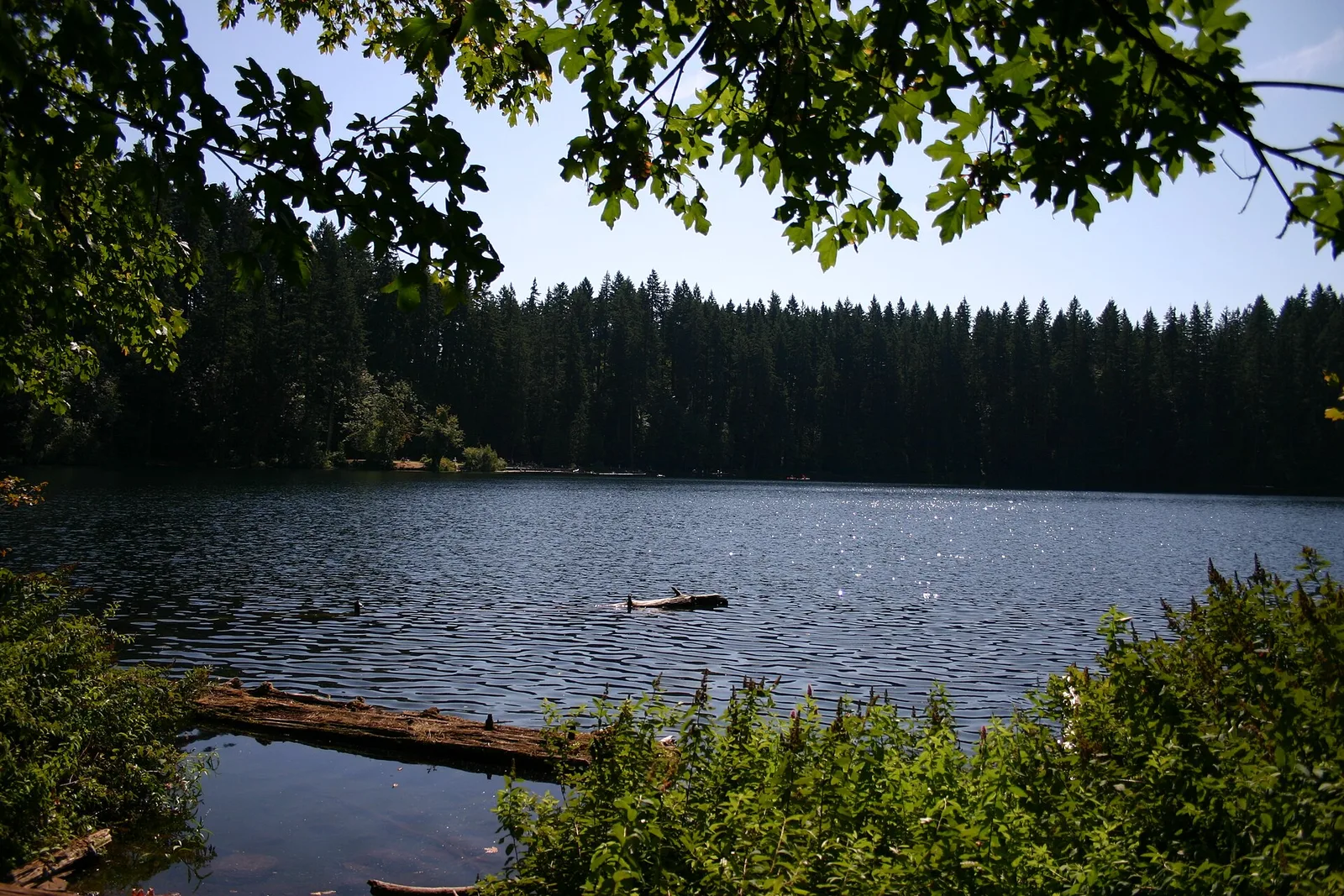
Four cabins rent at the park, each sleeping five, and they are covered in the roofed stays section of this guide. The group camp sleeps up to 64 across four Adirondack shelters and tent space. A primitive horse camp of two reservable campsites, with corrals and no water on site, stands as its own class beside the 46. Only portable toilets serve the campground from November 1 to April 14.
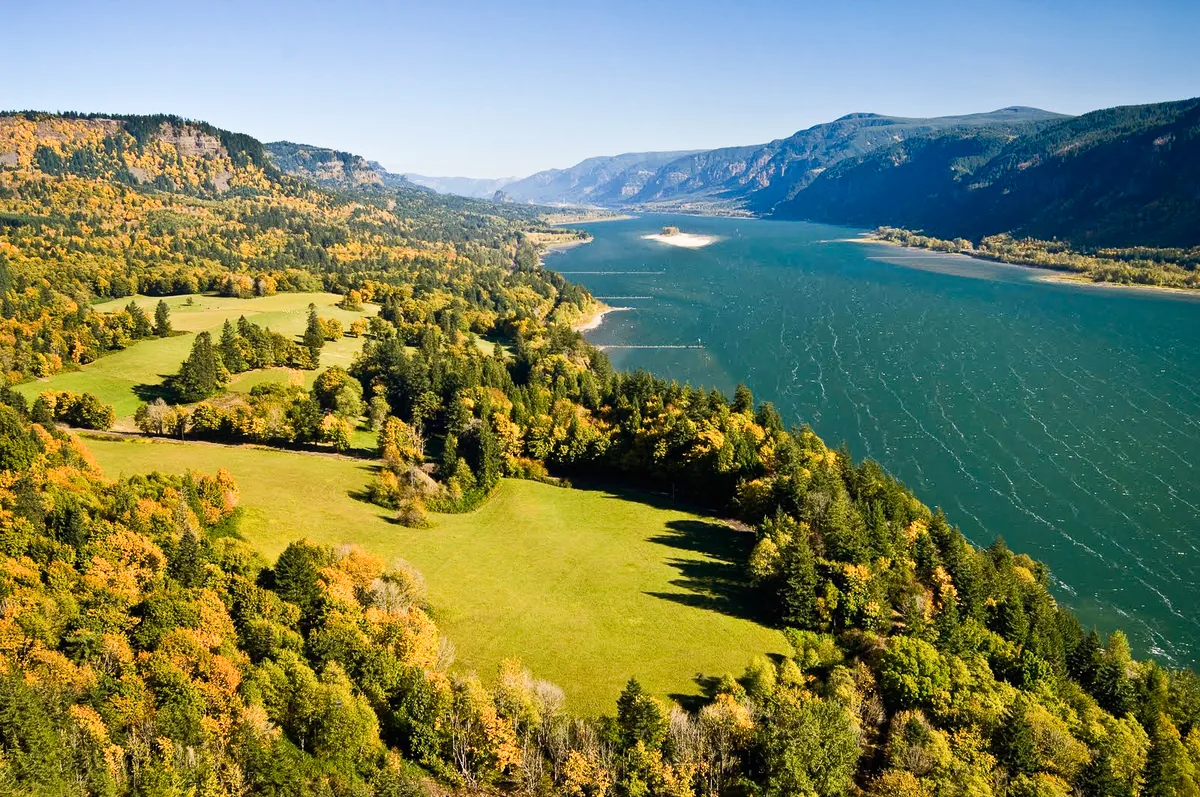
Beacon Rock State Park is at the gorge’s west gate. The campgrounds are in forest above the river. The Civilian Conservation Corps built the Upper Campground in 1935; it has 25 standard sites and one hiker and biker site. The Woodard Creek Campground adds two standard sites and five full hookup sites, and the park also carries a group camp for up to 25 and two primitive equestrian sites.
Quick facts. 35 sites across three camp areas, standard, full hookup, and primitive. Woodard Creek takes reservations year round and the equestrian camp is first come. The Upper Campground closes November 1 to March 15. Parks publishes no dump station for this park. Nightly fees run $12 to $56 by site class and season. Check-in is 2:30 p.m. and check-out is 1 p.m. Woodard Creek takes RVs and combinations of 40 feet or less and no taller than 12 feet 9 inches.
The park’s trail climbs the rock on 52 switchbacks above the river. The park currently closes the trail on Tuesdays, Wednesdays, and Thursdays from October through May for decking replacement, so check the alert before planning a weekday climb during those months.
Maryhill State Park offers camping on the Columbia River in Klickitat County at the gorge’s dry east end. The park holds primitive, standard, and full hookup sites with a maximum site length of 60 feet, two watercraft launches and 216 feet of dock, and a swim beach on the river. A mile from the park, Sam Hill’s full scale replica of Stonehenge honors local soldiers killed in World War I and is open to the public; the Maryhill Museum is a few minutes away. The Burlington Northern Santa Fe tracks run just north of the park carrying around 24 trains a day, and in winter the park’s water is available only at the dump station.
Quick facts. Primitive, standard, and full hookup sites; Parks publishes no total. Sites 51 to 71 close from October 31 to March 15, and the open camping runs first come from November 1 to March 15. In winter, water stands only at the dump station while power and sewer stay live at the RV sites. Nightly fees run $12 to $56 by site class and season. Check-in is 2:30 p.m. and check-out is 1 p.m. Maximum site length is 60 feet with limited availability.
Drones are not allowed at Maryhill, in the park page’s flat form, stricter than the permit rule the system prints. Firewood is sold on site.
Palouse Falls is worth naming in this guide. The park is day use only, with no camping, and it protects Washington’s official state waterfall. The nearest camping is the Lyons Ferry Marina campground, a KOA on the Snake River about seven miles south. With no campground to base from, the falls have stayed a someday trip for us rather than a camp.
Island parks
The San Juan Islands
Moran, the state park on Orcas Island, books through the state reservation system and its nine month window. The county parks beside it on the San Juan Islands use a different reservation system.
It is a single annual opening rather than a rolling window. County residents book first, from January 6, 2027 at 9 a.m. through January 8, 2027 at 4 p.m.
The reservation website opens to the public on January 13, 2027 at 9 a.m., with bookings running through October 31. County campsites run first come from November 1 through March 31.
The county’s pages disagree on the weekdays for those dates. The county’s page states that resident reservations in the county system are non transferable. We found no such prohibition for the state system.
Spencer Spit is also a state park on the islands.
It runs first come for all open sites from September 16 to May 14. Sites 1 to 42 close from November 1 to March 1. Walk in sites 43 to 50 stay open in that window, with a composting toilet nearby. Its water and dump station turn off from November 1 to March 1.
Ferry travel involves a separate reservation. Campers report booking each direction separately, with vehicle reservations releasing in tiers ahead of travel. If you miss the check in window, your space goes to standby. Campers report that walk on passengers and bikes need no vehicle reservation.
We would love to camp in the San Juans and have not. We read the reservations there as limited and tight.
Blake Island Marine State Park
Quick facts. 47 sites, 44 standard and 3 marine trail sites. Select standard sites take reservations May 15 to September 15 and the rest run first come; the standard sites are open all year. Campground water is off from early November through March. Nightly fees run $20 to $43 for the standard sites by season. Check-in is 2:30 p.m. and check-out is 1 p.m.
Trash receptacles are not available anywhere on Blake Island; all trash is strictly pack it in, pack it out. Occupancy splits by the end of the island, eight people per site in the main campground and six people per site on the west end.
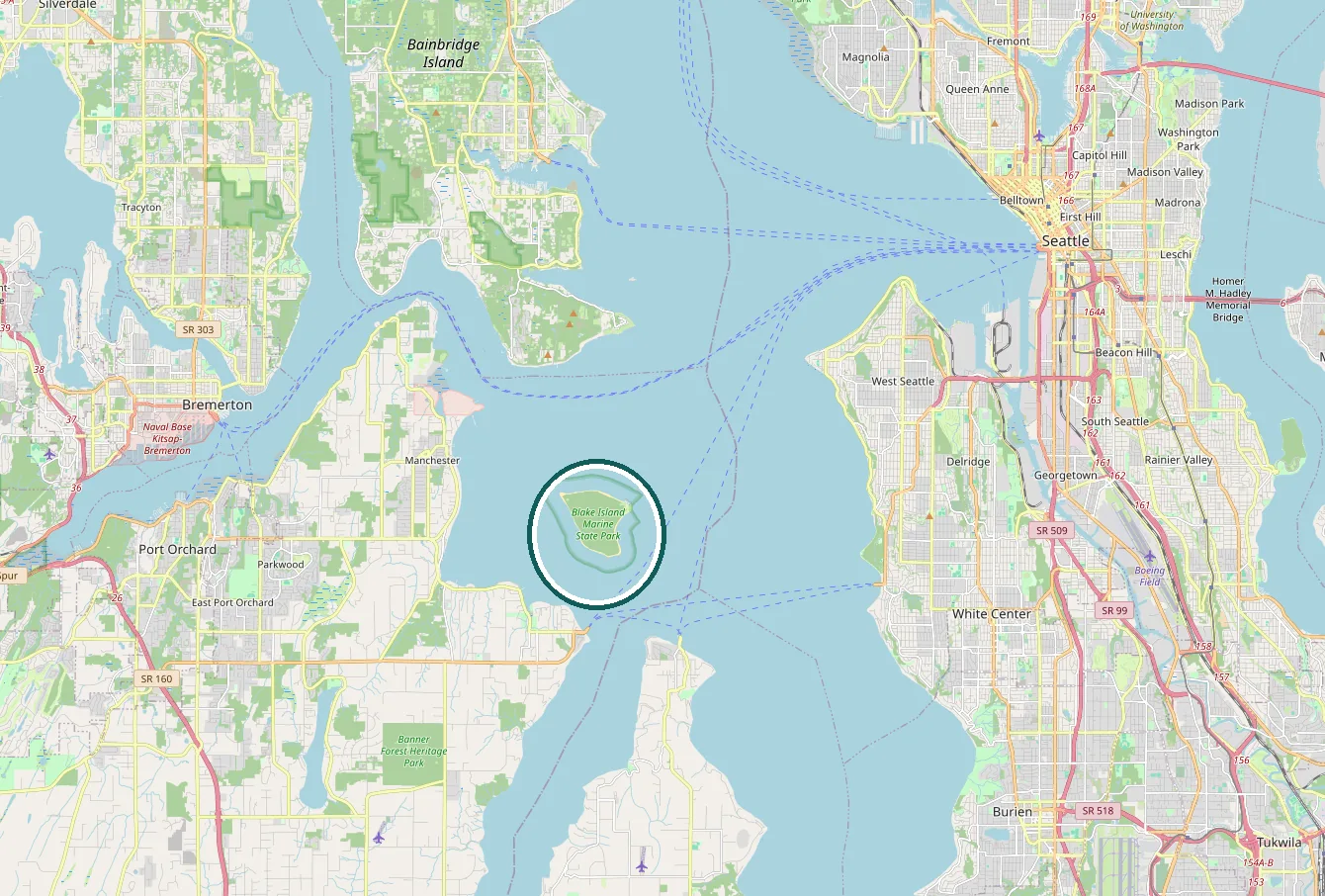
No road reaches Blake Island Marine State Park. The island sits in central Puget Sound west of Seattle, in sight of the skyline, and the park is boat in only. There is no bridge and no ferry, and since the island’s tour boat concession ended in 2021, visitors cross by private boat or by human powered craft such as a kayak or a canoe. A camping family must float everything it brings to the island, and the crossing is part of the camp.
The campground holds 44 standard sites and stays open all year. Select sites take reservations in the peak season, from May 15 to September 15, and the rest run first come, first served. Three more sites on the west end belong to the Cascadia Marine Trail and accommodate only campers who arrive by human or wind powered watercraft.
A group camp takes reservations for groups of up to 50. Boats tie up at 1,500 feet of moorage dock or on 24 mooring buoys, all first come, first served and limited to three consecutive nights, and a reserved campsite does not guarantee moorage. The island has drinking water, but the campground water shuts off from early November through March. The island runs pack in and pack out with no trash service, and a small store at the ranger station sells firewood and basic supplies.
Five miles of saltwater shoreline ring it, trails circle the island and cross the forested interior, and the views run from the Seattle skyline to the Olympic Mountains. Tillicum Village, the longhouse attraction that drew tour boats across the Sound for more than forty years, closed when its operator ended the concession in 2021, and its buildings have stood unused since. State Parks is writing a master plan for the island, expected to go to the Commission in 2026, and the future of the village buildings is one of its open questions.
We have not been to Blake Island, and it sits high on the list of parks we would like to camp. A state park camp you can reach only across the water, within sight of the city it faces, calls for a different kind of trip than any drive up campground.
Discover Pass vs Northwest Forest Pass
The Discover Pass is the state pass. Drivers need it to park at state parks and on recreation lands managed by the state fish and wildlife and natural resources agencies. An annual pass costs $45 and a one day pass costs $10, and two vehicles can use one pass, one at a time.
The Northwest Forest Pass is a federal pass for national forest lands. It covers Forest Service day use sites and trailheads across Washington and Oregon, at $30 for a year or $5 for a day. No state park needs a Northwest Forest Pass.
The Discover Pass works at the parks themselves, on day visits and at state trailheads and water access sites. The forest pass works on the national forest trailheads above the campgrounds, in the high country around Rainier and the North Cascades, and on the Mount Baker and Artist Point ground where this family’s backpacking runs. The Discover Pass does not cover federal forest sites, and the Northwest Forest Pass does not cover state parks.
Campers staying overnight in a state park do not need a Discover Pass for parking inside the park they are staying in. The forest pass is a day use pass.
Our household holds both passes, and neither has ever shaped where we camped. We consider both passes standard equipment, not camping planning tools. Buy both passes once, keep them in the car, and focus your planning on the reservation window and the park choice.
The free days
Each year the state land agencies designate free days, when no Discover Pass is required to park at a state park or on land managed by the Department of Natural Resources or the Department of Fish and Wildlife. The free days cover parking only. They do not apply to overnight stays or rented facilities, and Sno-Park permits are still required at designated Sno-Parks in winter. Both lists below are the published lists, checked in November 2026.
2026.
- Thu, Jan 1, New Year’s Day, also First Day Hikes
- Mon, Jan 19, Martin Luther King Jr. Day
- Mon, Mar 9, Billy Frank Jr.’s birthday
- Thu, Mar 19, State Parks’ 113th birthday
- Wed, Apr 22, Earth Day
- Sat and Sun, Jun 6 and 7, Free Fishing Weekend
- Fri, Jun 19, Juneteenth
- Sun, Aug 9, Smokey Bear’s birthday
- Sat, Sep 26, National Public Lands Day
- Sat, Oct 10, World Mental Health Day
- Wed, Nov 11, Veterans Day
2027.
- Fri, Jan 1, New Year’s Day and First Day Hikes
- Mon, Jan 18, Martin Luther King Jr. Day
- Tue, Mar 9, Billy Frank Jr.’s birthday
- Fri, Mar 19, State Parks’ birthday
- Thu, Apr 22, Earth Day
- Sat and Sun, Jun 12 and 13, Free Fishing Weekend
- Sat, Jun 19, Juneteenth
- Mon, Aug 9, Smokey Bear’s birthday
- Sat, Sep 25, National Public Lands Day
- Sun, Oct 10, World Mental Health Day
- Thu, Nov 11, Veterans Day
Frequently asked questions
How far in advance can you book a Washington state park campsite?
Reservations open nine months ahead of the first date of your trip, so count back nine months from the first night, not from the middle. At the best known parks, campers book summer weekends on the day the window opens, so be ready to book that morning. Parks publishes no release hour for campsites, so be ready on the day the window opens.
Do you need a Discover Pass if you are camping overnight?
No, not for the park you are staying in. The pass still applies to day visits and to parking at other state parks and at state recreation lands, and it costs $45 for a year or $10 for a day.
Can you book a site for the same day?
Yes. Same day reservations run online or by phone until 2 p.m. on the day of arrival, and that has applied at every park with reservable campgrounds since March 2025. Campers who missed the nine month window can try booking on the day of arrival.
What happens to unreserved sites after 2:30 p.m.?
They go to walk up campers, first come, first served. Walk up campers can take only the sites still unreserved after 2:30 p.m. that day. Check same day availability before driving out, because someone can still book an open site from anywhere until 2 p.m.
Are all state park campgrounds reservable or are some first come only?
Both; the mix varies by park. Some sites are first come by design all year, including primitive sites, hiker and biker sites, marine trail sites, and walk in sites. Other sites are first come during the off season, and a few parks take reservations for everything, including Fort Worden, where Parks states reservations are necessary year round. Check the park’s reservation and first come rules before planning your trip.
Can you transfer a reservation to someone else?
Parks publishes no route for handing a reservation to another camper, so there is no supported way to pass a booking on. You can change a reservation, but only within the same park. Book in your own name, inside the system.
What is the best strategy when the park you want is fully booked?
Use the second chances the system builds in. Campers report that cancelled sites reappear in the booking inventory, most often in the final week before a trip, and they describe refreshing the booking page through that week as the working method. Same day booking stays open until 2 p.m. on the arrival day, and whatever remains unreserved after 2:30 p.m. goes to walk up campers. Try a midweek trip, because most parks have availability then, even when their summer weekends are booked.
Can I take an RV or trailer to a Washington state park?
At most of them, yes. Most developed state parks in this guide take RVs and trailers, and hookup sites are ordinary reservable sites in the partial and full utility classes of the fee schedule. Maximum lengths are set park by park and stand in each park’s Quick facts line, from 32 feet at Dash Point to 75 feet at Fort Worden. The boat in island parks take no vehicles at all, and the primitive parks publish no hookups. Generators may run only from 8 a.m. to 9 p.m.
Is there cell service at the campgrounds?
It varies by park and by carrier, and the record behind this guide supports no carrier as the best choice. Campers report little or no service at Cape Disappointment and split results at Dash Point, and the Lake Easton entry reports good service, with shorter camper reports at Rasar, Bogachiel, and Lake Chelan. Treat any one park’s report as an anecdote rather than a promise, and download maps and booking confirmations before leaving coverage.
Sources
Washington State Parks, individual park pages for the roster parks in this guide, including Bogachiel, Twin Harbors, Joemma Beach, Lake Chelan, Deception Pass, Moran, Fort Worden, Fort Flagler, Millersylvania, Rasar, Saltwater, Dash Point, Belfair, Cape Disappointment, Lake Wenatchee, Lake Easton, Scenic Beach, Penrose Point, Twanoh, Spencer Spit, Bay View, Birch Bay, Rainbow Falls, Seaquest, Battle Ground Lake, Maryhill, and Beacon Rock. https://parks.wa.gov
Washington State Parks, Fort Flagler Historical State Park page and vacation houses page, and the Parks release of December 17, 2025, for the campground counts, the year round Lower Campground reservations, and the five vacation houses in its entry above. https://parks.wa.gov/find-parks/state-parks/fort-flagler-historical-state-park
Washington State Parks, Millersylvania State Park page and brochure, for the campsite counts, the winter form, and the Lakeside Cottage in its entry above. https://parks.wa.gov/find-parks/state-parks/millersylvania-state-park
Washington State Parks, Blake Island Marine State Park page, for the campground, moorage, and water facts above, and the Blake Island master planning page for the Tillicum Village status. https://parks.wa.gov/find-parks/state-parks/blake-island-marine-state-park
Washington State Parks, Seaquest State Park page, for the campsite counts, the yurts and group camp, and the interpretive center connection in its entry above. https://parks.wa.gov/find-parks/state-parks/seaquest-state-park
Washington State Parks, Beacon Rock State Park page, for the campground counts and the rock trail and its current closure alert in its entry above. https://parks.wa.gov/find-parks/state-parks/beacon-rock-state-park
Washington State Parks, Maryhill State Park page, for the campsite types, the Stonehenge memorial, and the train and winter water notes in its entry above. https://parks.wa.gov/find-parks/state-parks/maryhill-state-park
Washington State Parks, Winter Schedule. https://parks.wa.gov/find-activities/winter-schedule
Washington State Parks, fees page. http://parks.wa.gov/passes-permits/fees
Washington State Parks, Overnight Roofed Accommodation Fees, for the cabin, yurt, and vacation house rates in the roofed stays section above. https://parks.wa.gov/passes-permits/reservations/overnight-roofed-accommodation-fees
Washington State Parks news release of November 12, 2025, and the Discover Pass site, for the free days lists in the Discover Pass section above. https://discoverpass.wa.gov
Washington State Parks, making reservations and changing a reservation pages. https://parks.wa.gov/passes-permits/reservations/making-reservations
Washington State Parks, Park Rules and Regulations, for the quiet hours and generator hours in the reservations section above. https://parks.wa.gov/taxonomy/term/187
Washington State Parks, same day reservations expansion release, March 2025. http://parks.wa.gov/news/2025/state-parks-expands-same-day-camping-reservations-all-campgrounds
Washington State Parks, Discover Pass page. https://parks.wa.gov/node/454
San Juan County, Camping Information page. https://www.sanjuancountywa.gov/466/Camping-Information
Community record for this guide, camper reports, review bodies, and family media as labeled in the text, principally The Dyrt campground review bodies, Campendium summaries, the Washington Trails Association car camping reservations guide, Seattle’s Child family camping guides, Explore Washington State park guides, and Campnab’s published position on campsite scarcity and cancellation alerts for Washington parks. https://campnab.com/blog/your-guide-to-campsite-cancellation-alerts-for-washington-parks
Washington State Parks, Be a Junior Ranger program page, for the participating parks named in the family section, read November 9, 2026. https://parks.wa.gov/get-involved/programs/youth-programs/be-junior-ranger The hospital towns in the emergencies passage stand on the Washington Department of Health facility search and the hospitals’ own pages, checked November 9, 2026, and the alert systems on the Washington Emergency Management Division alerts page.