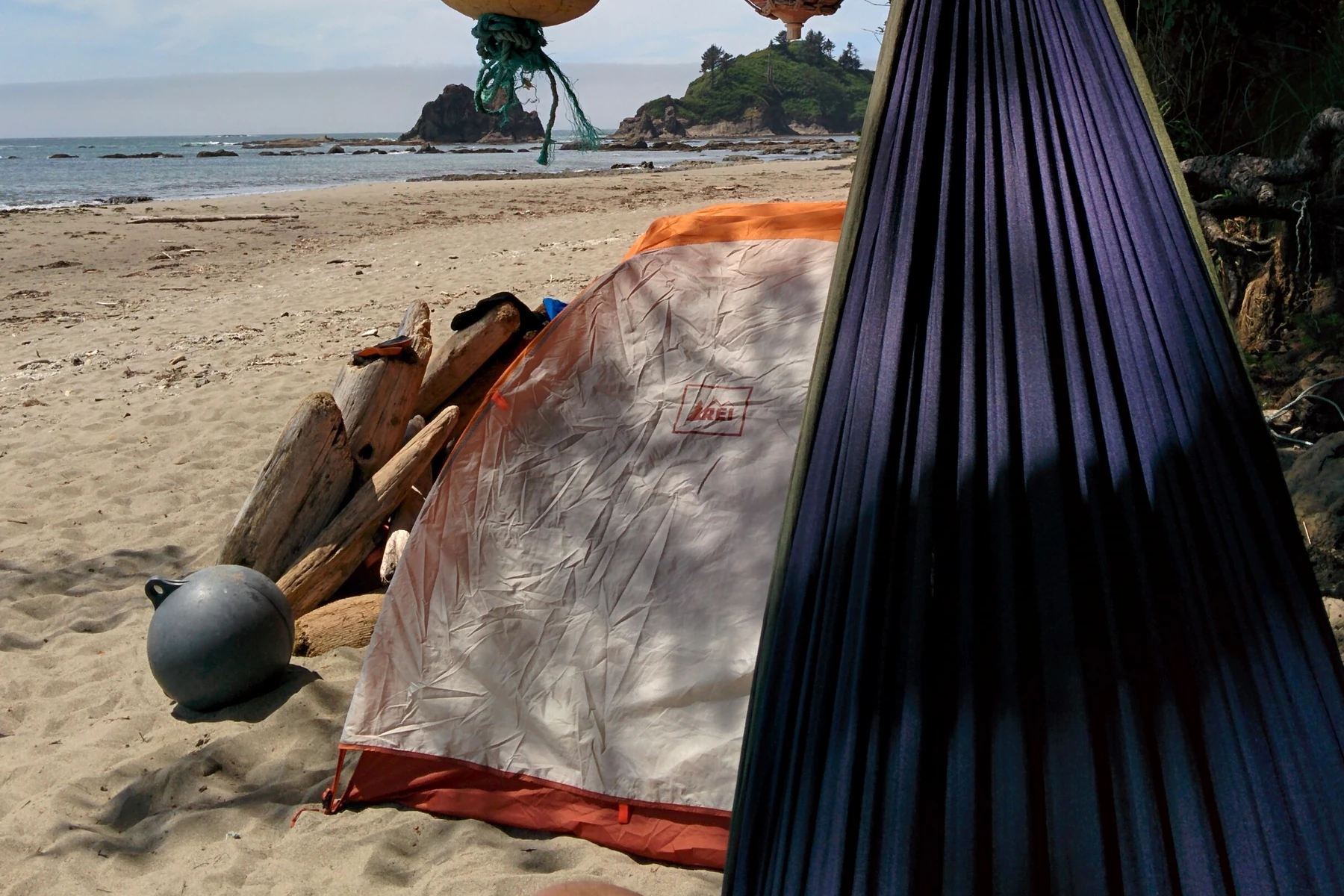
Washington camping is not one trip. It is a rainforest where the ground stays wet in August, and a desert lake where the afternoon wind takes unstaked canopies. It is a beach you reach by walking a short trail with a bear canister in your pack, and a mountain campground behind a highway that snow closes for half the year.
Each of those places books differently, opens in a different month, and rewards a different kind of planning. The first decision, where in this state to camp, comes with the booking reality and the season attached to it.
This page mixes the places we have camped with places we have only researched, and it tells you which is which as it goes. We camp as a family from the south Seattle area, with a daughter we have taken camping from infancy to preschool. Backpacking is the larger half of our camping, the Olympic wilderness coast is our favorite camping in the state, and our season runs May through September with no winter camping in it.
We have camped at four state park campgrounds, and walked and slept on six named beaches on the Olympic coast. We have backpacked the Cascades from Mount Baker to the Goat Rocks. We have also camped at a dispersed site at the end of a logging road, a kind of camp state parks do not offer. We have only researched the other campground systems.
If you need to choose a tent size for your family, consult the family tent size guide and the multi room tent roundup for help with floor space. If you camp out of your vehicle, the SUV tent roundup and our Vevor SUV tent review cover that kind of camping from testing and owner records. Every trip starts at the same place, the camping checklist our own packing runs from.
At a glance
| Region | Best for | Booking reality | Detail |
|---|---|---|---|
| Olympic Peninsula and rainforest | Rainforest trails and river valleys | Park campgrounds in release waves, wilderness permit for the backcountry | Olympic campgrounds guide |
| Washington Coast | Beach camping and wilderness coast backpacking | State parks at the nine month window, wilderness permit on the park coast | Washington Coast guide |
| State parks system | The widest choice of developed campgrounds | Nine month window, same day booking as the second chance | Washington State Parks guide |
| Mount Rainier | Mountain scenery from three entrances | Cougar Rock reservable up to 6 months out, White River first come, Ohanapecosh closed through February 2027 | Mount Rainier camping guide |
| Mount St. Helens | The volcano and its eruption story | Seaquest sites on the nine month window, its group camp reservable mid May to mid September | Washington State Parks guide |
| North Cascades and Baker country | High country lakes and passes | Recreation area reservations for a season opening the Monday before Memorial Day, permit lottery for the backcountry | North Cascades camping guide |
| Central Cascades | Alpine lakes and high country backpacking | Enchantments permits by lottery, federal campgrounds split between Recreation.gov reservations and first come | Covered in full below |
| Seattle and the South Sound | First trips and short drives | Nine month window at state parks close to home | Best Camping Near Seattle |
| Dispersed camping | No campground at all | No reservations; sites taken on arrival, land manager rules apply | Dispersed camping guide |
| Columbia River Gorge | River camping under the gorge walls | Nine month window at the three gorge parks, Horsethief Lake closed November to March | Washington State Parks guide |
| Eastern Washington | Dry weekends and big lakes | Nine month window at the big lake parks, and they fill | Covered in full below |
Our family camping season runs May to September. September is the locals’ month for midweek availability, and high country can take September snow, so the shoulder trades crowds for colder nights and reduced services.
State parks book nine months out, and the good summer weekends at the best known parks go on the day the window opens for their dates. Same day booking and cancellation watching are the real second chance.
A Discover Pass covers parking at state parks and other state lands, and a Northwest Forest Pass covers national forest trailheads. Our household holds both, and neither one has ever decided where we camped.
Washington has at least three rain climates, the wet coast and rainforest, the west Cascades, and the dry side east of the crest. For a wet weekend, consider camping east of the crest instead of canceling.
We would love to camp in the San Juan Islands but have not yet. Reservations are tight, and getting there takes a ferry. We have researched Rainier’s campgrounds and winter camping but have not taken those trips ourselves.
Quick facts for the most popular campgrounds
The region table above compares country. This one counts the campgrounds this guide leans on hardest, the big reservable anchors in each system, with the figures a planner actually needs. Site counts come from the two park agencies, and the last column gives each campground’s RV shape, its hookups, the length its sites take, and its dump station, from the same agencies.
| Campground | System and place | Sites | Season shape | How it is booked | RV shape |
|---|---|---|---|---|---|
| Kalaloch | Olympic National Park | 170 sites | Open year round | Recreation.gov. Loops release at 6 months, 2 weeks, and 4 days out | No hookups. Sites take 21 feet, a few 35 feet. Dump station, $10 a use. |
| Mora | Olympic National Park | 94 sites | Open year round | Recreation.gov, in the same staggered loop releases | No hookups. Sites take 21 feet, a few 35 feet. Dump station, $10 a use. |
| Hoh Rain Forest | Olympic National Park | 78 sites | Open year round | Recreation.gov. The A loop releases at 6 months, C at 2 weeks, B at 4 days | No hookups, and no dump station. Sites take 21 feet, a few 35 feet. |
| Fairholme | Olympic National Park | 88 sites | Late April to late September | Recreation.gov, in the same staggered loop releases | No hookups. Sites take 21 feet, some 35 feet. Dump station, $10 a use. |
| Staircase | Olympic National Park | 49 sites | Open year round, with water and flush toilets in summer only | Recreation.gov, in the same staggered loop releases | No hookups, and no dump station on the park’s campground list. Sites take 21 feet, a few 35 feet. |
| Deception Pass | State Parks, Whidbey and Fidalgo Islands | 312 sites in three campgrounds, 172 standard and 134 with water and electric hookups | Quarry Pond camps year round. Other loops close in winter, the Forest Loop from November 1 to March 31 | The state reservation system, up to nine months ahead | No sewer hookups at the sites. Trailer dump station in the park. |
| Moran | State Parks, Orcas Island | 124 standard sites and 6 hiker and biker sites | Campable year round with loop closures, the Northend Loop closed October 1 to May 1 and water off October 31 to April 1 | The state reservation system, up to nine months ahead | No hookups. Sites to 45 feet, with limited availability at that length. One dump station. |
| Lake Chelan | State Parks, Chelan | 109 standard sites and 35 utility sites | The main loops run mid April to the end of September. A small set of Trailer Loop sites is reservable year round | The state reservation system, up to nine months ahead | 18 of the utility sites are electric only and 17 are full hookup. One dump station. The agency’s campsite profile warns that motorhomes and trailers longer than 30 feet cannot enter or use the facilities. |
How Washington camping is actually booked
Washington campgrounds use several reservation systems. The state parks system books through its own reservation site on a nine month window. Many reservable federal campgrounds book through Recreation.gov, on windows that change from park to park and sometimes from loop to loop. One county system in the San Juans opens its whole season on a single morning. A camper who learns only one of these systems will keep losing sites in the others.
A fourth system runs underneath the other three. The Washington State Department of Natural Resources manages 80 campgrounds across the state, and nearly all of them are first come, first served, with no nightly fee beyond the Discover Pass priced in the passes section below. They are primitive camps by design, with vault toilets, picnic tables, and fire rings where facilities exist at all, and drinking water is the exception rather than the rule. Stay limits are posted forest by forest and vary widely, seven days in a thirty day period on the Olympic Peninsula against seven days in a whole year in Capitol State Forest, with a state default of ten days in thirty where a forest posts nothing. A handful of named camps break the first come pattern and take or require reservations, among them the Elbe Hills ORV Campground near Rainier and sites 1 to 8 at Sahara Creek Camp.
The system’s most distinctive camps sit in the San Juan Islands, reachable only by water. Cypress Head and Pelican Beach on Cypress Island, Griffin Bay on San Juan Island, and Point Doughty on Orcas Island are boat in camps, first come and primitive, and no pass is required for a campground that can only be reached by boat. Lummi Island’s five site campground, inside its natural resources conservation area, runs on the same terms.
Booking windows by system
| System | Window | How a site is won | Notes |
|---|---|---|---|
| Washington State Parks | 9 months ahead of the first trip date | Reserve online or by phone the day the window opens for summer weekends | Same day booking to 2 p.m.; first come for unreserved sites after 2:30 p.m. |
| Mount Rainier (Recreation.gov) | Up to 6 months, some loops 1 week | Reserve Cougar Rock loops in season; White River is first come only | Ohanapecosh closed for rehabilitation through February 2027 |
| Olympic frontcountry (Recreation.gov) | 6 months, 2 weeks, or 4 days by loop | Know which loop releases when at Kalaloch, Mora, Hoh, Fairholme, Staircase | Other park campgrounds are first come |
| Olympic wilderness (Recreation.gov) | Summer permits released April 15 at 7 a.m. Pacific | Permit required year round for overnight backcountry stays | Bear canisters required in park wilderness, loaned free at Wilderness Information Centers |
| North Cascades (Recreation.gov) | Reservations open ahead of a season that starts the Monday before Memorial Day | Reserve drive in sites on the recreation area; backcountry by lottery and general sale | About 40 percent of backcountry sites held for walk up permits |
| San Juan County Parks | One annual opening, residents first, then the public | For the 2027 season, residents January 6 to 8 and the public January 13 at 9 a.m. | Bookings run through October 31; first come November 1 to March 31 |
| San Juan state parks (Moran) | 9 months, the state system | Reserve through State Parks like any other state park | Winter loop closures and a water shutoff narrow the off season |
| National forest campgrounds | Mostly Recreation.gov where reservable, many first come | A mix by forest and campground | A $9 booking fee applies to national forest reservations through Recreation.gov, per the Washington Trails Association reservations guide |
| Washington DNR | No window, first come | Arrive and take an open site, registering where the forest requires it | 80 campgrounds, no nightly fee beyond the Discover Pass; a few named camps take reservations |
Reservations open nine months ahead of the first date of the trip, and campers book summer weekends at the best known parks on the day their dates open. Campers report setting their plans by the opening day rather than by the trip itself, and they treat the opening morning as the real reservation. State Parks publishes no release hour for general campsites on its reservation pages, so treat the day, not an hour, as the appointment. Changes to a state parks reservation stay inside the same park and carry a fee, and Parks publishes no route for handing a reservation to another camper.
At Rainier, Recreation.gov reservations open up to six months ahead at Cougar Rock, and some loops there release only one week ahead, so six months is the widest window rather than the rule for every site. In Olympic, the reservable campgrounds split their own loops across three release waves, six months, two weeks, and four days, which means a sold out campground may simply be a campground whose next wave has not opened.
North Cascades drive in campgrounds take reservations for a season that opens in mid May, on the Monday before Memorial Day weekend. Its backcountry runs a March early access lottery ahead of an April 29 general sale at 7 a.m. Pacific.
An RV reads these systems differently from a tent. No park run campground in Olympic has a hookup, its sites are built for 21 feet with a few at 35, and its dump stations stand at Kalaloch, Mora, and Fairholme; the park's only hookups belong to its two concession campgrounds, at Lake Crescent and Sol Duc, which sit outside the marquee table. In the state parks, hookup sites are a priced class of their own, partial utility and full utility in the fee schedule the State Parks guide prints, and the big developed parks carry trailer dump stations.
Second chances from cancellations and same day booking
Washington added a second chance to the state system in 2025. Since March 24, 2025, every park with reservable campgrounds takes same day reservations, booked online or by phone until 2 p.m. on the day of arrival.
After 2:30 p.m., parks offer any remaining sites to walk-up campers on a first come, first served basis. Parks reported more than 7,000 same day reservations under the pilots that led to the expansion, a figure that shows how much inventory used to sit empty behind plans that changed.
Campers report that cancelled state park sites reappear in the booking inventory quickly. They also report that the final week before a trip is when cancelled sites surface, for campers refreshing the booking page or watching text alerts. Campers use alert services for both state parks and Recreation.gov, though the reports we read did not endorse a single service.
The feeling that bots sweep the good sites in the first minutes is widespread in camper forums. The best sourced explanation points instead to demand, long booking windows, and tentative bookings that campers later cancel in volume. Sites are scarce because Washington has many campers and few summer weekends. The response that works is the second chance system, not suspicion.
How to win a first come site
Some of Washington’s best campgrounds take no reservations for most or all of their sites, and campers agree closely on the timing game for them. Arrive Thursday or midweek rather than Friday.
Arrive in the morning or before noon, and circle a campground during the late morning checkout window, when departing campers free their sites. Campers report Friday evening as the worst time to arrive, when every after work driver in the state has the same idea. Treat a backup park as part of the plan, not a concession. Your first choice may simply be full.
Staircase, an Olympic campground that takes reservations for part of the summer and runs first come outside those dates, filled by mid afternoon on a Friday in one account. The party that missed it camped at Potlatch instead and returned Saturday morning to open sites. Fairholme, La Wis Wis, and Heart O’ the Hills all carry the same Thursday arrival advice in camper reports. White River at Rainier is the counter example.
On a 2024 visit White River’s sites stood open mid morning and again in the afternoon. First come pressure varies by park and by weekend. This first come advice comes from other campers, not from our own experience.
The passes
Two passes cover parking at most state park and national forest sites; national park entrances have separate fees and passes. The Discover Pass, $45 for a year or $10 for a day, covers day use parking at state parks and on lands managed by the Department of Natural Resources and the Department of Fish and Wildlife. Campers staying overnight in a state park do not need one for the park they are staying in.
The Northwest Forest Pass, $30 for a year or $5 for a day, covers Forest Service day use sites and trailheads across Washington and Oregon, though not every trailhead requires one. Our household holds both passes, and neither has ever shaped where we camped. Treat both passes as standard kit, not planning tools.
Choosing a region
Compare regions by drive time, rainfall, booking difficulty, and crowds. How long is the real drive time from the Puget Sound cities most readers start from? How wet is the region itself, rather than the state on average?
How difficult is it to book a site, from a nine month reservation window to a first come morning? How crowded are specific places at specific times? Crowding claims here rest on specific places at specific times, because the record does not support a blanket claim that Washington camping is crowded. Campers report that Deception Pass is fully booked day after day from late June through Labor Day, while a quiet beach can be a half mile walk from a crowded trailhead, sometimes in the same park.
The Olympic Peninsula and the rainforest
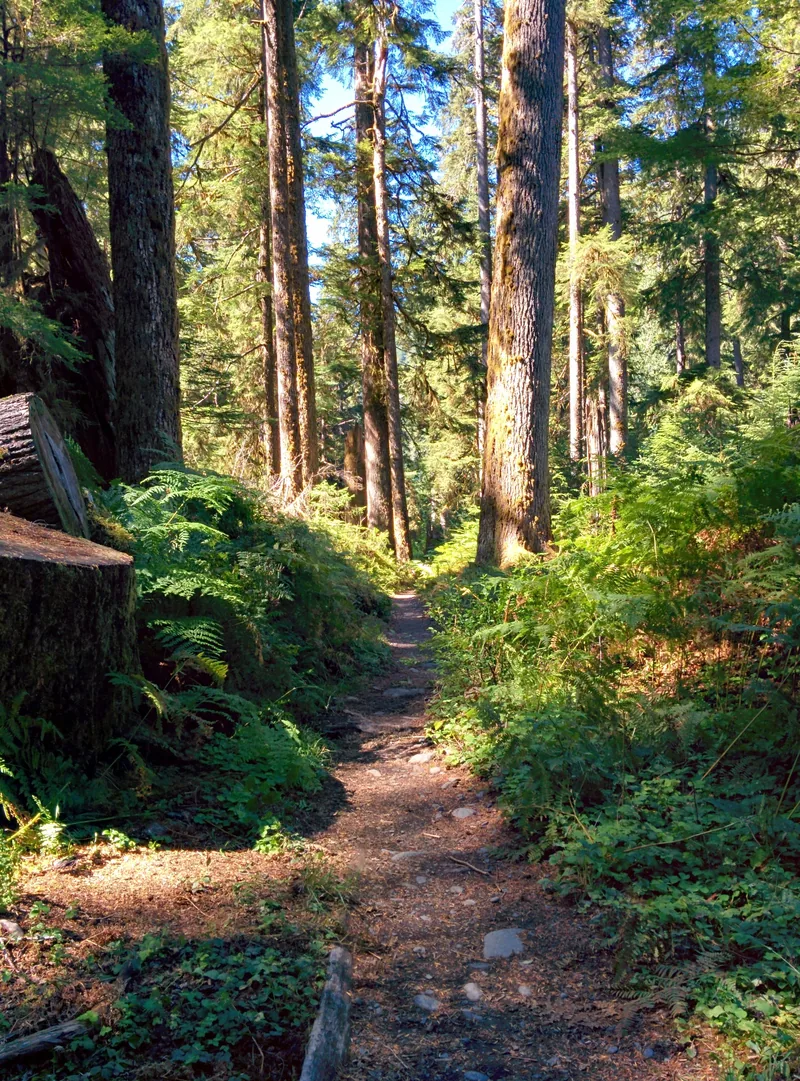
The Olympic Peninsula offers the state’s most rugged rainforest and coastal camping. The west side holds temperate rainforest valleys where the Hoh, Queets, and Quinault rivers run under moss heavy maples, and the park’s frontcountry campgrounds sit at the ends of long spur roads off Highway 101. The drive from Seattle to the Hoh or Kalaloch country takes roughly three to four hours, and the peninsula has the wettest climate in the state. Choose a drive-in campground as a base for day hikes, or get a wilderness permit and walk into the backcountry. For an RV those campgrounds are small scale, no hookups at any park run campground, sites built for 21 feet with a few at 35, and dump stations at Kalaloch, Mora, and Fairholme only.
We have backpacked the Hoh Rainforest. The river trail beyond the campground passes giant trees and hanging moss, and the crowds thin as the miles add up. The peninsula's backpacking, on the coast and in the rainforest both, has its own guide, the Olympic Peninsula backpacking guide. We also camped at Bogachiel State Park in 2017, a small state park south of Forks with developed sites near the Hoh corridor. The park's own page gives the RV shape the camper reports skip, partial hookup sites, combinations to 40 feet, and a trailer dump.
Campers describe 42 sites off Highway 101, coin-operated hot showers and flush toilets, firm ground that calls for a mallet, and road noise through the night that is less noticeable at riverside sites. Sites sit close together, with forest growth between them softening the closeness.
The trailhead and the main Hoh campground carry heavy traffic in season, and camper reports describe the corridor as busy from the parking lot onward. From our experience, crowds thin out in the backcountry beyond the first miles.
The Washington Coast
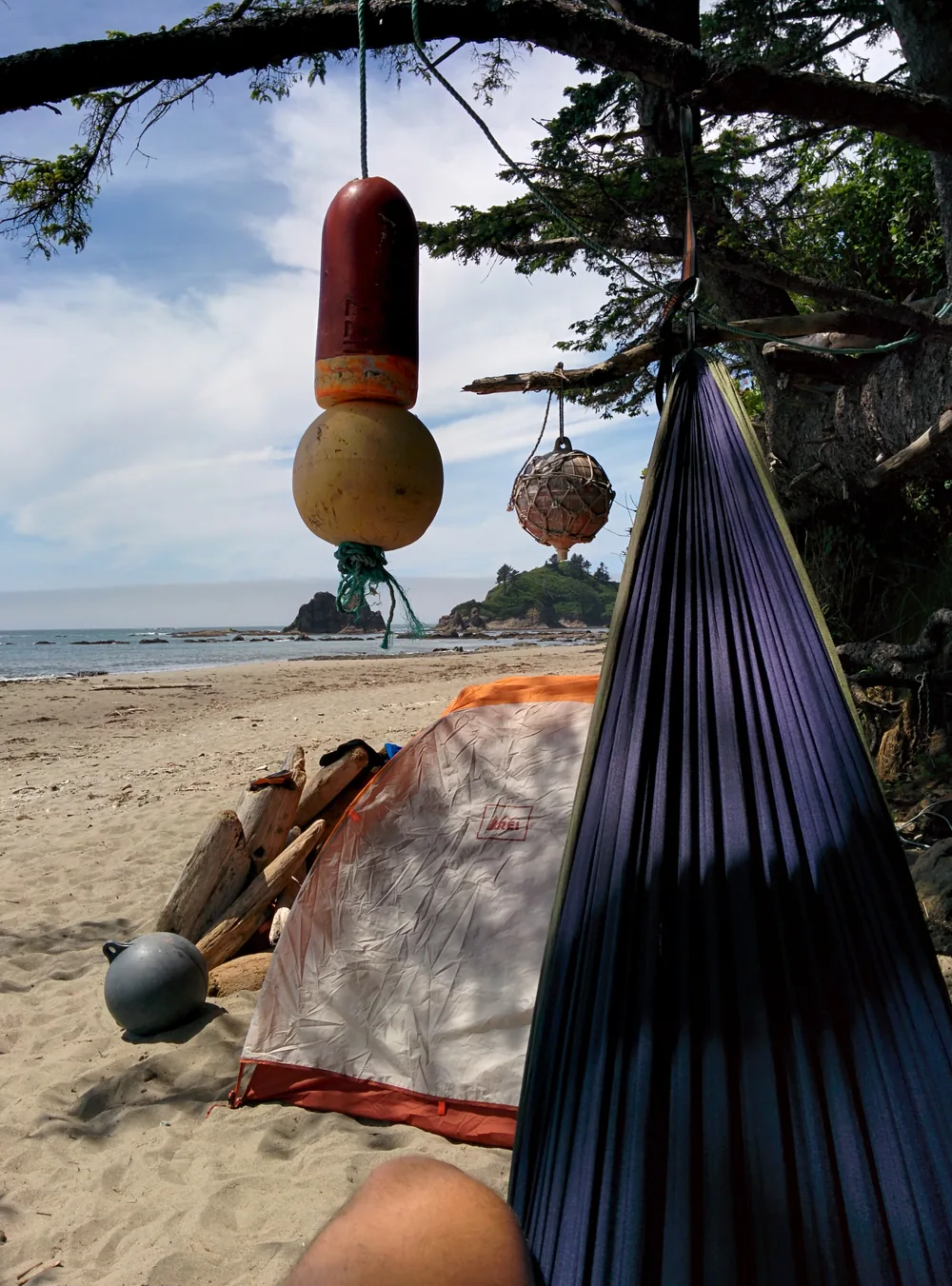
The outer coast is our home ground, and it holds two kinds of camping that share a shoreline. The first is a string of coastal state parks you reach by car, with developed sites a short walk from the sand. On the Olympic wilderness coast, backpackers camp on beaches wherever drift logs allow, and a federal wilderness permit replaces the reservation. Both kinds run north to south along the same water, and you can mix them in one trip. They book, pack, and fail in completely different ways.
Our family camps on the wilderness coast. We have camped overnight at Second Beach, Third Beach, Toleak Point, Strawberry Point, Scott Creek, and Mosquito Creek on many trips. It is our favorite backpacking spot in the state, and Toleak Point and Strawberry Point are the two beaches we would name first.
We recommend Second Beach and Third Beach for families with young children, because the walk in is short enough for small children to manage on their own. Crowds gather near the trail, a single privy stands at the trail end, and some groups camp without the required bear canisters. Campers report quieter conditions a half mile or more south.
Camp above the high tide line, and check the tide chart before you settle, because trip reports describe tents soaked overnight by camps pitched too close to the water. Olympic requires bear canisters for food storage in its wilderness, including the coast; rangers check for them, and campers report a ticket for those without one. Wilderness Information Centers loan canisters for free, though the park warns that supplies can run out on exceptionally busy weekends, so bring your own or arrive early on a holiday trip. Book permits for overnight stays through Recreation.gov year-round; summer permits become available on April 15, so plan a July beach trip in April.
Among the drive in parks, we camped at Twin Harbors State Park in 2018, the big Westport park where the coast turns from wilderness to beach town. Its sites are close together, and its showers use tokens. The park takes full hookup rigs to 35 feet, and its dump station closes November to April. Farther south, Cape Disappointment, at the mouth of the Columbia, is the coast’s biggest camping name.
The community record describes it as peaceful in spring and secluded outside summer, and full on holiday weekends. Some ocean-side sites will remain unavailable into 2027 because of erosion risk.
The drive in campgrounds along this coast, Twin Harbors and Cape Disappointment among them, are treated park by park in our Washington Coast camping guide.
The state parks system
Washington’s state parks form the default camping network in this state. The system has well over a hundred parks, with campgrounds in every region. A marquee park on a popular sound or lake books out the day its window opens, while a quiet park an hour farther on may hold open sites into the same weekend. Choose a beach park for beach access, a forest park for shade and quiet, or a lake park for swimming with children.
We have camped at four state parks; current camper reports describe conditions since our visits. Bogachiel, 2017, is the small rainforest gateway park near the Hoh, its close sites softened by forest growth between them. We camped at Twin Harbors, a large coastal park, in 2018; campers describe sites close together on grass near the beach.
Its showers run on tokens campers buy at the ranger station with dollar bills, because the token machine does not take coins. Campers name that friction again and again. Joemma Beach, 2017, down in the South Sound, is a small beach and dock park with vault toilets and potable water only. We camped at Lake Chelan in 2017, the east side lake park where the town and the water make the trip.
Campers report that Deception Pass, the state park on the bridges between Whidbey and Fidalgo islands, is fully booked day after day from late June through Labor Day. Its summer weekends book up months ahead, and reviews describe the crowds as structural, not seasonal. Its campsites include 134 with water and electric hookups, no site carries sewer, and the park has a trailer dump station.
Campers’ strongest quiet family pick is Rasar State Park on the Skagit River. Independent reviewers describe it the same way, with spacious and private wooded sites, two playgrounds, very clean bathrooms, and showers now reported free. We have camped at Rasar once ourselves, in the group camp with friends; the family detail here comes from camper reports and independent reviews. Between those two poles sit the midweek parks, which a family can still reach by shifting a trip from Saturday to Wednesday.
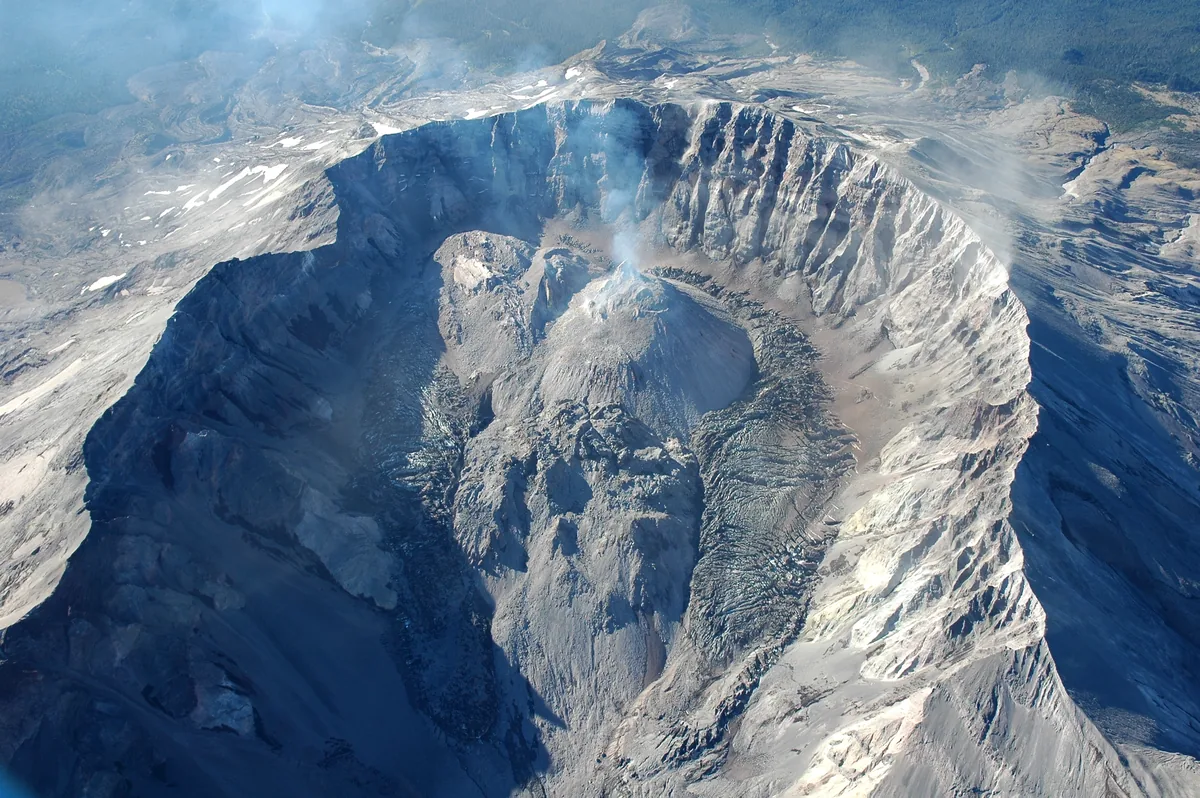
Mount St. Helens is a national volcanic monument in the Gifford Pinchot National Forest, not a state park. Seaquest State Park is a forested campground on Silver Lake serving the monument’s west side, with the monument’s interpretive center a short tunnel walk away and the monument itself 47 miles east up the highway. North of the mountain, Merrill Lake is a DNR walk in tent campground on a volcanically formed alpine lake, with a boat launch and a short trail into old growth.
Mount Rainier
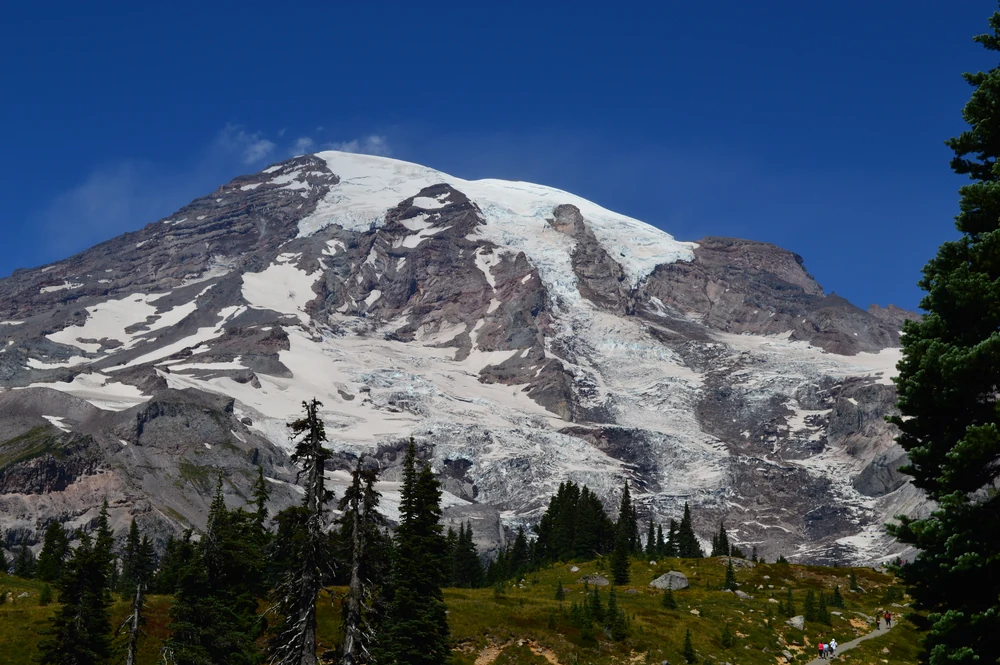
We have visited Mount Rainier many times but have never camped there. Reservations were too hard to get. The campground guidance here comes from park sources and camper reports, not from our own stays. Camping the Wonderland Trail is a trip we would love to do someday, and friends of ours have done it.
The mechanics explain why. In a normal year, the park has two campgrounds that take reservations, Cougar Rock and Ohanapecosh. Recreation.gov opens reservations up to six months ahead, but releases some Cougar Rock loops only a week ahead. In 2026 the reservable supply is Cougar Rock alone, because Ohanapecosh, the park’s largest campground at 185 sites, is closed for a rehabilitation project that the park now expects to run through February 2027.
The third drive in campground, White River, takes no reservations at all and runs first come, paid on arrival through the Recreation.gov app’s Scan and Pay. The park warns that there is no cell service there, so the app should be downloaded before you go. Mowich Lake, the park’s fourth camping area, cannot be reached by road at all right now, because the Fairfax Bridge on State Route 165 is closed to vehicles, bicycles, and pedestrians until further notice. Its walk in sites remain reachable on foot from the Wonderland Trail, wilderness permit in hand.
The park ran timed entry reservations in the summers of 2024 and 2025, and a great deal of advice online still describes it. But the National Park Service announced in February 2026 that Rainier will not use timed entry in 2026, relying on parking management instead.
Treat any source that tells you to book a 2026 timed entry slot as out of date, and treat parking as the real constraint. Camper reports describe the Paradise lots full by mid morning on peak days, and secondary guides put clear summer Saturdays earlier still. Older guides still recommend Ohanapecosh’s riverside loops for families, but the campground is closed. When you cannot get a spot in the park’s campgrounds, as we could not, try camping in the national forest or in towns outside the entrances.
The North Cascades and the Baker country
Three land managers share the northern mountains, and their rules differ. No drive in campground sits inside North Cascades National Park proper. The campgrounds drivers use, Colonial Creek, Newhalem Creek, and Goodell Creek, stand along Highway 20 in the Ross Lake National Recreation Area.
They take reservations through Recreation.gov for a season that opens in mid May, on the Monday before Memorial Day weekend. West of the park, the Mount Baker trailheads that draw Seattle’s hikers sit in the Mount Baker Snoqualmie National Forest. A Northwest Forest Pass or an interagency pass covers parking at the fee trailheads there, and no park permit applies to a day hike.
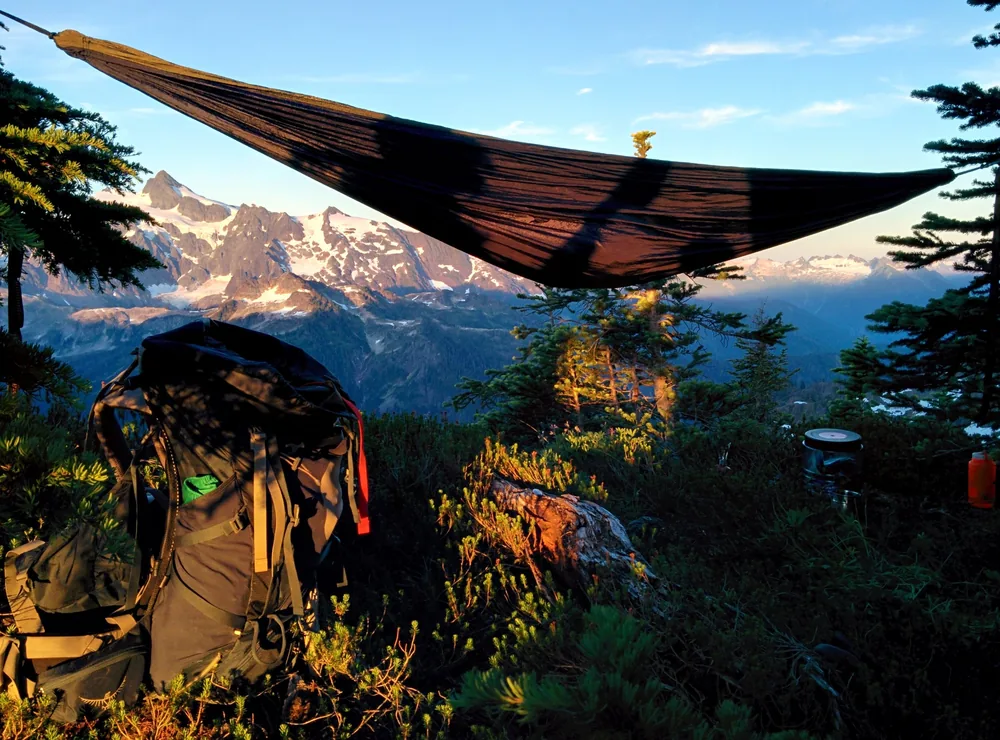
What we know firsthand in this country is backpacking. Our northern Cascades backpacking was all around the Artist Point area, in the Mount Baker country on national forest land, not inside North Cascades National Park. We took a hammock backpacking trip on Ptarmigan Ridge from the Artist Point trailhead in August 2016, and the hammock photograph at the head of this section is ours from that camp.
Our one stay at a Highway 20 campground is Rasar State Park, at the group camp down the Skagit River near Concrete. Our guidance on the corridor campgrounds inside the park comes from community reports and research. September 2026 reports from the Artist Point area describe the lot filling by about 10 a.m. on weekends, with cars then parking down the road, while the nearby Table Mountain trail had only a handful of parties. Arrive early if you want a parking spot.
The Washington State Department of Transportation closes the mountain stretch every winter under avalanche risk and reopens it when crews and conditions allow, and no fixed spring date exists to plan around. In spring 2026, storm damage and a rockslide kept the middle of the highway closed until its full reopening on June 14, weeks later than in a normal year. Check the opening with WSDOT each spring and build a Baker country or east side alternative into any May plan.
The Central Cascades
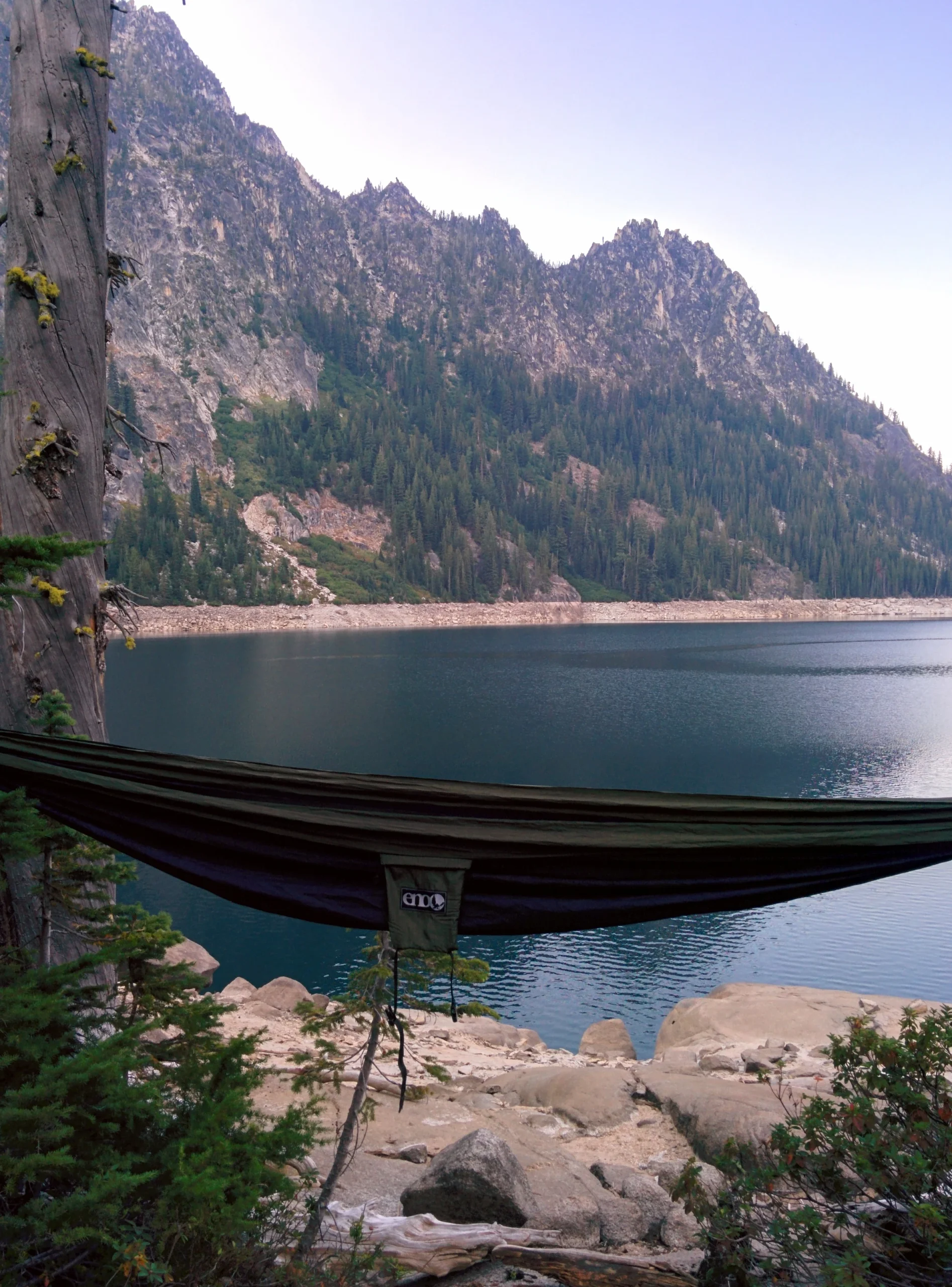
The Central Cascades run from Stevens Pass and US-2 south to Snoqualmie Pass and Interstate 90, taking in the crest and both slopes. The Alpine Lakes Wilderness sits at the center. On the east side, separate camping countries gather around Icicle Creek, Lake Wenatchee, the Teanaway, and Salmon La Sac. On the west, the Mountain Loop Highway crosses the region’s northwest shoulder between Granite Falls and Darrington.
Our backpacking here belongs to the hammock years. It began at Ice Lakes, off trail in July 2015. The Enchantments followed in August 2015, Peggy’s Pond and the climb of Mt Daniel in August 2016, Goat Lake off the Mountain Loop Highway in August 2017, and Seven Fingered Jack in August 2021. A dated trip to Lake Serene falls in June 2017, and Tuck and Robin Lakes stand on the backpacking list without a date.
We have not stayed in a developed campground in this region. On the east side, Eightmile, Bridge Creek, Johnny Creek, and Icicle Group Campground line Icicle Creek above Leavenworth. Glacier View and Nason Creek serve Lake Wenatchee, and Lake Wenatchee State Park adds a state park campground at the lake. Salmon La Sac Campground, between the Cle Elum and Cooper Rivers, serves as the developed base for its corridor. Along the Mountain Loop Highway, the Forest Service lists Clear Creek, Bedal, Gold Basin, Verlot, and Turlo among the campgrounds.
East of Cle Elum, the Teanaway Community Forest adds a state DNR layer to this region, co managed with the Department of Fish and Wildlife. Its three campgrounds, the Teanaway Camping Area on the West Fork, Indian Camp, and 29 Pines on the North Fork, are first come under a seven day stay limit, and dispersed camping is not allowed in the community forest.
Developed campgrounds do not share one booking rule. Some federal sites take reservations through Recreation.gov, while others remain first come. Salmon La Sac shows the split inside one campground, with about 40 of its 69 sites reservable and almost 30 first come. Kachess Campground also mixes Recreation.gov reservations with first come sites. Check the individual campground before deciding whether to book or arrive early.
For an overnight trip in the Enchantments, a permit is required from May 15 through October 31. The annual advanced lottery runs each February, and a daily lottery runs during the season.
The Enchantments are the extreme case. The Seattle Times put the 2024 permit lottery at about 47,000 applications for about 23,000 permits. The Enchantments’ approach trailheads fill before dawn in season. Trip reports describe the permit-capped core as quieter than the approach trails, which fits our own memory of the crowds.
Seattle and the South Sound
For our family in the south Seattle area, the camping region we use most is about an hour from our driveway. Summer Friday drive times are not the map’s drive times, and the southbound Interstate 5 corridor toward Tacoma and the military bases sets the real departure window for every park south of the city. A park that takes ninety minutes to reach on a Tuesday morning can take three hours on a Friday, limiting which parks a working family can use for a weekend.
The park we have camped at in this region is Joemma Beach State Park, on the Key Peninsula, where we stayed in 2017. Joemma is a beach and dock park, with good water access and a small camp. It has vault toilets and potable water, no showers, and a small number of primitive sites. Recent camper reports describe a pattern of locals partying there.
Between Joemma and the city sit the mainland parks that fill the region’s first trip role, and campers name one defining tent camping variable for them park after park, aircraft noise. Saltwater sits under the Sea-Tac flight path, Dash Point hears cargo and commercial planes at night, and even Deception Pass, up in the islands section of many a Seattle list, hears jets into the late evening. Tent walls stop none of it.
We have visited Saltwater but have not stayed overnight there. We would recommend it to a family just getting into camping, as a day trip for now. Its campground is closed. Projects are in development for the campground area, some of them because of flooding and erosion damage, and Parks is using the closure to reevaluate camping at the park. The park stays open for day use, and its beach is a short walk from the day use area.
Campers who stayed there before the closure report planes directly overhead every few minutes day and night, and sites close together with little privacy. The park’s low camper rating rests on exactly those nights. When camping returns, Saltwater will again be a first taste close to home, though never a quiet one. While the campground is closed, Rasar State Park is the better first overnight.
Southwest of Olympia, Capitol State Forest is the South Sound’s DNR ground, 110,000 acres of working forest with four campgrounds, Margaret McKenny, Middle Waddell, Porter Creek, and Fall Creek. Its campgrounds run May 1 to November 30 under the DNR pattern, first come with registration on arrival and a stay limit of seven days in a 365 day period, and dispersed camping is not allowed anywhere in the forest. The timely fact for this season is a closure. McKenny and Middle Waddell stayed closed through the summer of 2026, day use areas and trailheads included, because laminated root rot had turned some of their trees into hazards.
The metro campgrounds themselves, from Saltwater and Dash Point to the I-90 corridor and the Key Peninsula, are treated park by park in our Best Camping Near Seattle guide.
Dispersed camping
Some Washington campers want no campground at all. The national forests east and west of the crest hold the state’s dispersed camping, roadside sites on forest roads with no reservations. We have dispersed camped in Washington off Interstate 90 west of Snoqualmie Pass, at the end of an old logging road, on Forest Service land. We camped at one of those sites in July 2014, and our photographs show a campfire burning in its rock ring.
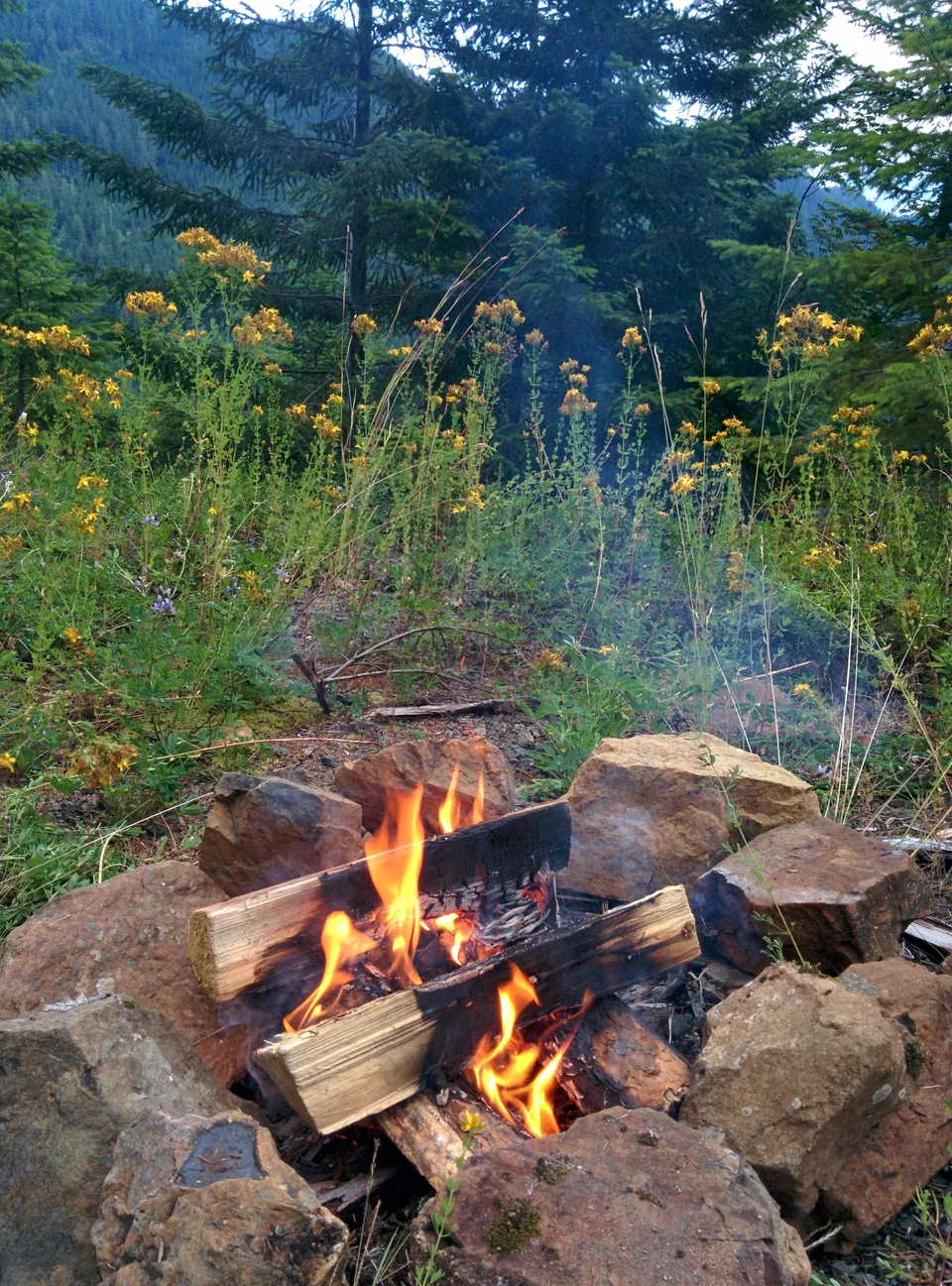
Campers describe dispersed camping along the I-90 corridor as using established forest-road pull-offs, with potholes and mud limiting which roads a car can use. Campers report that driving farther down a road tends to buy privacy and cleaner conditions. They also report trash left by others near the easy sites, and extra trash bags as the standing fix.
Expect highway noise at sites close to the interstate. Dispersed rules differ by land manager and by forest, so check the rules for the forest you plan to enter.
Eastern Washington and the dry side
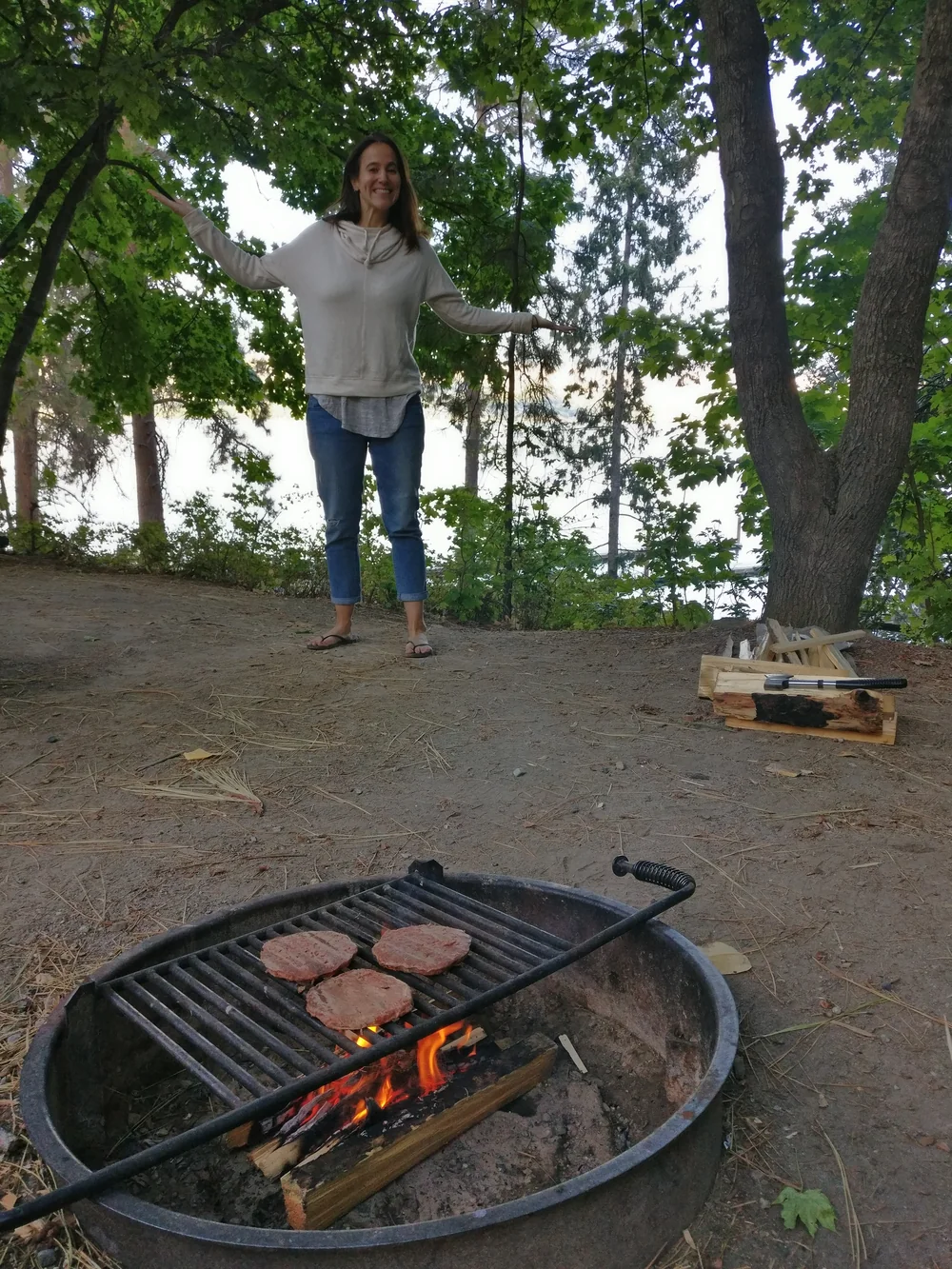
On the east side, plan for heat, wind, and distance rather than rain; Lake Chelan, Banks Lake, and the Columbia River parks hold most of the developed camping. Summer weekends book quickly at the same nine month window as the coast.
We camped at Lake Chelan State Park in September 2017 and have backpacked on the east slope in the Entiat drainage. We have not yet reached the head of that lake. We hope to take the ferry ride up to Stehekin someday. We have not camped in the Columbia Basin or farther east, but camping there looks sparse to us, with few sights. The park's 35 utility sites are an older park's hookups, and the agency warns that motorhomes and trailers longer than 30 feet cannot enter or use them.
We would still like to get out to Palouse Falls. The park is day use only. With no campground at the park or nearby to base from, it has stayed a someday trip for us rather than a camp.
Lake Chelan State Park is hot, dry, busy, and social in summer; campers come for the water and should choose a site with shade. Its Beach Loop takes reservations from mid April to the end of September, and its West Loop to mid September. Campers can reserve a small set of Trailer Loop sites all year. The park fills fast when the reservation window opens.
Steamboat Rock sees summer days in the upper 90s, afternoon wind strong enough to take unstaked canopies, a sprinkler schedule campers learn or get soaked by, and a summit trail everyone sensible hikes early. At Potholes, poplar windbreaks shelter campground loops from the wind, and algae sometimes closes the swimming area. The same basin parks described as crowded and loud on summer weekends read quiet on weekdays and in the shoulder. Eastern quiet is a calendar claim, not a summer weekend promise.
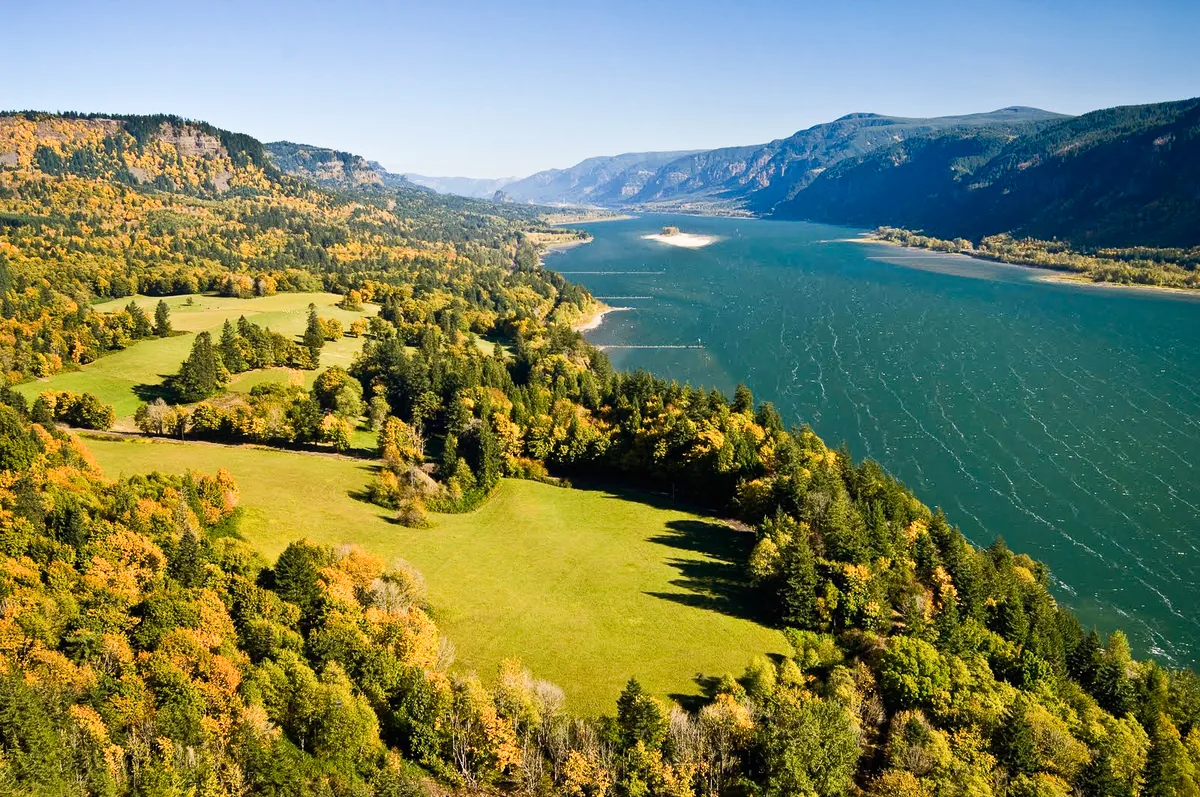
The Columbia River Gorge holds three state park campgrounds along its Washington shore. Beacon Rock sits beneath its namesake rock at the gorge’s west end, Columbia Hills has a campground at Horsethief Lake in the dry middle of the gorge, and Maryhill sits on the open river at its east end. The three campgrounds use the same nine month reservation window as the rest of the state park system, and their river wind and dry hills have more in common with eastern Washington than with the coast.
Rain, seasons, and the shoulder season
Washington’s climate varies by region, so consider the weather when planning a route. The coast and rainforest take the state’s heaviest rain, with west side rainforest valleys running roughly 80 to 200 inches a year, while the Sequim rain shadow on the northeast Olympic Peninsula takes roughly 15 to 17. The west Cascades fall between those extremes, with wet valleys and snowy passes, while the east side is dry enough that campers can keep rain gear as a backup layer. Our own season is May through September, no winter camping, rain avoided where possible. Even so, rain fell during our August 2026 camp at Second Beach, on our favorite coast and during our favorite season.
Start the rain rig with the ground, not the fly. A committed segment of campers camps wet on purpose, and they choose a flat or slightly rounded site. They never take the lowest site or a divot. Moisture seeping up through the footprint and floor can end a trip, even when the tent keeps rain off the roof. Car campers can add a freestanding canopy or string a tarp over a separate living and cooking area, keeping the tent for sleeping and staying dry while cooking or sitting.
Backpackers should pitch the tarp first and keep dry gear bagged until it is under cover. Unload and pitch or hang the tent the same day you get home, because a tent stored wet mildews fast.
The shoulder season brings fewer crowds but also fewer services. State parks begin closing individual loops in mid September, though the dates scatter by park. Named loops at Belfair and Dash Point close September 15 to May 15, and Deception Pass’s Forest Loop closes November 1 to March 31, while campers can reserve its Quarry Pond loop all year.
Many parks shut water off from November 1 to April 1, and many keep winter water at exactly one place such as a dump station tap. A few, Jarrell Cove among them, have no winter water at all from October 15 to April 1.
At Grayland Beach, flood prone sites are first come only from November 1 to April 15. At Chelan the reservable season ends in September, the West Loop in mid September and the Beach Loop at the month’s end, with a small year round reservable set in the Trailer Loop. Check the Parks winter schedule for your specific park before a cold season trip.
Locals favor September, when midweek availability improves and summer crowds ease. September is not reliably empty and not reliably dry. A popular coast campground stays busy after Labor Day, and real quiet arrives in October instead.
Snow can fall at elevation in September, as a storm at Cascade Pass showed, and snow covers the passes most years by late October. Every high elevation plan in September carries an early snow warning, and the forecast check is part of the plan, not a formality. If rain washes out a west side weekend, consider a drier destination instead of canceling. Go east over the passes to Chelan and the basin, or north into the Sequim rain shadow. Pass weather can be the worst of the trip, and dry side campgrounds also book up, so plan around the reservation window.
We have not camped in winter; the following information comes from community and agency research. Lowland temperate winter camping means camping in rain at parks with reduced services, coastal campgrounds, cabins, and yurts; check the closures and water rules above. Snow camping takes practice, its own gear, and its own skills. Lake Wenatchee offers plowed roads, heated restrooms and showers, and a Sno Park permit, and Lake Easton offers day use area camping from December to March with its own permit, water, and heated restrooms.
For current conditions, check the Parks winter schedule, the National Park Service for Rainier and North Cascades, the Northwest Avalanche Center, and WSDOT for the passes.
Family camping by region
The variables that decide a family trip, site spacing, night noise, showers, and swim water, are exactly the variables most regional guides treat as footnotes. We camped with our daughter from infancy through preschool, and the two of us pitched our big tent in about fifteen to twenty minutes with a small child underfoot.
Site spacing and noise come first, because they decide whether anybody sleeps. The most repeated family complaint in this state is not weather or bugs but the neighbors. Sites sit close together at Twin Harbors, Lake Chelan, and Bogachiel, with conversations audible through tent walls and late groups hard to escape. At Bogachiel, forest growth provides some separation between the close sites. At some parks, aircraft and trains make more noise than other campers.
Saltwater and Dash Point sit under flight paths, Deception Pass hears jets into the late evening, and Larrabee stands beside freight trains with night horns. Families choosing a first overnight should filter first on noise, using the noise details in the Seattle and state parks sections.
Shower details matter at 7 p.m. when you have a sandy preschooler. Twin Harbors showers take tokens sold at the ranger station for dollar bills, and Bogachiel showers take coins.
Oregon’s state park showers are free and untimed. Washington ties or beats Oregon at a handful of individual parks, including Rasar and Lake Wenatchee, but loses badly at Dash Point and Moran’s Northend. Shower prices and status change by season. Check the park’s own page in the season you go.
Freshwater is the main choice for young children swimming in Washington. At Deception Pass, choose shallow, roped-off Cranberry Lake over the park’s pass beaches, where currents are dangerous. Cascade Lake at Moran is warm and has a gradual entry.
Lake Wenatchee’s roped swimming area draws crowds and has mosquitoes in June; its rocky beach calls for water shoes. Belfair and Twanoh, on Hood Canal, are the saltwater exceptions, shallow and relatively warm. This guide names a playground only where the record names one, because a promised playground that is not there is an error a family remembers.
A first overnight needs a short drive, a real bathroom, and an easy exit more than it needs scenery. For new families, Saltwater will offer a first taste of camping again when its campground reopens, with some caveats, while campers recommend Rasar as an overlooked option.
Frequently asked questions
What is the best month for camping in Washington?
The state’s camping season in practice runs May through September, and our own camping runs inside it. July and August are the driest months and the most crowded. September is this guide’s pick once the crowds thin, with two cautions the seasons section works through: named loops begin closing from mid September at some parks, and many parks turn water off from November 1. We do not winter camp, and the winter material in this guide is labeled research wherever it appears.
Do I need a reservation to camp in Washington?
At the marquee campgrounds in summer, plan on one. State park sites book up to nine months ahead, and summer weekends at the popular parks are taken on the morning the window opens for those dates. Olympic National Park’s reservable campgrounds release their loops in a stagger, at 6 months, 2 weeks, and 4 days out. There is also a same day route at the state parks: book online or by phone until 2 p.m. on the arrival day, and unreserved sites go first come, first served after 2:30 p.m. A long list of national forest campgrounds and some park campgrounds, Heart O’ the Hills and White River among them, stay first come only.
How much does camping in Washington cost?
The fixed costs this guide can print are the passes and booking fees. A Discover Pass, needed to park at state parks and state recreation lands, is $45 for a year or $10 for a day, and a camper staying overnight does not need one to park inside the park where they are staying. A Northwest Forest Pass for Forest Service trailheads and day use sites is $30 a year or $5 a day. The state parks reservation fee is $8 online or $10 by phone. Site fees themselves vary by system, season, and site type, and each system’s booking pages post them, so this guide points there rather than printing a fee table that would age.
At state parks the schedule prices them in rising bands, standard, then partial utility, then full utility, and the State Parks guide on this site prints that schedule in full.
Where can I camp for free in Washington?
On national forest land, away from developed campgrounds. Dispersed camping on Forest Service land costs nothing for the camping itself, though parking at a developed trailhead can require the Northwest Forest Pass. Our own dispersed camping is a single site off Interstate 90 west of Snoqualmie Pass, down an old logging road, and the dispersed section of this guide treats that country in full. State parks and national parks charge for their campgrounds.
What is the most popular campground in Washington?
There is no honest statewide ranking, so this guide answers with the crowded ground it can stand behind. The most crowded camping we have personally seen is Second Beach in the summer, and the Enchantments permit country runs crowded in season. Among the drive in campgrounds, Deception Pass is the state’s giant at 312 sites and books like it, and summer weekends at the marquee state parks are gone on the morning their window opens. The booking section of this guide is built for exactly that pressure.
Can you camp on the Washington coast?
Yes, three ways. The south coast state parks, Twin Harbors, Grayland Beach, and Cape Disappointment among them, are treated in this guide’s coast section and park by park in Best Washington State Parks for Camping. Kalaloch gives the national park a frontcountry campground on the bluff. And the wilderness beaches themselves take campers on a wilderness permit, which is the ground Olympic Peninsula Backpacking covers camp by camp.
Booking windows, closures, and park status change, sometimes mid season. We check primary sources each season and correct outdated details. If you find a discrepancy with a park’s own page, trust the park’s page and tell us so we can correct it.
Readers touring both coasts will also want Best Camping on the Oregon Coast, which covers the Oregon state parks system the same way this page covers Washington’s.
Find more camping guides on the Camping hub.