The outer coast of Washington is a drive to coast, a run of beach towns and state parks strung along the shore roads south of the national park, and the camping questions here are not where the parks are. They are which of them the wind, the booking window, and the season leave open to a tent. The state parks run on one reservation system that opens nine months ahead. The town campgrounds each book their own way. Two places on this coast carry live cautions that change what a camper should book at all, and this guide puts those cautions up front rather than burying them at the entries.
Our own basis on this coast is small, and it is worth stating at its exact size. We have camped at one campground on this coast, Twin Harbors State Park, in the summer of 2018. The coast ground our family knows deeply is the Olympic wilderness coast inside the national park, the backpacking beaches we have returned to for a decade, and campers looking for the Peninsula’s campgrounds, that national park coast included, belong in our Olympic Peninsula camping guide, while this guide covers the outer coast from Ocean Shores to the Columbia River mouth. This guide points to it and does not retell it.
Everything else on this coast we know as researched ground, checked against the parks, the counties, and the state agencies that run it, and against what other campers report. Where an entry rests on reporting rather than on our own stay, the entry says so.
The guide works in the order a trip gets decided. The roster runs place by place from north to south, because that is the order a driver meets this coast. Readers planning the wider state should start with our Washington campgrounds by region hub, which owns Washington region by region and carries this guide's cluster. A camping checklist covers what every trip this page starts will pack.
In this guide
- At a glance
- Choosing your part of the coast
- Reservations on this coast
- The North Beach from Ocean Shores to Moclips
- The South Beach from Westport to Twin Harbors
- Willapa Bay and the Long Beach Peninsula
- Family camping on this coast
- Seasons on this coast
- Resupply, tides, and emergencies
- Fees and passes
- Frequently asked questions
At a glance
The system line comes first, because it governs every state park below. Every state park campground on this coast books through the one Washington State Parks reservation system, up to nine months ahead of the first night of a trip. Same day reservations run online or by phone until 2 p.m. on the arrival day, and sites still unreserved after 2:30 p.m. that day go to whoever walks up. The town, county, and private campgrounds in this guide sit outside that system, and each books its own way.
The coast line is short. The roster runs from the North Beach towns at the top of Grays Harbor down the South Beach state parks, around Willapa Bay, and up the Long Beach Peninsula to the mouth of the Columbia River. What separates its ends is not the mileage, which a driver covers in a day. It is the wind exposure, the site spacing, and how much town sits around the campground gate.
The status line carries the two cautions a reader must meet before booking anything. Cape Disappointment State Park, the largest single campground search on this coast, reopened in a reduced form after a renovation closure that ran into 2026. The state's own winter schedule describes it with a set of sites closed pending storm evaluation, and the park's own page now carries its camping in the present tense, first come, with no closure statement. Grayland Beach State Park runs a block of flood prone sites first come, first served and non refundable from November 1 to April 15. Both cautions are carried in full at their entries below.
The shortlist below sorts the treated ground by the trip a reader is actually planning. The section names in the last column jump to the matching part of this guide further down this page, so a reader can go straight to the ground a row names.
| Trip type | Place | The catch | Read more |
|---|---|---|---|
| The camped anchor | Twin Harbors State Park | Our one stay on this coast; the hookup sites are small and close together, and much of the park closes for winter flooding | The South Beach from Westport to Twin Harbors |
| Family beach base | Ocean City State Park | The roster's largest campground, forested and busy in summer, with loops that close from October to mid May | The North Beach from Ocean Shores to Moclips |
| Quiet water instead of surf | Bruceport County Park | A small county campground on Willapa Bay, researched rather than camped, booking through the county | Willapa Bay and the Long Beach Peninsula |
| Storm season trip | Cape Disappointment State Park | Reduced reopening form and sites held pending storm evaluation, in a researched entry | Willapa Bay and the Long Beach Peninsula |
| First coast trip with town services | Westport | The town's state park is day use only, so its camping is private ground near the marina | The South Beach from Westport to Twin Harbors |
| Winter first come ground | Grayland Beach State Park | Flood prone sites run first come and non refundable from November 1 to April 15 | The South Beach from Westport to Twin Harbors |
For a state park in summer, count back nine months from the first night and book the morning the window opens, as campers who work this system report doing. Treat same day booking and the first come ground as the real second chance. Then pick the part of the coast by wind and spacing before picking the park, because on this coast the part decides more than the park does.
Choosing your part of the coast
The official park pages answer where a campground is. A tent camper choosing on this coast is answering a different question, which part of the shore fits the trip in mind. The parts separate cleanly once they are named in driving order. What follows works the geography first, then the conditions that actually filter the roster, then the boundary between this guide and its Olympic companion, stated once.
The North Beach runs from Ocean Shores up through Pacific Beach to Moclips, and it is the developed end of the coast. Town services sit close to the campgrounds, the private resort inventory is thickest here, and the state parks at Ocean City and Pacific Beach sit inside that town fabric rather than apart from it. A first coast trip, or a trip that wants restaurants and a grocery within a short drive, lands here by default.
The South Beach runs from Westport down through Grayland to Twin Harbors, and it is the state park end of the coast. Three state park campgrounds stand in a short run of shore highway with one fishing town between them, and the camping here is public ground booked on the one system. The beach is wide, the dunes are grassy, and the campgrounds sit back in shore pine and dune grass rather than in town.
Willapa Bay is the quiet water behind the Long Beach Peninsula, and it changes the terms of a trip. The bay side trades ocean surf for a shallow tidal bay, and the camping on its shore is a county campground and scattered small ground rather than state parks. Campers who want sheltered water and a slower shore choose the bay on purpose, not as a consolation.
The Long Beach Peninsula is the long settled end of the coast, a sand spit of roughly 28 miles with the Pacific on one side and Willapa Bay on the other. Its camping is a town fabric of private and small campgrounds running through Seaview, Long Beach, and Ilwaco, with one large state park, Cape Disappointment, at its foot where the Columbia River meets the sea. The peninsula is the part of this coast where the town is the campground experience, for better and for worse.
The conditions that separate these campgrounds are wind exposure, site spacing, and town noise, in that order. Wind is the coast's standing fact, and the parks themselves say so; the Pacific Beach and Ocean City park pages carry a wind advisory in the state's own words, warning that strong winds here whip up water and sand. Exposure runs highest at the small open parks and lowest inside Ocean City's forested loops and the South Beach parks' dune shelter. Site spacing is the second filter, and it is a reported pattern rather than an official one; campers consistently describe the South Beach hookup ground and the town resorts as close set, and the state parks' standard sites as the roomier ground.
Town noise is the third, and it cuts both ways, since the same town that wakes a light sleeper also feeds the family that does not want to cook. Our guide to how to choose a campsite works the site level version of these judgments once a campground is picked.
The boundary between this guide and the Olympic guide is a line between camping systems, and it is worth stating in one place. This guide owns the drive to coast of state parks, county ground, and beach towns north and south of Olympic National Park. The park's own coast entire belongs to the Olympic guide: its coast campgrounds at Kalaloch, Mora, South Beach, and Ozette, and its wilderness beach camps at places like the La Push beaches, where camping is permit ground reached on foot. The Olympic campgrounds guide carries that coast in full, including Bogachiel State Park just outside the park's west side, and readers headed for the park's shore should work from it. One more edge belongs in this passage so no reader has to guess at it.
The Hood Canal and Kitsap shore parks, places like Belfair and Twanoh and the Kitsap Peninsula state parks, are not this guide's ground. They belong to the near Seattle ground in this cluster, and they get no treatment here. The state Department of Natural Resources runs first come campgrounds elsewhere in Washington under the Discover Pass, but none of them sits on this coast, so every campground in this guide is a state park, a county park, or private ground.
Driving on the beach
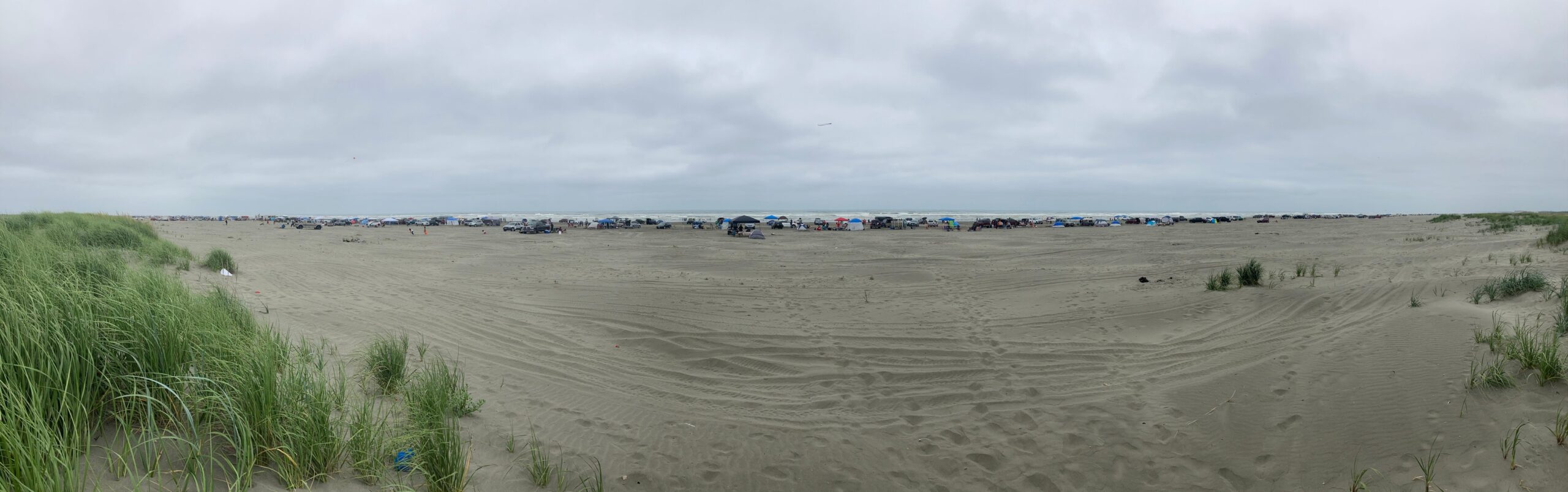
Part of choosing a part of this coast is knowing which beaches take vehicles, because on this coast the beach itself is a road in places. Washington's Seashore Conservation Area, 62 miles of the southern coast managed by State Parks, is considered a public highway. Driving is allowed year round on some of its beaches, only seasonally on others, and not at all on the closed sections, and the posted signs at each access are the governing word. The speed limit on the sand is 25 miles per hour, pedestrians always have the right of way, and every rule of the road applies as it would on pavement.
The working rules are consistent wherever driving is allowed. Vehicles stay on the uppermost hard packed sand, the Pacific Beach and Ocean City park pages state the rule in those words, and all terrain vehicles are not allowed on the beach or the dunes anywhere in the area. Access varies place by place on this roster in ways worth knowing before arrival.
A county managed road gives public vehicle access directly onto the beach at Grayland Beach. At Twin Harbors, the Schafer Road beach access is open to pedestrians only, because deteriorating beach conditions ended vehicle use there. At Griffiths-Priday, vehicle access to the beach is closed outright for road erosion.
And one rule admits no local variation at all: camping and overnight parking are not permitted on the beach at any time, and beach fires must sit more than 100 feet from dunes and vegetation. The drivable beach is a way to reach the sand, never a place to sleep on it.
Reservations on this coast
Every developed state park campground in this guide runs on the one Washington State Parks reservation system, and this coast is where that system's second channels matter. The town, county, and private ground books separately, in the bounded passage at this section's end. What follows is the state system taught as a working method, because a coast where flooding closes loops and storm damage holds sites back rewards campers who know all three doors into a campground, not just the first one.
The first door is the nine month window. Reservations open up to nine months in advance of the first date of a trip, which means a July weekend is decided the previous October. Campers who want summer weekends at the known parks book on the morning the window opens for their dates. That is reported practice among campers who work this system, not an agency rule, and the agency publishes no release hour for campsites.
Our own booking record belongs to the federal system, through Recreation.gov, and it is not offered as experience of this one. The method below is the system's documented shape, checked against the state's pages.
The second door is same day booking, and on this coast it is a real channel rather than a technicality. Same day reservations run online or by phone until 2 p.m. on the arrival day, a policy in force at every park with reservable campgrounds since March 24, 2025. Sites still unreserved after 2:30 p.m. that day go first come, first served to whoever walks up. A coast trip decided on a Friday morning is therefore not automatically a lost cause, and a camper already on the shore road can work the system from the road.
The third door is cancellations, and it is the one door this guide labels with care. Campers report that cancelled sites reappear in the system quickly and that steady refreshing in the final week before a trip is how watched parks get caught; that is community reported behavior, not an agency promise, and it is printed here at exactly that weight. The change rules around it are documented: a reservation can be changed only within the same park, and the state publishes no route for handing a reservation to another camper, so a booked site you cannot use is a cancellation to release, not a transfer to arrange.
Two inventory warnings belong in this section as booking facts, not buried at the entries. At Cape Disappointment, the state's winter schedule describes a named set of sites closed until winter storms have passed and the sites are evaluated, and campers additionally report ocean side sites held back until April 1, 2027 over erosion risk. Treat that park's bookable inventory as reduced, and check its sites against the park page close to any trip. At Grayland Beach, the flood prone sites run first come, first served and non refundable from November 1 to April 15, which means winter ground there is a drive up decision made with the weather in view, not a reservation to lean on. The companion treatment in our Washington State Parks camping guide works this same system across the whole state roster for readers comparing this coast against the rest of Washington.
The ground outside the state system books in smaller pieces. Bruceport County Park takes its reservations through Pacific County. The private resorts named in this guide, in Westport, Ocean Shores, and the Long Beach Peninsula towns, each run their own booking, mostly online through their own sites or the booking platforms, with their own cancellation terms. No state window, same day rule, or pass applies to any of them, and the entries below say which side of that line each place stands on.
RVs read this coast through the same state system. Hookup sites are ordinary reservable sites in the partial and full utility classes, a trailer dump costs $5 per use and nothing to a camper who has paid for camping, and a vehicle towed in behind an RV is not charged while the RV stays on its site. The private resorts set their own hookup classes, and each entry below carries its own ground's form.
Arrival runs on the same clock at every state park in this guide. Campsite check in is 2:30 p.m. and check out is 1 p.m.; the roofed stays at Fort Columbia and the yurts and cabins run 4 p.m. in and 11 a.m. out. A reserved site is held for the camper who booked it, and a walk up camper registers at the campground bulletin board or the park office when no booth is staffed, with fee envelopes as the self pay form; the automated pay stations in these parks sell the Discover Pass and are not the campsite fee channel. The town and county grounds keep their own clocks, each operator its own; Thousand Trails Long Beach takes campsites from 12 noon with an 11 a.m. check out.
Stay limits and park rules run on the same system forms at every state park here. A party may stay no more than 10 nights in one park in any thirty day period, and no more than 90 nights in a calendar year across all state parks. One party and at most eight people hold a site, group sites excepted; a site includes one vehicle, and extra vehicles cost $10 a night. Quiet hours run 10 p.m. to 6 a.m., and generators may run from 8 a.m. to 9 p.m. Alcohol is prohibited across the parks except in designated campsites or overnight accommodations, by the registered occupants or their guests, and under the rule's other named exceptions, and fireworks are prohibited on all state park lands, including the beaches in front of them.
Trash goes in the receptacles the parks provide or travels out with you; the state rule bars leaving rubbish anywhere else in a state park.
The North Beach from Ocean Shores to Moclips
The north end of the roster is the developed end, where the campgrounds sit inside a town fabric of resorts, restaurants, and shore roads. It runs in the order a driver meets it: the Ocean Shores peninsula first, then Pacific Beach, then the quieter ground at Moclips and the Copalis River. Nothing in this section is ground we have camped, and the entries run on the parks' own pages and on what campers report, labeled where reporting carries a claim.
Ocean City State Park
Quick facts: 149 standard sites and 29 full hookup sites, with two large group accommodations; reservable on the state parks system to nine months; open year round, with Loops 2 and 3 closed October 1 to May 14 and named sites in the open loops first come in that window; water stays on in winter; restrooms; showers; full hookups at 29 sites and a sewer dump station with fresh water, $5 per use and free to campers who have paid for camping; nightly fee per the State Parks fee schedule; check in 2:30 p.m., check out 1 p.m.; dogs on leash; fires in designated areas; a forested campground behind the dunes.
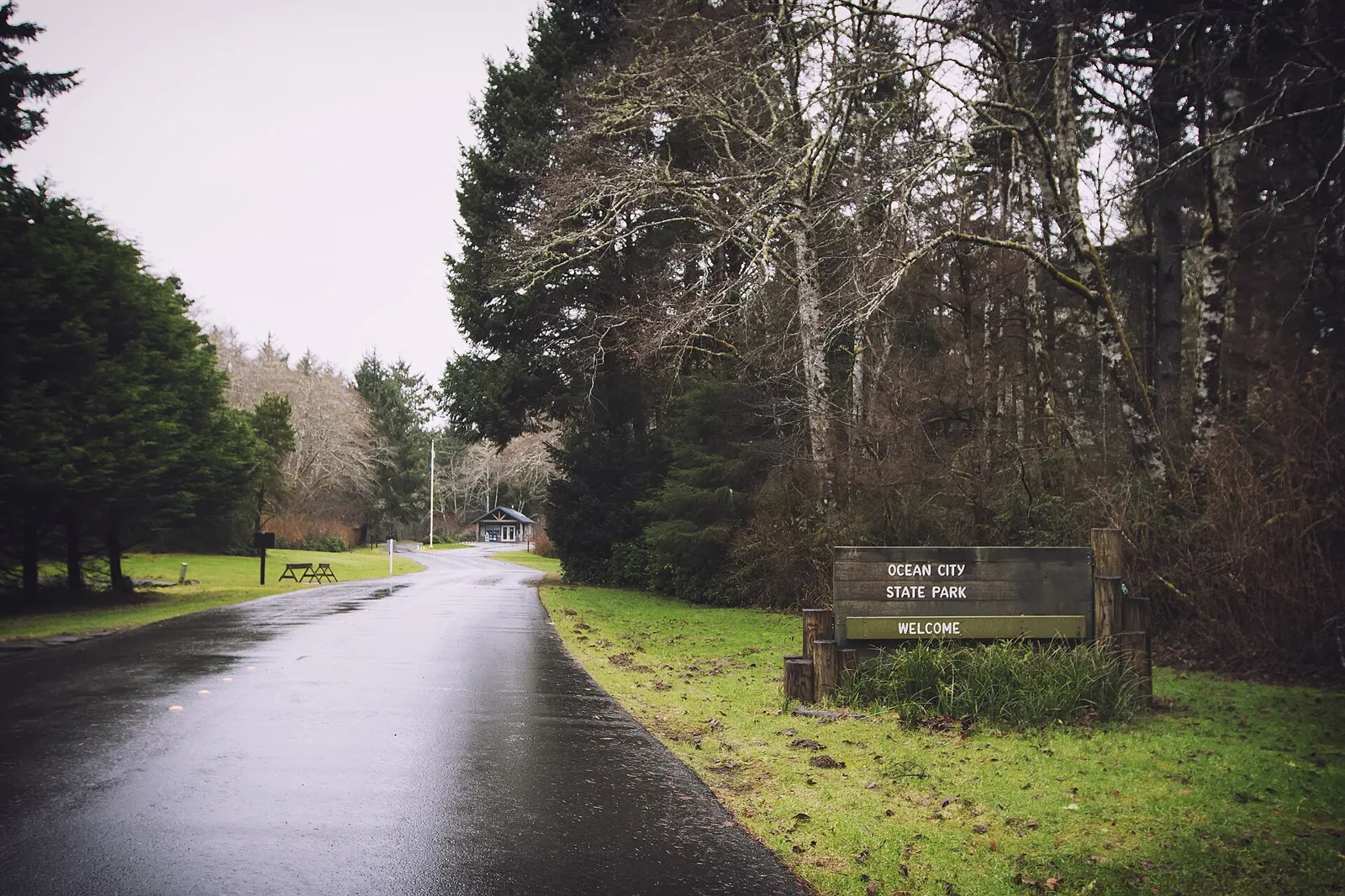
Ocean City State Park is the state park ground for the Ocean Shores peninsula, a forested campground just north of the town of Ocean Shores, and the two belong in one entry because a camper choosing between them is choosing between public and private versions of the same beach trip. The park is the roster's largest campground: 149 standard sites and 29 full hookup sites in wooded loops behind the dunes, with restrooms and showers, a dump station, an amphitheater, and two large group camps. The forest is the deciding fact in the park's favor, because it breaks the wind that the open parks on this coast take full force, and the park's own page carries the same wind advisory the exposed parks carry. In the off season the park contracts, with two of its loops closing from October 1 to May 14, and named sites in the remaining loops run first come, first served through that window, with water left on.
Ocean Shores
Quick facts: Private resort ground; Ocean Breeze RV Resort lists over 200 campsites with 30 amp electrical service and five rental cabins, with tent sites carried in its listings; a membership resort that takes public stays when it has openings, booking its own way; open year round; restrooms, showers, and a dump station are not stated on the operator's own page; no maximum length is published by the operator; the town holds no municipal campground, and the state park above it is the public ground.
Ocean Shores itself is a town entry, not a park entry, and its camping is private ground. The town fills a sand spit with ocean beach on one side and a canal and lake system on the other, and its overnight inventory is resorts rather than public campgrounds. Ocean Breeze RV Resort, the town's large private membership resort, lists tent sites among its RV and cabin inventory and takes public stays when it has openings, booking its own way as every private operator here does. The honest separation is this. Its operator lists 30 amp electrical service across its sites, and publishes no maximum length of its own.
The state park gives a tent camper a wooded public campground on the state system, and the town gives services, rentals, and resort amenities at resort terms. A tent camper who wants the beach and the system books the park; a camper who wants the town's apparatus books the town and accepts that tent ground there is the thinner part of the inventory.
Pacific Beach State Park
Quick facts: 16 standard sites, 41 partial hookup sites with electricity only, and two yurts; reservable on the state parks system; open year round, with sites 9 to 15, 21, and 22 first come October 1 to May 14; water stays on; restrooms; showers; partial hookups and a sewer dump station with fresh water, $5 per use on the system form; nightly fee per the State Parks fee schedule; check in 2:30 p.m., check out 1 p.m.; no wood burning campfires in the park, gas and propane fire pits allowed; the park road is one way and all RVs back in; no maximum length is published for this park.
Pacific Beach State Park is a small park, and its size and exposure are its deciding facts. The park holds 16 standard campsites, 41 partial hookup sites with electricity only, and two yurts, set on open ground right at the ocean with restrooms and showers and a dump station, and its page lists Wi-Fi among its amenities. There is no forest buffer here of the kind Ocean City offers, and the park's page carries a wind advisory for the strong winds that whip up water and sand on this shore. One rule surprises tent campers used to other parks. The park road is one way, and all RVs are required to back in.
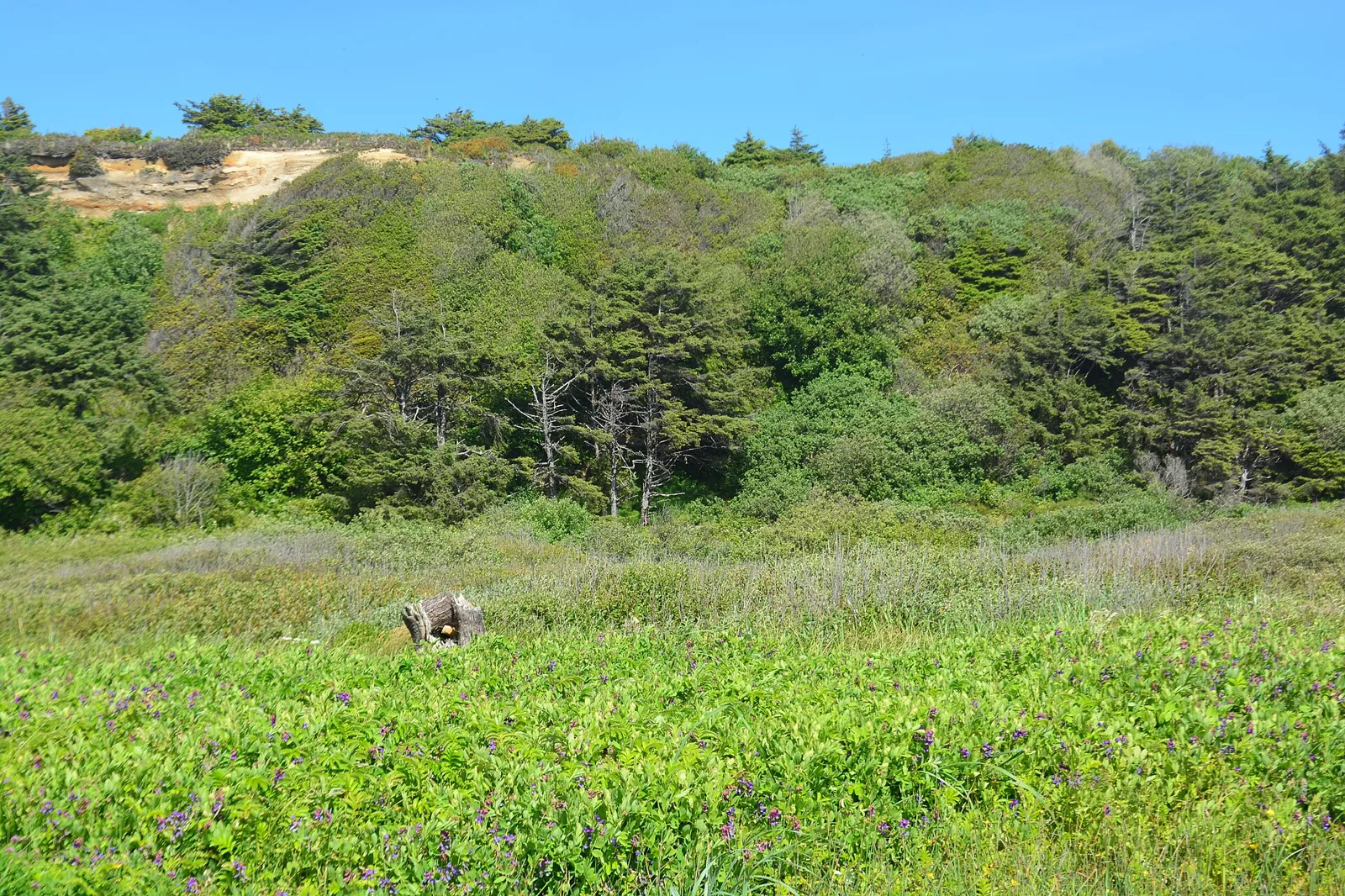
Wood burning campfires are not allowed in the park at all, though portable gas and propane fire pits are, and campfires are allowed on the beach itself at least 100 feet from dunes and vegetation. Day use parking is very limited, which matters less to a camper with a site than to anyone meeting them there. What the park gives in exchange for its exposure is immediacy; the sites sit next to the surf, and the sound of it is the park's whole character.
Moclips and the Copalis ground
Quick facts: Private resort ground at Copalis Beach; Copalis Beach RV Resort confirms RV sites and tent camping on its own page and lists shower facilities, laundry, and propane among its amenities; open year round; hookup types, site counts, a maximum length, and a dump station are not published by the operator; Griffiths-Priday State Park, at the mouth of the Copalis River, is day use only and carries no camping.
Moclips and the Copalis ground, at the north end of the roster, are the quiet alternative to the Ocean Shores fabric, and the evidence for them is thinner than for the parks below. The state park name a driver meets here is Griffiths-Priday State Park, at the mouth of the Copalis River where the river meets the ocean beach, and it is day use only, with a picnic shelter that can be reserved through Ocean City State Park, restrooms, and trails through the dunes. Vehicle access to its beach is closed for road erosion. The overnight ground at Moclips and Copalis Beach is private resorts and rental ground, and its overnight ground includes Copalis Beach RV Resort, whose operator confirms RV sites and tent camping and publishes no hookup detail of its own; the nearest state park camping is Pacific Beach and Ocean City to the south. What the brief can say honestly is that the shore here is quieter, the town fabric thins to almost nothing, and a camper who books this end is choosing that quiet on purpose.
Grays Harbor and Aberdeen
Grays Harbor and Aberdeen close the section as the gateway a driver passes rather than a place this roster camps, named briefly so the north end does not float free of its approach. Aberdeen and Hoquiam sit at the head of the harbor, where the shore roads divide for the North Beach and the South Beach, and they hold the roster's full service stops, groceries, fuel, and marine supply. Private ground exists at the harbor's edge, including a long running RV park and campground in Hoquiam that lists tent camp sites. Campers bound for either beach pass through here; the roster's camping starts where the shore roads end. A second Hoquiam ground, Hoquiam River RV Park, states full hookups with 50 amp service, a dump station, and pull through sites on its own pages.
The South Beach from Westport to Twin Harbors
The middle of the roster is a short run of shore highway holding a fishing town and three state park campgrounds, and it holds this guide's one camped entry. Westport comes first in driving order, then Grayland Beach, then Twin Harbors at the run's south end. The beach along the whole run is wide and flat, the dunes are grass covered, and the campgrounds sit behind them in shore pine.
Westport
Quick facts: Private ground throughout; American Sunset RV and Tent Resort is family owned, open 365 days a year, and runs a dedicated tent area beside its full hookup RV sites and cabins, booking directly; Westport RV Park and Motel sells back in sites with and without sewer and lists pull through sites and tent sites; Kila Hana Camperland lists tent spaces; hookup counts, dump stations, and maximum lengths are not published by the town's operators; Westport Light State Park is day use only, and the town's public camping is the state parks down the shore.
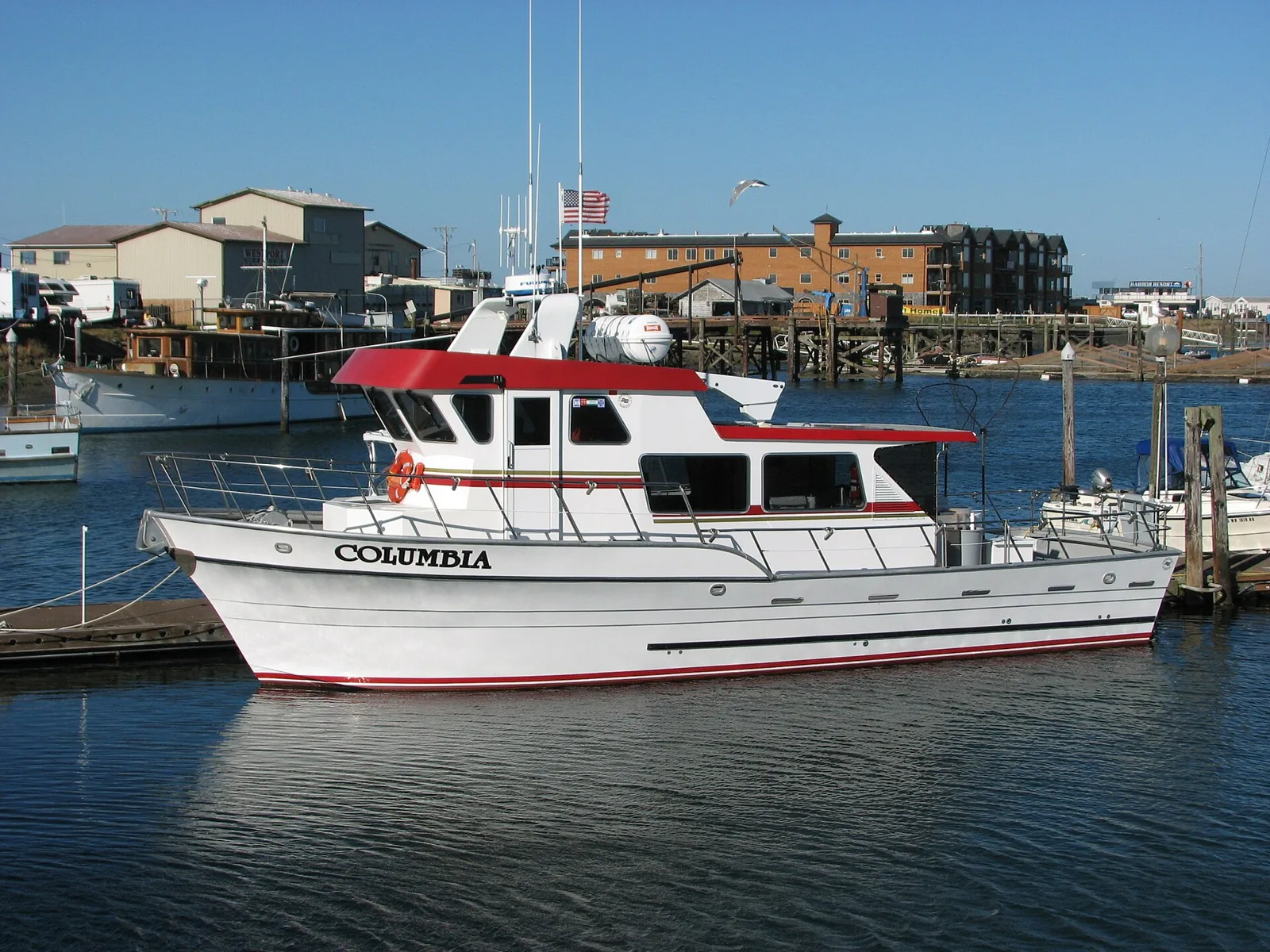
Westport is a town entry in the same form as Ocean Shores, a working marina town at the mouth of Grays Harbor whose camping is private ground, and the entry exists because a reader searching Westport camping meets the town's commercial ground first and deserves the separation stated clearly. The town's state park, Westport Light State Park, is day use only, a 560 acre park holding the Grays Harbor Light and the town's beach access, and it offers no camping of any kind. The camping Westport actually has is private: American Sunset RV and Tent Resort, a family owned campground near the marina, runs a dedicated tent area alongside its hookup sites and cabins and stays open through the year, booking directly with its own terms. A second in town ground, Kila Hana Camperland, also lists tent spaces. A tent camper based in Westport is therefore on private ground with town services at hand; the state park camping sits down the shore at Grayland Beach and Twin Harbors, and the choice between them is the same public and private choice this guide draws at Ocean Shores. A second Westport ground, Westport RV Park and Motel, sells back in sites with and without sewer hookup and lists pull through sites among its amenities. Our own time in Westport includes a charter fishing trip out of its harbor.
Grayland Beach State Park
Quick facts: Sites from primitive to full hookup, Parks publishes the types and no counts; reservable on the state parks system all year, with the flood prone sites first come, first served and non refundable from November 1 to April 15; yurts reservable year round; water stays on; restrooms; showers; full hookups among the site types and a trailer dump, $5 per use on the system form; maximum site length 60 feet with limited availability; nightly fee per the State Parks fee schedule; check in 2:30 p.m., check out 1 p.m.; large sites with paved driveways behind grassy dunes.
Grayland Beach State Park is the middle park of the South Beach run, an open dune campground south of Westport whose deciding facts are its setting and its flood season. The park offers sites running from primitive to full hookup, large sites with paved driveways and a maximum site length of 60 feet at limited availability, and yurts that can be reserved year round, most of them ADA accessible and some pet friendly, with restrooms and showers on the grounds. The park's published site breakdown counts accessible units in every class it offers. Five marked trails cross the grassy dunes to the beach, and a county managed road gives vehicle access onto the sand. The park's open setting is the trade for its position; there is less forest shelter here than at Ocean City, and the wind works on this ground accordingly. One camper review describes the park as quiet; that is a single report, not the park's established character. A trailer dump stands in the park, and the park asks campers not to use chemical additives in their holding tanks.
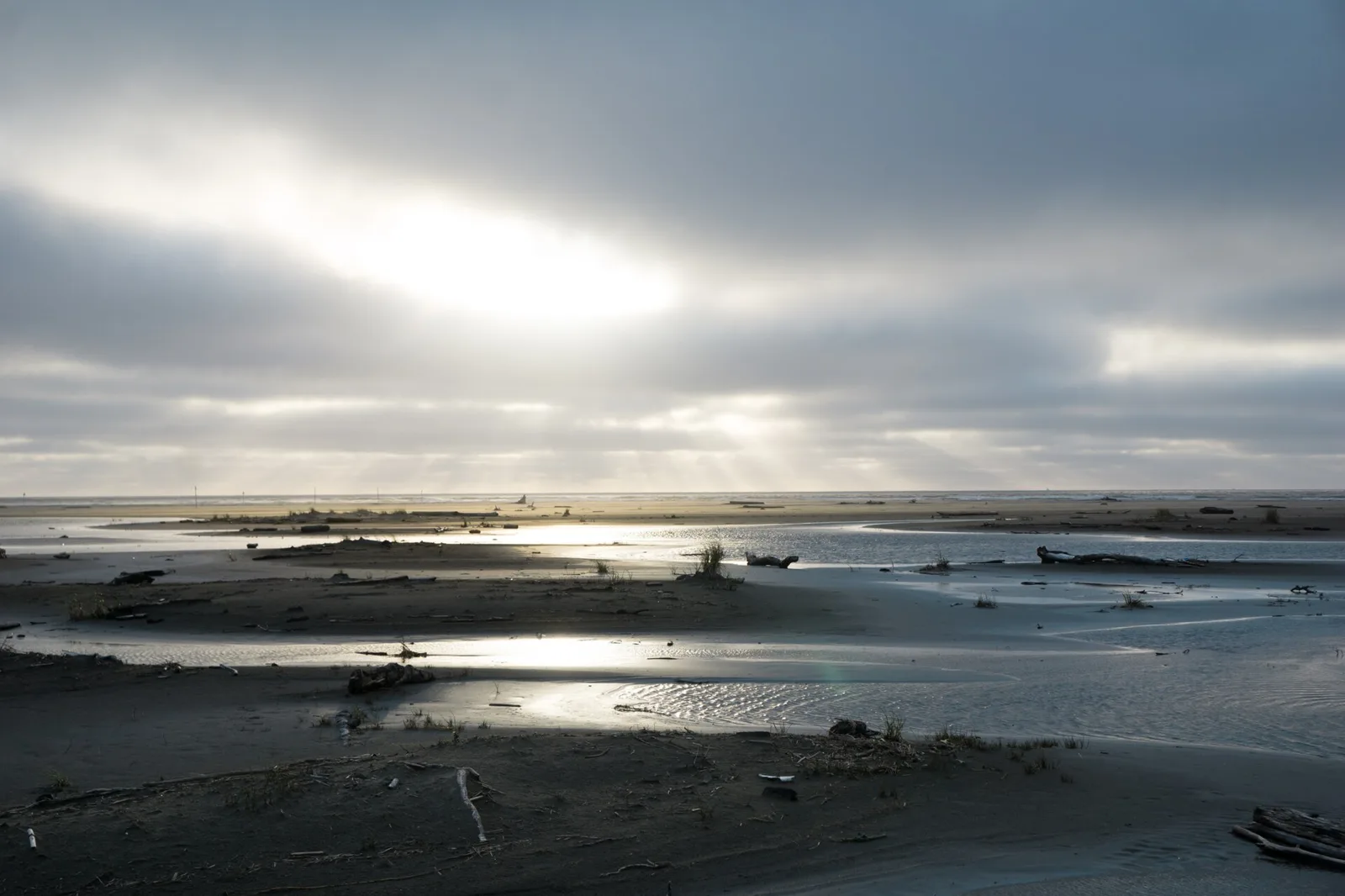
The fact that shapes Grayland Beach's year is water. The park's own advisory states that seasonal flooding may affect approximately 50 or more campsites, most susceptible from November 1 through April 15, and that those sites are offered first come, first served only in that period, with campers encouraged to judge site conditions on arrival. The state's winter schedule adds that the flood prone ground is non refundable in that season, and the beach access trails can flood with it. Summer campers book this park on the system like any other. Winter campers are choosing ground that may be wet, on terms that do not give the fee back, and the entry at the seasons section below carries the calendar form of the same rule.
Twin Harbors State Park
Quick facts: Hiker and biker sites, standard sites, and full hookup sites, with a group camp and heated yurts and rustic cabins; reservable on the state parks system, with the open sites first come from September 15 to May 1; the Eastside loop and Westside sites 232 to 299 close November to May 31 for seasonal flooding; water stays on; bathrooms; showers, run on tokens bought at the ranger station as campers report; full hookups with a maximum site length of 35 feet at limited availability, the hookup sites small and close together; trailer dump $5 per use, closed November to April; nightly fee per the State Parks fee schedule; check in 2:30 p.m., check out 1 p.m.; camped here in the summer of 2018.
Twin Harbors State Park is this guide's camped entry. We camped at Twin Harbors in the summer of 2018, and it is the one campground on this coast we write about from our own stay. Friends on that stay rented wetsuits and surfboards in Westport and surfed off the beach much of the time, and we think this is one of the better spots on the Washington coast to surf. Nothing else about that stay is filled in beyond what the record holds; the rest of this entry is the park's documented form and what other campers report, labeled as such and kept separate from our stay.
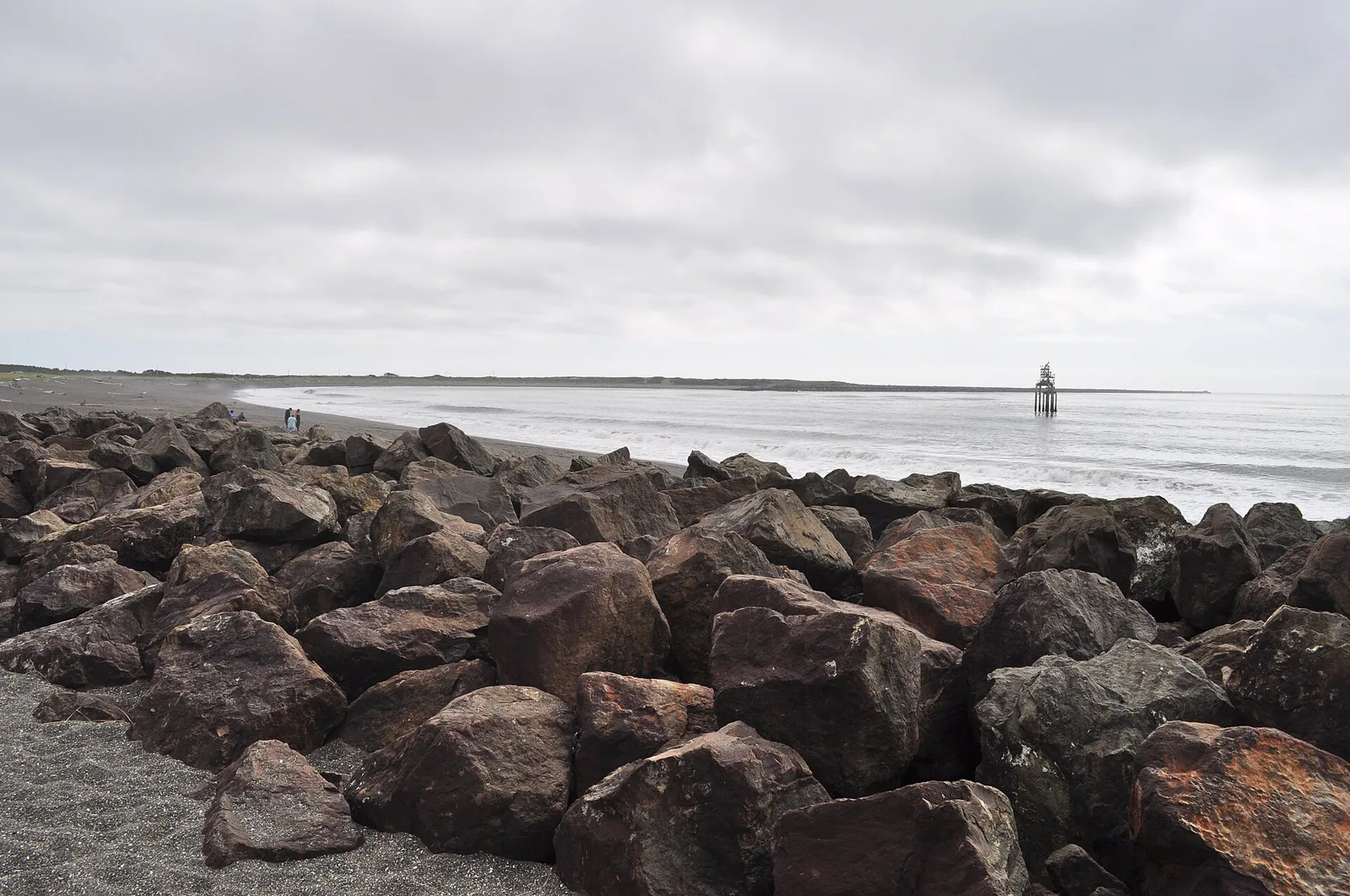
The park stands at the south end of the South Beach run, on the shore road below Grayland, where dunes and shore pine separate the campground from a wide driftwood strewn beach reached by the Shifting Sands Trail. Its documented form is a tent and hookup campground together: hiker and biker sites, standard sites, and full hookup sites, with bathrooms and showers available, a group camp, and heated yurts and rustic cabins that can be reserved through the year, some of them pet friendly. The hookup sites come with the park's own caution attached, stated on its page. Hookup sites are small and close together, and the maximum site length is 35 feet with limited availability, so larger rigs work hard here and tent campers on standard ground hold the roomier end of the park. The welcome center runs from mid May to mid September. Its full hookup sites take rigs to 35 feet with limited availability at that length, and the park prints its own trailer dump fee, $5 per use.
What other campers report about this park is consistent enough to carry as the entry's second layer, labeled as reported and not merged with our stay. Campers describe the park as two grounds in one, a wooded side and a full hookup side, with the close spacing the park itself warns about felt most on the hookup side, and some reports describe late night noise from neighboring campers while others describe clean bathrooms and a regular ranger presence. The shower mechanic is the detail campers repeat most.
Showers run on tokens bought at the ranger station, with dollar bills the practical currency, which is worth knowing before a first night rather than after it. Mosquitoes in the wetter periods are a standing report for the low ground behind the dunes. None of this is our 2018 trip described back to us; it is the park as its recent campers find it, and a reader should weigh it as reporting.
The park's winter form is the last deciding fact. The state's winter schedule closes the entire east side loop and a long run of west side sites from November into the end of May for seasonal flooding, on dates the schedule itself calls weather dependent. Day use at the park can close in the rainy season for the same reason. What stays open through winter runs first come, first served from mid September to the start of May, the dump station closes from November to April, and the cabins and yurts keep taking reservations all year.
A summer trip meets the whole park instead. A winter trip here is a smaller, wetter park, and the schedule's flooding language should be read as the park's own description of its ground, not as boilerplate.
Twin Harbors also carries a treatment inside our Washington State Parks camping guide, as one of the four Washington state parks we have camped, treated there inside the statewide system rather than as a coast campground among its coast neighbors.
Willapa Bay and the Long Beach Peninsula
The south end of the roster wraps around Willapa Bay and climbs the Long Beach Peninsula to the Columbia River's mouth. It is the longest settled part of this coast, and its camping is a fabric of county and town ground with one large state park at the peninsula's foot. The section works in driving order again: the bay shore first, then the peninsula towns, then the state park that anchors the whole end of the coast, then the two state park names at its edges that carry no camping at all.
Bruceport County Park
Quick facts: A Pacific County campground on a bluff above Willapa Bay; tent sites and full hookup sites; reservations handled through Pacific County, outside every state system; campsite fees from Pacific County's published park fee schedule run $20 for a tent site, $30 for an RV site without hookups, and $40 for an RV site with hookups, with $10 for an additional vehicle; its site count, water, restroom and shower forms, dump station, and check in times are not published by the county and are confirmed with the county when booking; no Discover Pass applies to county ground.
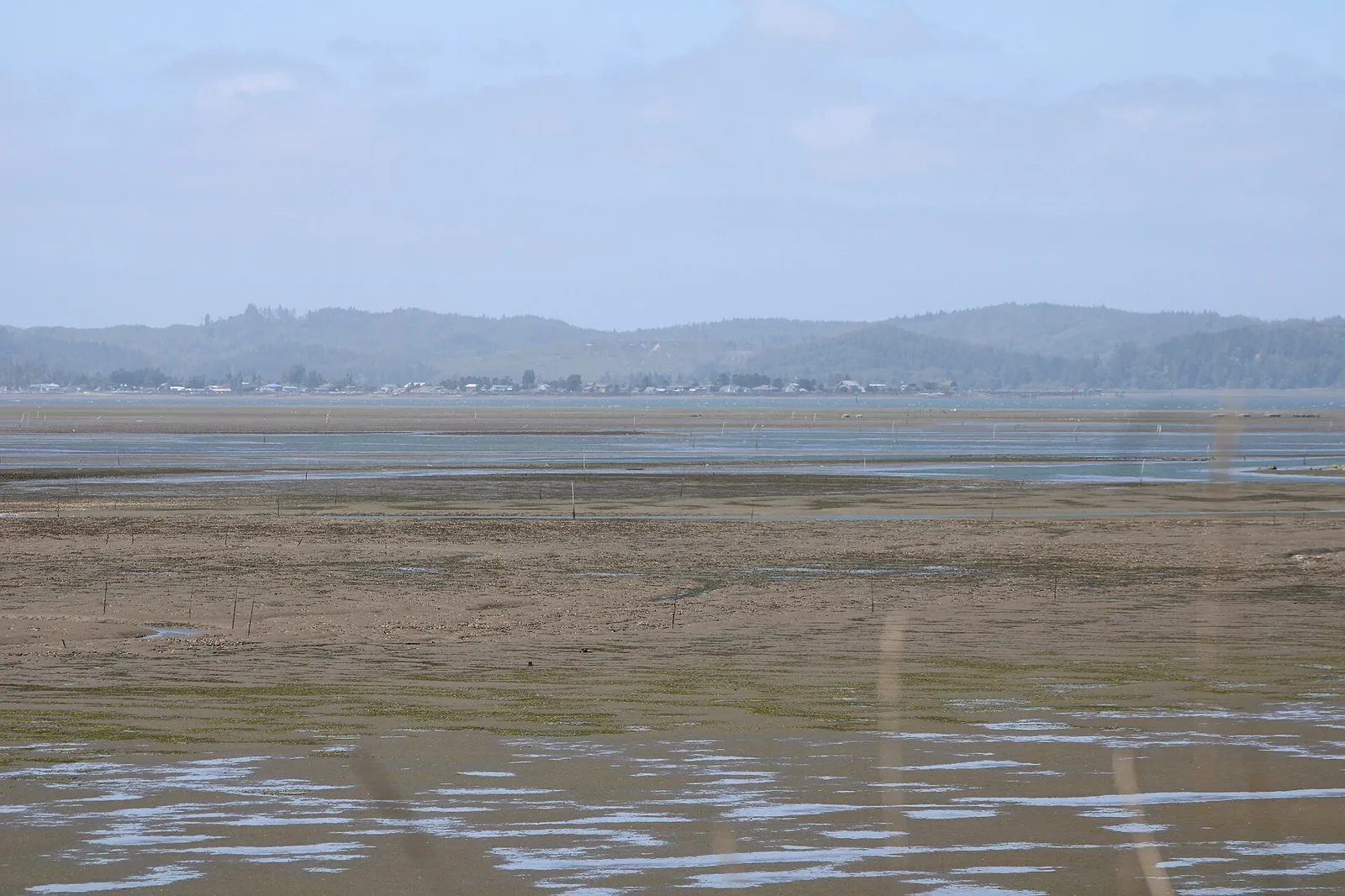
Bruceport County Park is the bay shore's named campground, a small Pacific County park on a bluff above Willapa Bay near South Bend, and it is the roster's sheltered water entry. The campground is county ground, booked through Pacific County rather than through any state system, with a mix of tent sites and full hookup sites. Its deciding fact is the water it stands on: Willapa Bay is a shallow tidal bay, and a stay here is built around the bay shore, the tide flats, and the working oyster water, not around surf. This entry is researched rather than camped, like everything in this section, and its county details are the kind a camper confirms with the county when booking, because county pages and fees move on county schedules.
Long Beach and Ilwaco
Quick facts: Private town ground, each operator booking its own way; Wallicut River RV and Cabins Resort in Ilwaco lists tent sites and a group tent class beside full and partial hookup and dry RV sites, with pull through classes, restrooms and showers, a convenience store, and propane on its own page; Thousand Trails Long Beach in Seaview lists every site full hookup for rigs to 40 feet, sites first come inside its membership system, campsite check in at 12 noon and check out at 11 a.m.; site counts by type are not published by either operator.
Long Beach and Ilwaco are treated as one grouped entry because the search that brings readers here is a town search, and the peninsula's answer to it is town ground. Between Seaview, Long Beach, and Ilwaco the peninsula holds a run of private campgrounds and RV resorts, each booking its own way, and the tent camper's task is separating the operators that genuinely take tents from the RV only ground. Two named forms verify at that standard. Wallicut River RV and Cabins Resort in Ilwaco lists 37 tent sites alongside its RV sites and cabins, a short drive from the state park at the peninsula's foot. Thousand Trails Long Beach in Seaview lists tent sites inside its membership park, which takes stays through its own system. Pull through sites are a sellable class here, in full hookup and partial forms. Every site carries full hookups, and the sites take RVs and trailers to 40 feet.
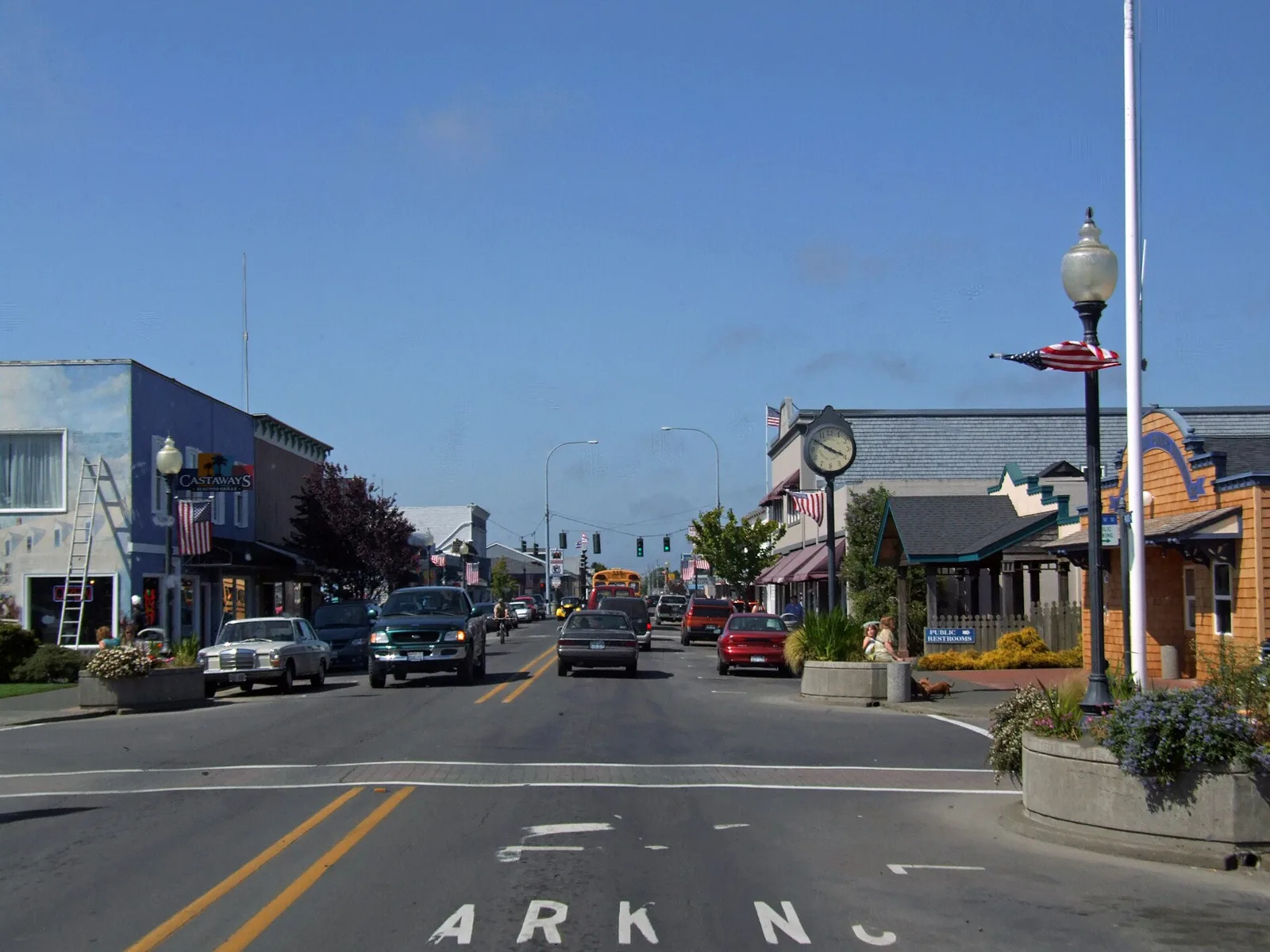
Other peninsula ground runs RV first, and a tent camper should confirm the tent policy with the operator before counting on any of it. What the town fabric gives that the state parks do not is position, a site inside the peninsula's towns, walking distance from the beach accesses and the boardwalk town of Long Beach itself, in exchange for closer neighbors and commercial terms.
Cape Disappointment State Park
Quick facts: Standard, partial hookup, and full hookup sites and five primitive hiker and biker sites, all first come, first served on the park page's current form, in a campground reopened in reduced form; sites 7 to 10, 21 to 25, and 101 to 110 closed until winter storms have passed and the sites are evaluated; water and sewer always on, per the Winter Schedule; restrooms and showers are not stated on the park's own page; a trailer dump is marked in the system's 2022 brochure, with no detail published on the park page; RVs and combinations to 45 feet; nightly fee per the State Parks fee schedule; check in 2:30 p.m. and check out 1 p.m. on the system form; the Cape D Store is closed in 2026 and into 2027.
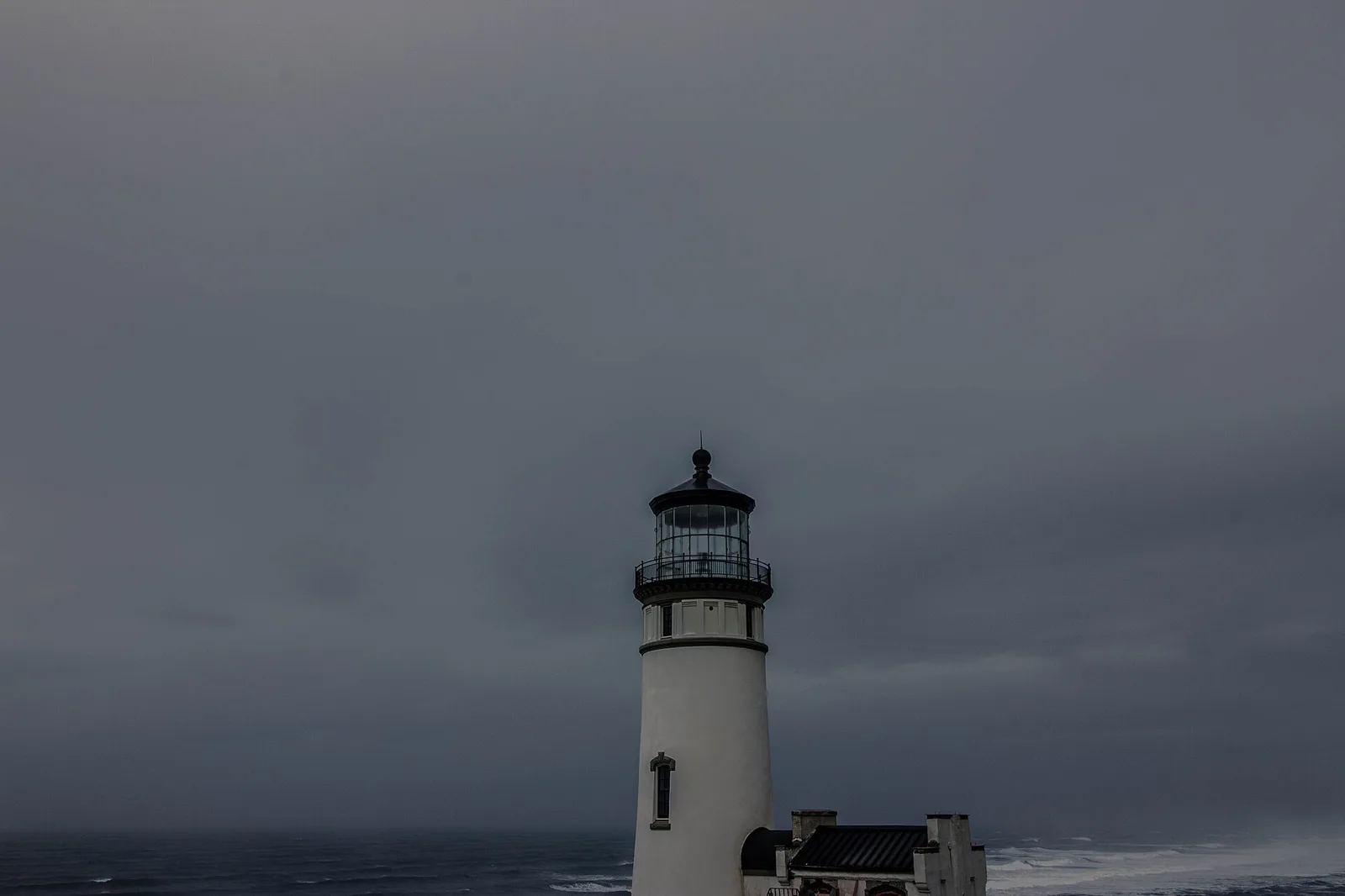
Cape Disappointment State Park is the largest single campground search on this coast and this guide's most cautioned entry, and it is researched ground for us; we have never camped there or visited, and the entry runs on the state's record and on labeled camper reporting. The park is a 2,023 acre camping park at the foot of the Long Beach Peninsula, fronted by the Pacific and looking into the mouth of the Columbia River, holding the North Head Lighthouse, the Lewis and Clark Interpretive Center, yurts, and historic vacation homes alongside its campground. The campground's documented form is standard, partial hookup, and full hookup sites with five primitive hiker and biker sites given as first come, first served, taking rigs up to 45 feet. On facilities this guide prints no shower or bathroom status for this park, because the state's park page states none, and readers should treat any listing that promises a facility form here as running ahead of the primary record.
The park's boating ground sits on the river side. Baker Bay holds one boat ramp and 135 feet of dock on the park's published record, and launching runs on the state forms, an annual launch permit, or a Discover Pass, annual or one day, paired with a daily launch permit. With renovation work still moving through the park, the ramp's current status belongs on the close to the trip check this entry already asks for.
The status of this campground is the entry's center, and it is carried here at the strength the record supports. The park's camping closed entirely into 2026 for major renovations, and the campground has reopened in a reduced form. The state's winter schedule describes the reopened campground in a note as open year round, with water and sewer always on, and a named set of sites, 7 to 10, 21 to 25, and 101 to 110, closed until winter storms have passed and the sites are evaluated. The park's own page, read in November 2026, carries the camping in the present tense with no closure statement: standard, partial hookup, and full hookup sites and five primitive hiker and biker sites, all first come, first served, and RVs and combinations of 45 feet or less.
Campers separately report ocean side sites held back until April 1, 2027 over erosion risk; that report reached the record secondhand and is labeled as such. The working conclusion for a reader is narrow and honest.
This park's camping is real and reduced, its store is closed into 2027 while a new contact station is built, and its status should be checked against the park's own pages close to any trip rather than trusted from any guide, including this one. North of the river mouth the geography continues into our Best Camping on the Oregon Coast, which opens on the same river's south shore and runs its roster from Astoria to the California redwoods.
Leadbetter Point State Park
Quick facts: Day use only, with no camping and no fires at any time; restrooms on the park page's record; seven miles of trails between Willapa Bay and the Pacific; a Discover Pass parks the car.
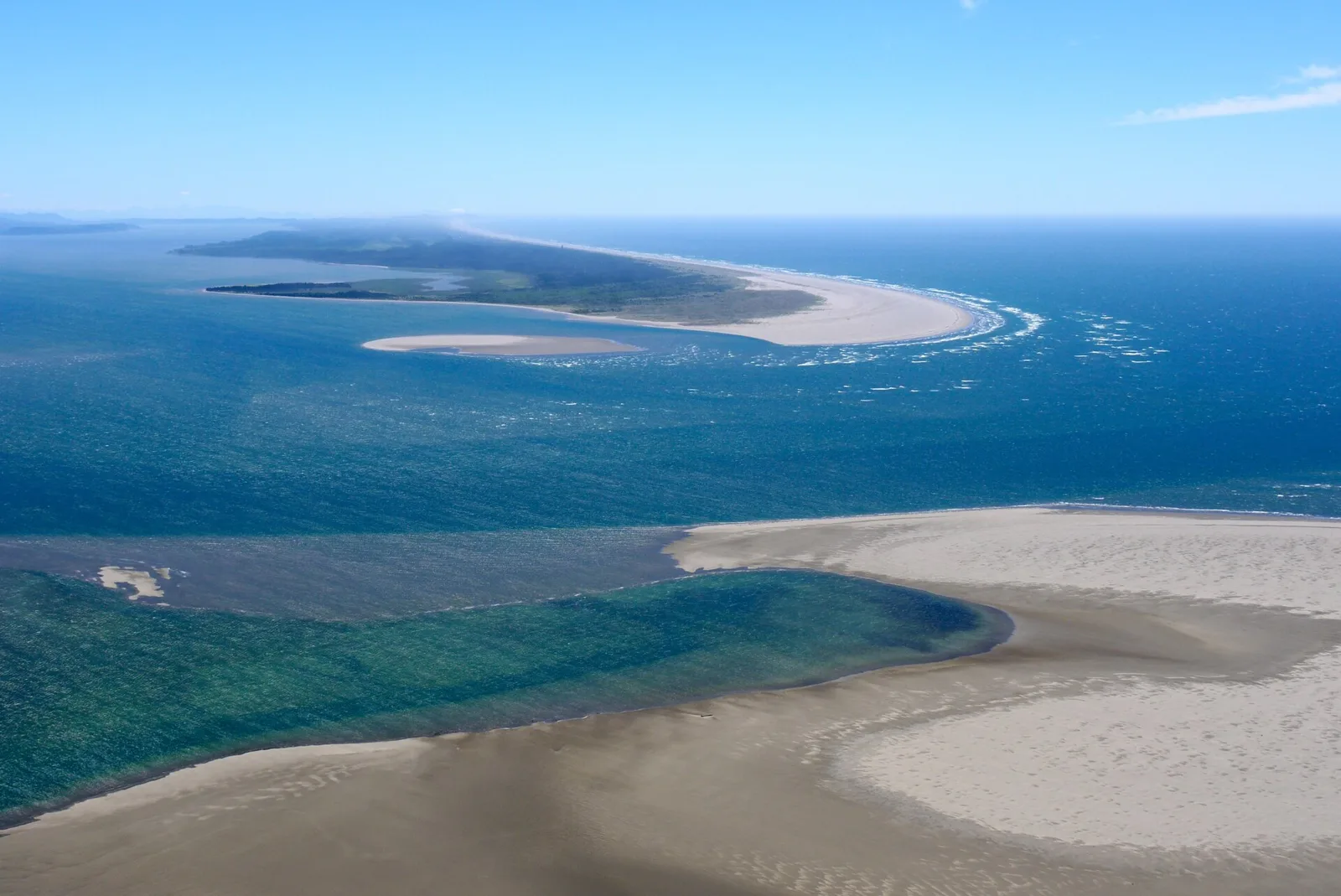
Leadbetter Point State Park prints as a short no camping note, because a coast guide that omits this name leaves readers to assume camping the park does not offer. Leadbetter Point, at the peninsula's north end beside the Willapa National Wildlife Refuge, is day use only, and no fires are allowed there at any time. What the park offers is the point itself: seven miles of trails, and a bay side the state's page describes as friendly to kayaks, canoes, and paddleboards when the tides and the weather cooperate. The nearest camping is the Long Beach and Ilwaco town ground to its south and Cape Disappointment at the peninsula's foot, and a reader who wants to wake up near this park books there and drives up for the day.
Fort Columbia State Park
Quick facts: No campground; two historic vacation houses are the park's only overnight stays, reservable on the state parks system to nine months, the smaller sleeping up to four guests and the larger up to twelve; check in 4 p.m., check out 11 a.m.; no pets in the houses; restrooms in the day use area; a Discover Pass parks the car.
Fort Columbia State Park, named briefly to close the peninsula's state park set, is the river mouth's second historic name, a day use park whose interpretive center opens Thursday to Sunday from June 1 to August 31. It has no campground. Its only overnight stays are two historic vacation houses that take reservations through the state system year round, the smaller sleeping up to four guests and the larger up to twelve, with no pets allowed in the houses. It belongs in this guide as apparatus, a day trip from a peninsula campsite, not as camping ground.
| Ground | Sites or types | Booking | Water | Restrooms and showers | Hookups and dump | Longest rig | Season form |
|---|---|---|---|---|---|---|---|
| Ocean City State Park | 149 standard, 29 full hookup, two group camps | State parks system, to nine months | Stays on in winter | Restrooms and showers | Full hookups at 29 sites; dump station, $5 per use and free to campers who have paid for camping | Not published | Year round; Loops 2 and 3 closed October 1 to May 14 |
| Ocean Shores (Ocean Breeze RV Resort) | Over 200 campsites; tent sites in its listings | Private; membership resort taking public stays when openings allow | Not published | Not published | 30 amp electrical service; dump station not published | Not published | Year round |
| Pacific Beach State Park | 16 standard, 41 partial hookup, 2 yurts | State parks system | Stays on | Restrooms and showers | Partial hookups, electricity only; dump station, $5 per use | Not published | Year round; named sites first come October 1 to May 14 |
| Moclips and the Copalis ground (Copalis Beach RV Resort) | RV sites and tent camping; counts not published | Private, operator direct | Not published | Showers listed by the operator | Hookups and dump not published; laundry and propane listed | Not published | Year round |
| Westport (town ground) | Dedicated tent area at American Sunset; tent spaces at Kila Hana; tent sites at Westport RV Park and Motel | Private, operator direct | Not published | Not published | Full hookup sites at American Sunset; back in sites with and without sewer at Westport RV Park and Motel | Not published | Year round; American Sunset open 365 days |
| Grayland Beach State Park | Primitive to full hookup; yurts; counts not published | State parks system; flood prone sites first come November 1 to April 15 | Stays on | Restrooms and showers | Full hookups among the types; trailer dump, $5 per use | 60 feet, limited availability | Year round |
| Twin Harbors State Park | Hiker and biker, standard, and full hookup sites; group camp; yurts and cabins | State parks system; open sites first come September 15 to May 1 | Stays on | Bathrooms; showers on tokens, as campers report | Full hookups; trailer dump $5 per use, closed November to April | 35 feet, limited availability | Reduced in winter; Eastside loop and Westside sites 232 to 299 closed November to May 31 |
| Bruceport County Park | Tent sites and full hookup sites; count not published | Pacific County, outside the state system | Not published | Not published | Full hookup sites; dump station not published | Not published | Not published |
| Long Beach and Ilwaco (town ground) | Tent sites and a group tent class at Wallicut River; counts by type not published | Private, operator direct; Thousand Trails sites first come inside its membership system | Not published | Restrooms and showers at Wallicut River | Full and partial hookup and dry sites at Wallicut River; every site full hookup at Thousand Trails, to 40 feet | 40 feet at Thousand Trails; not published at Wallicut River | Year round at Thousand Trails; not published at Wallicut River |
| Cape Disappointment State Park | Standard, partial hookup, and full hookup; five primitive hiker and biker sites | First come, first served, on the park page's current form | Water and sewer always on, per the Winter Schedule | Not stated by the park | Full hookups among the types; trailer dump marked in the system's 2022 brochure | 45 feet | Reduced reopening; named sites closed until winter storms pass and the sites are evaluated |
| Hoquiam River RV Park (Hoquiam) | Not published | Private, operator direct | Not published | Not published | Full hookups with 50 amp service; dump station; pull through sites | Not published | Open all year |
Family camping on this coast
The family section of this guide is built the way the evidence allows, and it says which parts are which. Our own family practice is general rather than coast specific. We have camped with our daughter from infancy through preschool, in a family tent sized for the three of us and the gear that comes with a small child, and that practice shapes the questions this section asks of every park. Our one coast stay, Twin Harbors in 2018, is not written as a family review of this roster, because the record does not frame it that way. What follows is that general practice, the roster's documented facts, and the family conditions other campers report on this coast, labeled where reporting carries them.
The family pattern campers describe for beach camping generally is a beach with room to roam and no road to cross to reach it, and this roster serves that pattern unevenly in ways worth naming. Ocean City's forested loops put the beach a trail walk away and give children a campground with some enclosure to it. The South Beach parks put wide sand close to the sites, which is the pattern at its simplest. The town resorts trade that openness for amenities, pools and game rooms and stores, which some families count as the point of the trip. The criterion that separates family reports on this coast more than any amenity list is spacing and noise.
The close set hookup ground and the town resorts draw the neighbor complaints, at Twin Harbors in the community record most fully, while the standard state park sites draw fewer. A family choosing on this coast is choosing a spacing and a sound level as much as a beach.
Showers and restrooms on this roster are carried park by park in the showers and restrooms passage of the Resupply, tides, and emergencies section of this guide, because they are the facility fact family campers actually plan around. The one mechanic worth a family's planning is Twin Harbors', where campers report token showers bought at the ranger station, a small friction worth one line in a family budget of time and dollar bills. The other parks' mechanics are reported too inconsistently to state.
At Cape Disappointment, no shower status is stated at all, for the reason its entry gives. Families sizing the tent side of any of these trips will find the sizing and layout work in our family tents guide, and the camping checklist carries the small child layer that beach camping adds, from sun shelter to a dry change of everything.
The swim picture on this coast is short and should not be softened. The ocean surf here is not swimming water for small children. The state's own park pages say ocean swimming is not recommended on this shore because of unpredictable currents and rip tides, and the beach is a place to play at the water's edge under a parent's eye, not a swim beach in the lake sense. The coast's sheltered exception is Willapa Bay, where the water is shallow, tidal, and out of the surf entirely, suited to paddling and shore play at the right tide rather than to swimming laps. A family that wants a child swimming on a coast trip should plan that part of the trip around the bay shore, and treat the Pacific as scenery and sound.
Dogs get one bounded passage, answered from the parks' own rules because our dog does not come on our camping trips and this part is researched rather than practiced. Every state park in this guide allows dogs on leash, and that rule covers the campgrounds. On the open beach outside the park campgrounds, the state's Conservation Area rules allow dogs off leash where the owner keeps good control of them. The lodging exceptions run the other way. No pets are allowed in Fort Columbia's vacation houses, while some yurts at Twin Harbors and Grayland Beach are pet friendly, and a family traveling with a dog should book those units by name rather than assuming.
Seasons on this coast
Our own season frames this section before the researched calendar takes over, because the two are different kinds of knowledge. We camp in Washington from May through September, we do not camp in winter, and we avoid rain where we can and camp in it when it comes anyway; our Twin Harbors stay, in the summer of 2018, sits in the middle of that season. Nothing in this section's winter material is offered as our practice, and the winter passages below are labeled researched where they stand.
The researched calendar starts with the booking rhythm the reservations section teaches. Summer is the peak, booked nine months out at the known parks, and the shoulder does not empty this coast the way campers hope. September stays busy at the popular coast campgrounds, and the coast does not empty after Labor Day. The quieter pattern the community record supports is specific rather than general.
Cape Disappointment reads as peaceful in April and secluded outside summer in camper reporting, and full on holiday weekends including Thanksgiving, which is a holiday bounded quiet and not an off season promise. Spring before the booking peak and fall after it are the working camper's windows on this coast, with the weather priced in.
The calendar's hard dates are the reservation to first come switches and the closure windows the state's winter schedule sets park by park. Grayland Beach's flood prone sites run first come, first served and non refundable from November 1 to April 15. Twin Harbors keeps its open sites first come from September 15 to May 1 while its east loop and a run of west side sites close for flooding from November into the end of May, and its dump station closes from November to April. Ocean City closes two loops from October 1 to May 14 and runs named sites in its other loops first come in that window; Pacific Beach stays open with a set of sites first come across the same months. The pattern under the dates is a reduced services coast in winter, with loops closed and Twin Harbors' dump station closed from November to April, and the schedule, not any guide, as the document that names each park's exact form.
Razor clam seasons and the camping calendar
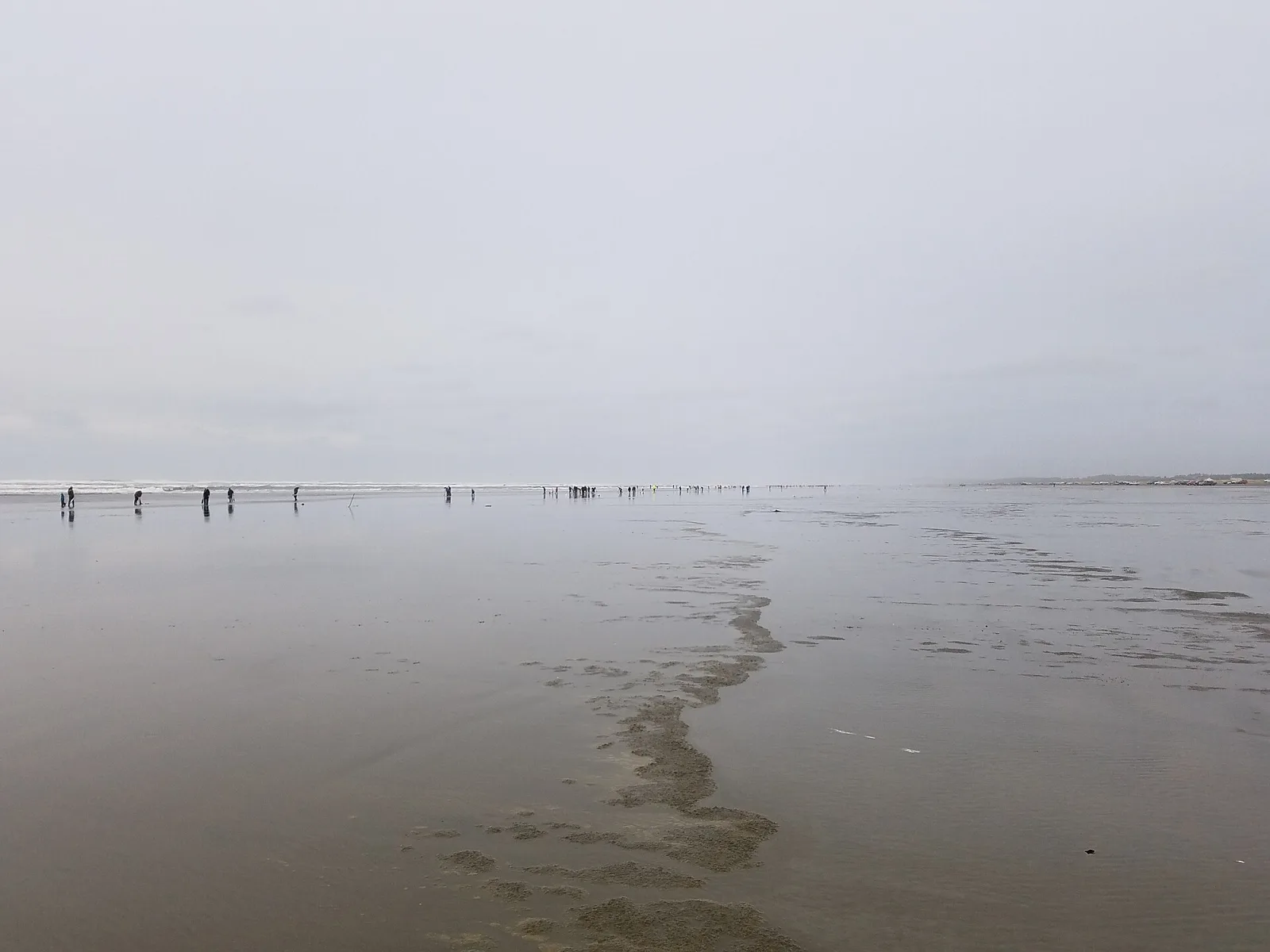
One calendar on this coast belongs to an agency most camping guides never mention, and it moves campground demand as surely as the booking window does. The state Department of Fish and Wildlife manages razor clam digging on five beaches, Long Beach, Twin Harbors, Copalis, Mocrocks, and Kalaloch, four of them inside this guide's ground and the fifth inside the Olympic guide's. Digging is not a season a camper can circle in advance.
WDFW announces tentative digs ahead of each season, and no tentative dig becomes real until marine toxin testing clears it. Two test samples, seven to ten days apart, must show domoic acid under the health guideline, and final approval usually lands about a week or less before a digging series opens. Diggers age 16 or older need a valid license. None of this is our practice; we have no clam digging in our record, and the passage is here because of what dig weekends do to campsites.
A confirmed dig series fills the campgrounds near its beach for those nights, and a postponed one empties them again, so a camper planning a quiet weekend on this coast is reading the clam calendar whether or not a clam gun is in the truck.
The machinery is not theoretical, and the current season shows it working. As this guide is written in November 2026, the season's opening digs were postponed in October after toxin levels trended up or past the health guidelines. WDFW has since approved five days of digs at Copalis and Mocrocks for November 7 to 11, while digs at Long Beach and Twin Harbors remain postponed until further notice. Those dates will be stale before this page is a season old, and they are printed dated, as an example of the gate doing its work.
The durable advice is the checking habit. Read WDFW's current announcements before fixing a coast weekend in dig season, and treat every tentative date as a rumor until the toxin tests confirm it.
Wind and rain on this coast
What follows is reported practice from the community record, labeled as such, because our own tent record is aggregate and our one coast stay carries no weather detail. The practice campers on this coast repeat is drainage first. Read the site for where water runs before the fly goes up, pitch on the high ground of the site rather than its lowest corner, and know that a footprint can trap water against a tent floor as easily as it protects it. For wind, the reported discipline is staking and guy lines treated as structure rather than decoration, with extra attention on sand and exposed ground where a standard stake pulls free, and the named failure is the unstaked canopy, which this coast's afternoon wind takes apart regularly in camper accounts. Our own tents' behavior enters only at its attested size.
Our family has stayed dry through rain in the dome class tent we camp in, and our backpacking tent has taken many wet, high wind nights with condensation as the only cost, and neither fact is offered as coast specific testimony. A reader who wants the fly itself understood before meeting this weather will find the working explanation in our guide to what a rainfly is, and the shoulder season kit layer sits in the camping checklist.
Winter on this coast, finally, is carried in the labeled form this guide uses for everything outside our season. The lodging market on the peninsula and the South Beach sells the winter storm season as a product, and the campground reality underneath it is the reduced services calendar above, with fewer loops, first come ground, wet sites, and short days. Storm watching from a rented house with a wood stove and storm watching from a tent are different trips that share a forecast, and this guide's honest position is that the coast's winter belongs to the first form for most campers. We do not winter camp, and no sentence here pretends the winter passages were learned in a tent.
Resupply, tides, and emergencies
Showers and restrooms
Restrooms and showers exist at Twin Harbors, Grayland Beach, Pacific Beach, and Ocean City, each on the state's own amenities record. Their mechanics print only where the record states them: at Twin Harbors, showers run on tokens bought at the ranger station, as campers report, and the other parks state the facilities without a mechanic. Cape Disappointment carries no shower or bathroom status in this guide, because no Parks page states one for it, and any listing that promises a facility form there is running ahead of the primary record.
The town and private grounds state their facilities operator by operator. Wallicut River and Copalis Beach RV Resort state showers on their own pages. For the rest of the town ground, the pages read for this guide state no shower form, and a camper who needs a shower at a town ground confirms it with the operator when booking.
Resupply
Aberdeen and Hoquiam, at the head of Grays Harbor, are this roster's full service base, with groceries, fuel, and marine supply where the shore roads divide. Aberdeen is the town we know best on this coast, and it is where we stock up on last minute supplies before heading out to camp; we have found a Walmart, a chain grocery store, and the major gas chains there. Below them, resupply rides on the town fabric: Ocean Shores, Westport, and the Long Beach Peninsula towns each put groceries and fuel within a short drive of their campgrounds.
Ocean Shores, where we have spent a fair amount of time, runs in our experience on a small grocery store with no big box stores behind it, and its prices run expensive; Westport runs thinner than Ocean Shores. Inside the parks, the store picture is thin and dated. The Twin Harbors Welcome Center runs a park store selling firewood, ice, snacks, and some camping supplies from May 15 to September 15.
The Cape D Store at Cape Disappointment sells firewood, ice, groceries, and propane, and it is closed through 2026 and into 2027 while the new contact station is built, so no park store on this coast sells propane this season. The operators who state propane on their own pages are Wallicut River and Copalis Beach RV Resort. The Willapa Bay shore has no sourced store fact at its campground, and a camper based at Bruceport plans resupply around South Bend and Raymond rather than around the park.
Tides and beach hazards
The Pacific on this coast is not a swimming shore. The state's own park pages say ocean swimming is not recommended here because of unpredictable currents and rip tides, and the surf itself is the hazard a camper plans around. Sneaker waves are the standing form of that hazard. They arrive without warning inside a set of smaller waves and run far up the beach, and they are the reason the working rules here are to check the tide tables before walking the sand, to keep off drift logs in the surf zone, and never to turn your back on the water. State Parks' beach safety material and the Seashore Conservation Area page are the checking route, and checking the tides before a bay shore stay or a beach walk is a planning step, not local knowledge.
Beach fires follow the Conservation Area rule restated at ground level: more than 100 feet from dunes and vegetation, and no larger than 4 feet in any dimension; inside Pacific Beach State Park, wood burning campfires are not allowed at all, and Leadbetter Point allows no fires at any time. Razor clam and crabbing seasons run on the Department of Fish and Wildlife's announcements rather than on a standing calendar, and the clam passage in the seasons section above carries that checking instruction in full; WDFW's seasons pages carry that route. For crab, the coast's standing form is year round crabbing in some gear. In Willapa Bay (Marine Area 2-1), pots run November 15 through September 15, while gear such as snares, foldable traps, and ring nets runs year round; crabbers 16 and older carry a current Washington fishing license, and WDFW's crab pages hold the current limits and closures.
Food storage, programs, and access
No campground in this guide provides a food storage locker or bear box. Food lives in an airtight container or in the vehicle, the form State Parks itself prints in its park brochures, and nothing edible is left out unattended. The driver on this coast is the raccoon, and campers report raids on unattended food at Cape Disappointment as a standing pattern; gulls and crows work the same openings. State Parks' own beach guidance is blunt on the other half of the rule: never offer food to wild animals.
The coast's interpretive weight sits at its south end. The Lewis and Clark Interpretive Center at Cape Disappointment runs daily from April 1 to October 31 and Wednesday to Sunday through the winter on the park's published hours. North Head Lighthouse opens for volunteer run climbs from May 1 to September 30, with hours worth a call ahead. Fort Columbia's interpretive center keeps its shorter summer season, Thursday to Sunday from June 1 to August 31. Twin Harbors and Grayland Beach carry interpretive opportunities on their park pages, Ocean City holds an amphitheater, and programs run in season on the Parks events calendar, so the calendar is the check before a trip built around one.
Ocean City, Pacific Beach, Twin Harbors, and Grayland Beach each list accessible campsites, accessible restrooms, and accessible parking on their park pages, and Grayland's published site breakdown counts accessible units in every class it offers. Cape Disappointment's record carries accessible campsites. Bruceport carries an ADA access feature on its Dyrt listing, while its mechanics stay with the county as its entry states. Service animals follow the agency's own form: State Parks' accessibility notice welcomes them in park facilities even where pets are prohibited.
Wi-Fi is the exception on this coast, not the rule. Pacific Beach is the one state park here whose page lists it among its amenities, and Thousand Trails Long Beach offers free Wi-Fi at its lodge and laundry areas with paid plans beyond that; no other park or operator page read for this guide names it. Laundry follows the same pattern: Copalis Beach RV Resort lists laundry facilities on its own page, and the Thousand Trails laundry areas are the only other laundry named in this guide.
Emergencies
Call 911 first for any emergency on this coast; everything in this passage is the layer behind that call. Hospital towns are named by town only. The North Beach and South Beach grounds sit in Grays Harbor County, whose hospital town is Aberdeen (Harbor Regional Health).
The Willapa Bay shore's hospital town is South Bend (Willapa Harbor Hospital). The Long Beach Peninsula's hospital town is Ilwaco (Ocean Beach Health). The Washington Department of Health facility search, linked in the sources below, is the locator for the current facility and its services.
For conditions rather than emergencies, the alert and burn restriction routes run by county: Grays Harbor County Emergency Management for alerts and the County Fire Marshal's Office for burn restrictions on the north half of this coast, and Pacific County Emergency Management and the county's Fire Marshal for the south half. Park and beach conditions run through the State Parks alerts page and the Seashore Conservation Area page. No burn ban level or closure prints in this guide as standing copy, because those facts move; the routes above are where they stand today.
Fees and passes
The pass that governs this coast's state parks is the Discover Pass, and its verified figures are $45 for an annual pass and $10 for a one day pass. The two lines a coast camper actually blurs are worth stating separately. A camper staying overnight does not need a Discover Pass to park inside the park where they are staying; the pass is a parking pass, and the campsite fee carries the parking with it. A day visitor does need one, which matters on this roster because four of its state parks, Leadbetter Point, Griffiths-Priday, Westport Light, and Fort Columbia, are day use ground that a camper visits from a campsite elsewhere, and the pass is what parks the car at each of them.
Campsite fees on the state system follow one published schedule, printed below from the agency's fees page as checked in November 2026. Fees vary by site type and season across named peak, shoulder, and winter seasons. Standard sites cost least among the developed types, with partial and full hookup sites above them. A reservation carries its own fees on the same pattern, and an extra vehicle at a site is a per night charge rather than a free addition.
| Site type | Peak season, May 15 to September 15 | Shoulder season, April 1 to May 14 and September 16 to October 31 | Winter season, November to March |
|---|---|---|---|
| Primitive and water trail | $12 | $12 | $12 |
| Standard | $31 to $43 | $23 to $35 | $23 |
| Partial utility | $41 to $51 | $35 to $46 | $35 |
| Full utility | $46 to $56 | $41 to $51 | $41 |
The listed fees include tax, a site includes one vehicle, and extra vehicles cost $10 a night.
The line this section exists to draw is the boundary of that pass. A Discover Pass pays for parking on state managed land and nothing else; it does not pay for a night at Bruceport County Park, which books and charges through Pacific County, and it buys nothing at any private campground in this guide, each of which charges on its own terms. Our own household holds a Discover Pass and a Northwest Forest Pass, and neither has ever shaped where we camped; they are standard kit for an outdoor family here, carried because the year always includes state park days and forest trailheads, not because any single trip required them.
Frequently asked questions
How far ahead can you book a state park campground on the Washington coast?
Reservations open up to nine months in advance of the first date of a trip, through the one Washington State Parks system that every state park in this guide uses. Summer weekends at the known parks are commonly taken on the day the window opens for those dates. The system's second chance is same day booking, online or by phone until 2 p.m. on the arrival day, with unreserved sites going first come, first served after 2:30 p.m.
Is Cape Disappointment open for camping?
In a reduced form, yes, and no stronger statement is honest right now. The campground closed entirely into 2026 for major renovations and has reopened reduced. The state's winter schedule note describes it as open year round with water and sewer always on and sites 7 to 10, 21 to 25, and 101 to 110 closed until winter storms have passed and the sites are evaluated. The park's own page, read in November 2026, carries the camping in the present tense and first come. Check the park's own pages close to any trip and treat every summary, including this one, as a pointer back to them.
Which campgrounds in this guide have we actually camped?
One. We camped at Twin Harbors State Park in the summer of 2018, and every other entry in this guide is researched against the parks, counties, and agencies that run the ground, with camper reporting labeled where it carries a claim. The coast ground our family knows firsthand is the Olympic wilderness coast inside the national park, which this guide points to and the companion Olympic guide carries.
When do Grayland Beach campsites go first come, first served?
The park's flood prone sites run first come, first served from November 1 to April 15, and they are non refundable in that season. The park's own advisory counts approximately 50 or more campsites that seasonal flooding may affect, and it advises campers to judge site conditions on arrival. This guide prints the rule and the dates and no site list, because the state's own pages do not agree on one.
Can you drive on the beach on the Washington coast?
On some of it, under road rules. The Seashore Conservation Area is treated as a public highway, with driving allowed year round on some sections, seasonally on others, and not at all on closed sections; the speed limit is 25 miles per hour, pedestrians have the right of way, and vehicles stay on the uppermost hard packed sand. All terrain vehicles are not allowed, access points vary, with the Schafer Road access at Twin Harbors now pedestrian only, and camping or overnight parking on the beach is never permitted.
What do razor clam seasons mean for a camping trip?
They mean the coast's campgrounds fill and empty on a calendar set by toxin tests rather than by the parks. WDFW announces tentative digs for five beaches, and each series is confirmed only after two rounds of marine toxin testing pass, usually about a week before the digs. A confirmed dig series books out the campgrounds near its beach for those nights; a postponed one, like the postponed opener this November, releases them again. Anyone 16 or older who digs needs a valid license.
What pass does a night at a state park on this coast require?
For the campsite itself, none beyond the site fee. Overnight campers do not need a Discover Pass to park inside the park where they are staying. The pass, $45 a year or $10 for a day, is what a day visitor needs at these parks, including the day use parks in this guide, and it covers no county or private campground.
Can you take an RV or trailer to these campgrounds?
At the state parks on this coast, yes. Every state park campground in this guide takes RVs, hookup sites are ordinary reservable sites in the partial and full utility classes, and the longest stated maximum is Grayland Beach's 60 feet. Pacific Beach requires all RVs to back in on its one way road. The private resorts set their own classes, from full hookup pull through sites to dry sites, and each entry carries its ground's form.
This coast's state park and town ground is the part of Washington's coast our family has camped least: one park, one summer, against a decade of returns to the wilderness beaches one guide over. This page does not dress that up, and its researched entries are written to be checked rather than believed, with the primary sources named below for every load bearing fact. The choice the page returns a reader to is the one it opened with: pick the part of the coast by wind, spacing, and water first, work the booking system with all three of its doors, and let the park follow from those decisions. The wider state, region by region, sits in the Washington campgrounds by region hub.
Booking mechanics, flood and erosion holds, closures, and park status change fast on this coast, and this page is checked against its primary sources each season. Its most load bearing checks are the ones named in its own entries: Cape Disappointment's live status as its reduced reopening settles, Grayland Beach's flood season at its middle, and the razor clam announcements as each digging series confirms or falls. When those facts move, this page moves with them.
Sources
Washington State Parks park pages for Twin Harbors, Grayland Beach, Pacific Beach, Ocean City, Cape Disappointment, Leadbetter Point, Griffiths-Priday, Westport Light, and Fort Columbia State Parks, and the Fort Columbia vacation houses page, all read November 5, 2026 and re-read November 9, 2026.
Washington State Parks, Winter Schedule, for every roster park's closure, first come, and water form; Seashore Conservation Area rules, for beach driving, beach camping, fire, and pet rules; Making Reservations, for the nine month window; the March 2025 release on same day reservations; the changing a reservation page; and the Discover Pass page, for the pass figures and the overnight parking rule.
Washington Department of Fish and Wildlife news releases of October 6, 2026, on the postponed season opener, and November 3, 2026, on the approved Copalis and Mocrocks digs, the toxin test requirements, and the license rule.
Pacific County, Bruceport County Park, the county's official park page, and the county's published park fee schedule, for the Bruceport campsite fees printed in its entry. American Sunset RV and Tent Resort, Westport, the operator's own site and booking listing, for its tent area and year round form. The operators' own pages for Ocean Breeze RV Resort, Wallicut River RV and Cabins Resort, Thousand Trails Long Beach, and Copalis Beach RV Resort, read November 9, 2026, for their site classes and amenities. Grays Harbor County Emergency Management and the County Fire Marshal's Office, and Pacific County Emergency Management and the county's Fire Marshal, for the alert and burn restriction routes. The Washington Department of Health facility search, for the hospital towns named in the emergencies passage. Operator and booking listings for the remaining named grounds, read as listing level evidence.
Camper reported material in this guide is drawn from the cluster's community research record, paraphrased and attributed in the text wherever it carries a claim, and graded in that record rather than restated here.